Compare best drinking-water-safe garden hoses: verify using published specifications, manuals and owner feedback. See research-based findings, key trade-offs.
If you fill a pet’s bowl, top off a kiddie pool, hand-water an edible garden, or drink from the tap at the end of a hose, the phrase drinking-water-safe suddenly matters a great deal. Many ordinary garden hoses are made with materials that can leach lead, phthalates, or other compounds into standing water, especially after the hose has been sitting in the sun. This research-based guide explains what a genuinely potable-safe hose looks like, which materials tend to qualify, and, most importantly, why you should verify every safety claim rather than take the label at its word.
What Makes a Good Drinking-Water-Safe Garden Hose
A drinking-water-safe (also sold as potable or non-toxic) hose is designed so that the water passing through it does not pick up harmful substances. Three things generally define a trustworthy one. First, a lead-free waterway, meaning both the hose liner and the metal fittings are free of lead, since brass fittings are a common hidden lead source. Second, a material that avoids the plasticizers used in cheap vinyl hoses, which is why polyurethane and certain rubber and drinking-water-grade hoses dominate this category. Third, and this is the part buyers skip, independent certification such as NSF or an equivalent standard for potable water.
Here is the honest part: we do not simply repeat a manufacturer’s safe for drinking claim. Marketing language like non-toxic or drinking-water-safe is not regulated the way a formal certification is. A hose can carry those words on the packaging without third-party research behind them. Treat the claim as a starting point, then confirm it. Our garden hose materials guide explains which materials are more likely to meet potable standards and why liner and fitting both matter.
Top Research-Based Picks
The models below are commonly researched for potable use because of their materials and documentation. We list them as starting points, not as guarantees. Always confirm the specific model’s current certification yourself.
Eley polyurethane hose. Eley builds around a lead-free polyurethane core and is relatively transparent about material safety, which is why it is a frequent pick for gardeners who want cleaner water at the nozzle. Read our full Eley polyurethane garden hose review and then check the brand’s own current certification documents.
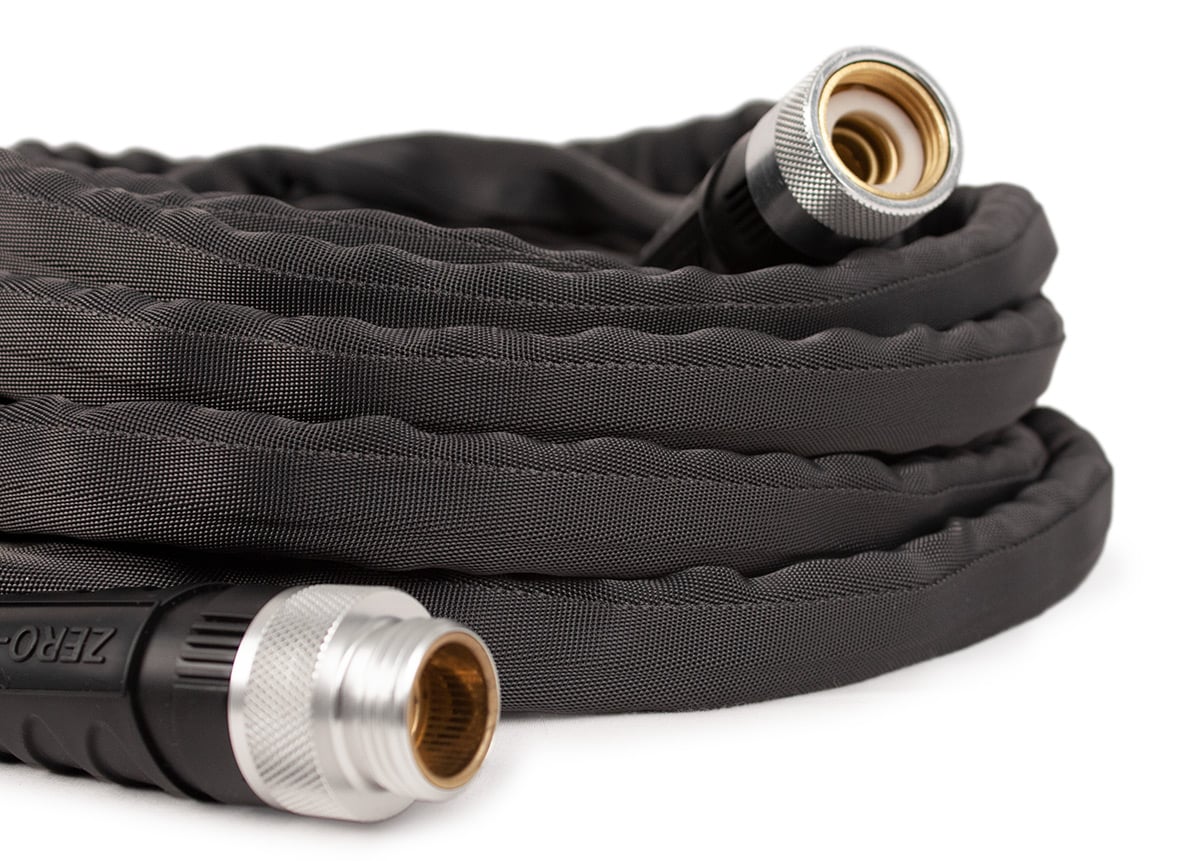
Drinking-water-grade rubber and hybrid hoses. Several manufacturers sell hoses specifically labeled for potable use. Flexible hybrids such as the Flexzilla and lightweight options like the Zero-G hose are often cross-shopped in this category. Verify each one’s certification and fittings before trusting it for drinking water, because a general lead-free claim on the hose does not automatically cover the couplings.
Lead-free labeled hoses with certified fittings. The safest choices state both a lead-free waterway and certified fittings. When a brand documents an NSF or comparable standard, that is far stronger evidence than a non-toxic slogan.
What to Look For
Certification, not slogans. Look for a named standard such as NSF/ANSI for potable water rather than unregulated words like safe or non-toxic. If you cannot find a certification, contact the manufacturer and ask directly.
Lead-free fittings. Standard brass can contain lead. Confirm the couplings are specifically lead-free, since the fittings touch the water just like the liner.
Material. Polyurethane and drinking-water-grade rubber are generally better bets than inexpensive PVC or vinyl hoses that rely on plasticizers.
Usage habits. Even a certified hose is best used mindfully. Let water run for a few seconds to flush out anything that sat in the hose, avoid drinking from a hose that has baked in the sun, and store it out of direct heat. Match diameter and length to your needs using our garden hose sizes guide.
How We Chose
Our selections are based on documented materials, published safety standards, fitting composition, and the balance of publicly available information, not on any chemical research performed by our team. We deliberately did not treat marketing phrases as proof. Where a hose claims to be lead-free or potable-safe, we frame it as a claim to verify rather than a fact, and we point you to the manufacturer’s certification. We did not run a controlled physical or laboratory test, and we do not publish measurements or safety results we cannot source. This cautious approach is the whole point of the category: with drinking water, verification beats trust.
Frequently Asked Questions
Is any garden hose truly safe to drink from? Some hoses are certified for potable water, but many ordinary hoses are not. The only reliable answer for a specific hose is its own third-party certification, so verify before you sip.
What does lead-free actually cover? It should cover both the hose liner and the metal fittings. Because brass couplings can contain lead, a lead-free liner alone is not enough. Confirm the fittings are lead-free too.
Are non-toxic and drinking-water-safe the same thing? Not necessarily. Both terms are used loosely in marketing. A formal potable-water certification such as NSF carries far more weight than either phrase on its own.
Why should I flush the hose first? Water that has been standing inside any hose, especially in the sun, can pick up compounds and warmth. Running it for a few seconds clears that first slug of water.
Does polyurethane guarantee safety? No single material guarantees it. Polyurethane avoids many problem plasticizers and is a good starting point, but you still need to confirm the specific product’s certification and fittings.
For the full comparison of hose types and how safety fits into your overall choice, start with our main best garden hoses guide, and read the materials guide to understand which constructions are most likely to earn a genuine potable-water certification.
How we research
We compare published manufacturer specifications, official manuals, warranty information and recurring owner feedback. Rankings are research-based unless original YardToolLab test evidence is explicitly shown on the page.
Related guides
Best Polyurethane Garden Hoses: Lightweight Lead-Free Picks
Best Garden Hose for a Vegetable Garden: Lead-Free and Food-Safe Watering
Best Garden Hose for an RV: Drinking-Water Safe and Compact
Best Kink-Free Garden Hoses: Kink-Resistant Picks That Keep Flowing