Compare best polyurethane garden hoses: lightweight using published specifications, manuals and owner feedback. See research-based findings, key trade-offs.
Polyurethane (PU) garden hoses have become a popular choice for gardeners who want something lighter than rubber but tougher than cheap vinyl. Because polyurethane can be manufactured without the plasticizers and heavy metals used in many traditional hoses, it is also frequently marketed as a lead-free, drinking-water-safe option. In this research-based guide we explain what separates a good polyurethane hose from a poor one, highlight standout models worth researching, and walk through the specifications that actually matter before you buy.
What Makes a Good Polyurethane Garden Hose
Polyurethane is a synthetic polymer prized for its strength-to-weight ratio. A well-made PU hose delivers three things at once: low weight, good burst resistance, and flexibility that does not turn brittle in cold weather. The best examples use a hybrid construction, meaning the polyurethane is reinforced with a braided or woven layer that helps the hose resist kinking and hold pressure.
A quality PU hose should also resist the flattening and memory coiling that plague inexpensive hoses. Look for a wall that feels substantial rather than papery, fittings that are solid rather than thin stamped metal, and a manufacturer that publishes a burst-pressure rating. Because polyurethane naturally avoids many phthalate plasticizers, reputable brands often pair the material with lead-free fittings and certification claims. If potable water safety matters to you, read our companion notes on the garden hose materials guide so you understand how PU compares with rubber and vinyl.
Top Research-Based Picks
The picks below are drawn from published product specifications, brand documentation, and widely reported owner feedback rather than any in-depth lab test on our part. Always confirm current specs on the product page before purchasing.
Eley Polyurethane Hose. Eley builds its hoses around a lead-free polyurethane core and is one of the more transparent brands about material safety. It is frequently cited for durability and consistent water flow. See our detailed Eley polyurethane garden hose review for the full rundown of its construction and fittings.
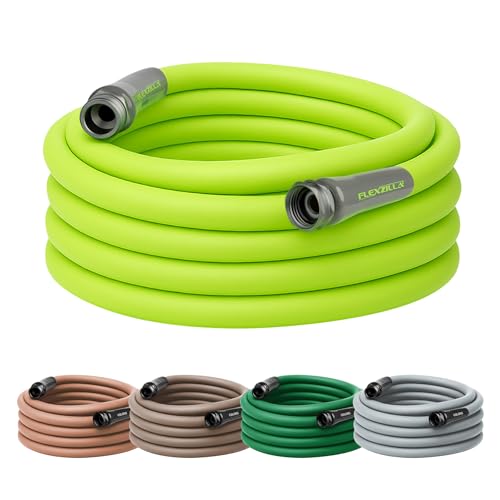
Flexzilla. While Flexzilla uses a flexible hybrid polymer rather than pure polyurethane, it competes directly with PU hoses on weight and flexibility and is a common cross-shop. It stays pliable in cold weather and lies flat without aggressive coiling. Our Flexzilla garden hose review covers where it fits best.
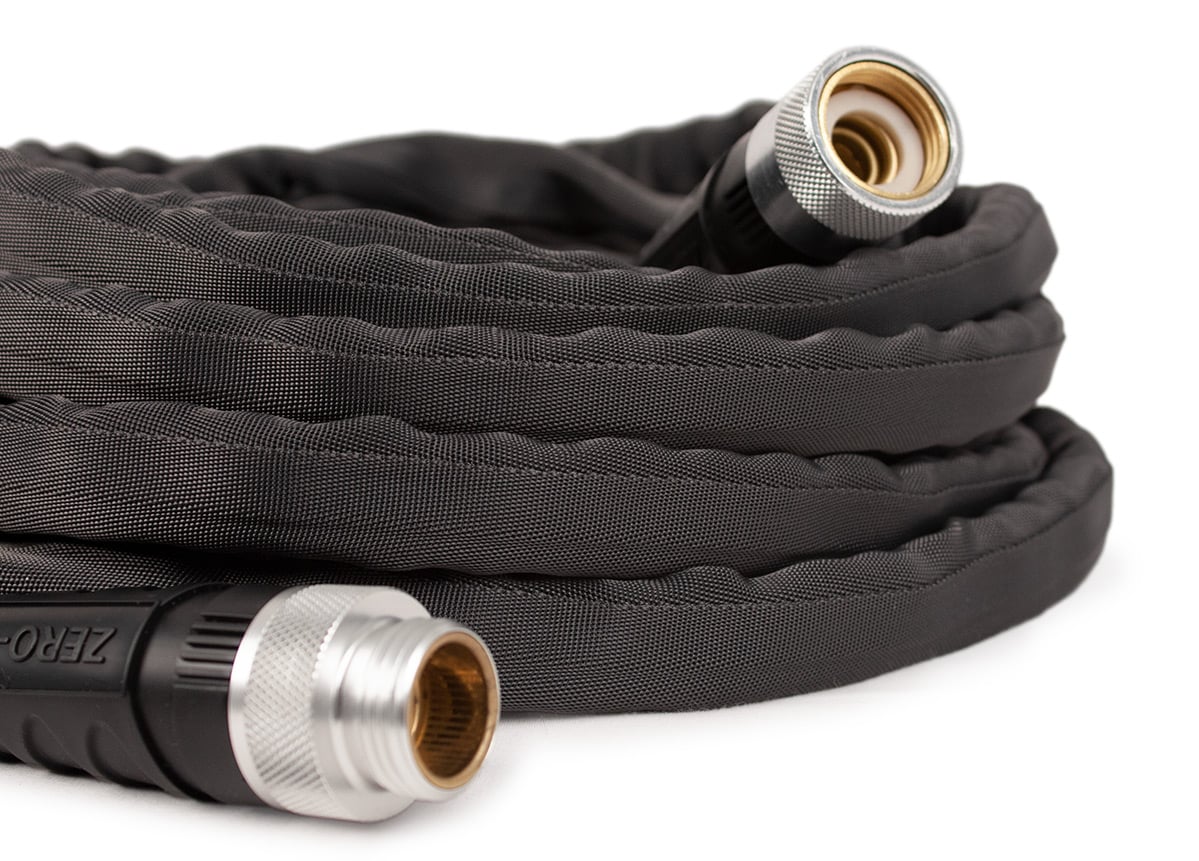
Lightweight braided PU models. Several brands sell braided polyurethane hoses in the 5/8-inch diameter that emphasize a low carry weight. If reducing arm strain is your main goal, a lightweight PU or hybrid hose like the Zero-G lightweight hose is worth comparing against traditional PU on kink resistance and longevity.
What to Look For
Diameter and flow. Most homeowners are best served by a 5/8-inch hose, which balances water volume and weight. A 1/2-inch hose is lighter but delivers less flow, while 3/4-inch is usually overkill outside of long runs. Our garden hose sizes guide explains how diameter and length affect pressure.
Fittings. Solid brass or machined aluminum couplings outlast thin stamped metal and are far easier to hand-tighten without leaks. Crush-resistant collars near the spigot help prevent the common failure point right behind the fitting.
Burst and working pressure. A published burst rating is a sign of an honest manufacturer. Higher burst numbers generally indicate a more robust reinforcement layer.
Weight and length. Polyurethane’s headline benefit is weight, so match the length to your yard. A 50-foot hose is dramatically easier to manage than a 100-foot one, and you can always add a coupler later.
How We Chose
Our selections are based on documented specifications, manufacturer safety disclosures, warranty terms, and the balance of publicly reported owner experiences. We prioritized hoses that publish real burst-pressure figures, use lead-free or clearly documented materials, and back the product with a meaningful warranty. We did not run a controlled physical test, and we avoid quoting any measurement we cannot source. Where a model appears in our review library, we link to the full write-up so you can see the reasoning behind each recommendation.
Frequently Asked Questions
Is polyurethane really safer than a standard hose? Polyurethane can be produced without many of the plasticizers used in vinyl hoses, and several PU hoses are marketed as lead-free. That said, safety depends on the specific product and its fittings, so verify each brand’s own certification rather than assuming all PU hoses are equal.
Are polyurethane hoses good in cold weather? Generally yes. Quality PU stays flexible in cooler temperatures better than stiff rubber, though you should still drain and store any hose before a hard freeze.
Do polyurethane hoses kink? Braided and reinforced PU hoses resist kinking well, but no hose is fully kink-proof. Wider bend radii and proper storage on a reel make the biggest difference.
How long do they last? Longevity varies by construction and care. A well-built PU hose with brass fittings and UV resistance can last many seasons if drained and stored out of direct sun.
For a broader comparison across every hose type, including rubber and expandable options, start with our main best garden hoses guide, then use the materials guide to confirm polyurethane is the right fit for your watering needs.
How we research
We compare published manufacturer specifications, official manuals, warranty information and recurring owner feedback. Rankings are research-based unless original YardToolLab test evidence is explicitly shown on the page.