Compare best coiled garden hoses: recoil picks for small using published specifications, manuals and owner feedback. See research-based findings, key.
Coiled garden hoses, sometimes called recoil or spring hoses, are built to stretch out when you need water and spring back into a compact coil when you are done. For balconies, patios, small courtyards, and RV setups, that self-storing behavior is a genuine convenience. But coiled hoses are a specialty tool, not a replacement for a full-length yard hose, and choosing the wrong one leads to tangles and weak flow. This research-based guide explains what makes a coiled hose worth owning, which types to research, and the specs that matter most.
What Makes a Good Coiled Garden Hose
A coiled hose earns its keep through memory retraction. The material is set into a tight spiral so that, once the water is off and the pressure drops, the hose pulls itself back toward the spigot. A good coiled hose retracts cleanly without tangling into a knot and stretches to a usable working length without collapsing under its own tension.
The best coiled hoses use a durable polymer, often a polyurethane or hybrid material, that keeps its spring across many seasons rather than relaxing into a limp tube. Because coiled hoses are short by design, flow rate is more sensitive to diameter than on a long hose, so a slightly wider bore helps maintain useful pressure. Solid fittings and a straight, non-coiled leader section at each end make connecting to the tap and nozzle far easier. For background on how coil-friendly materials like polyurethane behave, see our garden hose materials guide.
Top Research-Based Picks
These suggestions are based on published specifications and general owner feedback rather than a in-depth retraction test by our team. Verify the current spec before purchasing.
Polyurethane coiled hoses. PU is a natural fit for coiled designs because it holds a spring well and stays lightweight. A quality PU coiled hose retracts reliably and resists the brittleness that makes cheap coils crack. Eley, known for its lead-free polyurethane hose, is a useful reference point for what a durable PU material should feel like even if you choose a coiled model from another maker.
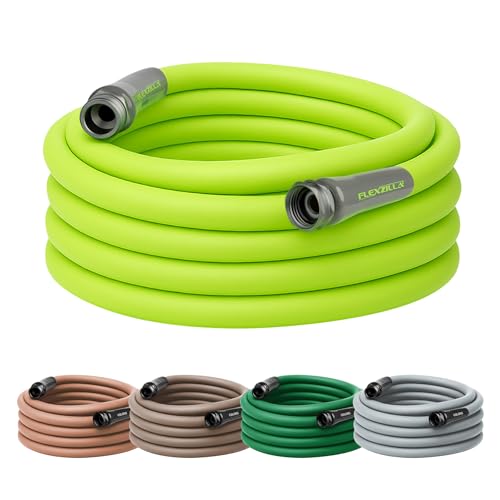
Hybrid flexible coiled hoses. Some brands offer coil or self-retracting hoses in a flexible hybrid polymer. These prioritize a soft feel and cold-weather flexibility, similar to what makes the Flexzilla popular in full-length form.
Compact recoil hoses for RV and patio use. Short recoil hoses in the 25-foot to 50-foot range are ideal where storage space is tight. If minimizing weight is the priority, compare a coiled hose against a straight lightweight option like the Zero-G lightweight hose to decide which storage style you actually prefer.
What to Look For
Working length versus coiled length. A coiled hose labeled 50 feet does not give you 50 feet of comfortable reach, because part of the length stays in the coil under tension. Buy longer than your measured distance.
Diameter. On a short hose, a wider bore matters more for maintaining flow. Check our garden hose sizes guide to understand how diameter affects pressure on shorter runs.
Leader sections. Straight, uncoiled segments at each end reduce strain on the fittings and make the hose easier to connect without fighting the spring.
Retraction quality. The whole point is clean recoil. Reinforced coils that keep their memory are worth paying for, since a relaxed coil tangles.
Fittings. Brass or reinforced fittings resist the twisting stress a coiled hose places on its ends.
How We Chose
Our picks rely on documented specifications, material choices, warranty terms, and the general pattern of publicly reported owner experiences. We favored coiled hoses that use durable spring-retaining polymers, provide straight leader sections, and use solid fittings. We did not run a controlled physical retraction or flow test, and we do not quote measurements we cannot source. We are also upfront about the category’s limits: coiled hoses are best for small spaces and light watering, not for high-flow tasks or long yard runs.
Frequently Asked Questions
Do coiled hoses reduce water pressure? They can, especially if the diameter is narrow or the coil is stretched to its limit. Choosing a wider bore and not overstretching helps maintain flow.
How far do coiled hoses actually reach? Expect the usable reach to be noticeably shorter than the labeled length, since some of the hose remains in the coil. Buy longer than you think you need.
Do they tangle? A quality coil with good memory retracts cleanly, but a cheap or worn coil can knot. Storing it hung and draining it after use preserves the spring.
Are coiled hoses good for a large yard? No. They shine on patios, balconies, small gardens, and RVs. For a big yard, a straight full-length hose is the better tool.
Can I leave a coiled hose in the sun? Prolonged sun and heat can weaken the coil’s memory over time, so shaded storage extends its life.
To see how coiled hoses stack up against every other style, begin with our main best garden hoses guide, then use the garden hose sizes guide to pick a diameter and length that keep your short hose flowing strongly.
How we research
We compare published manufacturer specifications, official manuals, warranty information and recurring owner feedback. Rankings are research-based unless original YardToolLab test evidence is explicitly shown on the page.