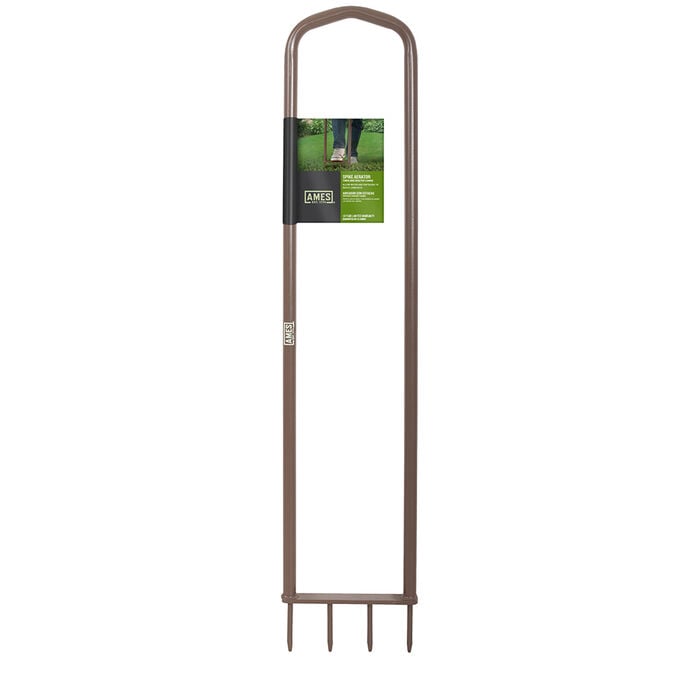
A manual lawn aerator worth buying is a step-on core model with hollow steel tines, because plugs beat spikes on compacted clay. Here is what to look for in tines, foot bar and handle, when to aerate each grass type and how big a lawn a manual tool can handle.
The short answer
For most lawns the right manual aerator is a step-on core aerator: a steel frame with a foot bar and two to five hollow tines that pull plugs of soil out of the ground. Choose that over a spike aerator if the soil is clay or has been walked on hard, because spikes press soil sideways and make compaction worse while hollow tines remove it. Look for tines about half an inch in diameter and 3 to 4 inches long, a foot bar wide enough for a boot, a welded steel frame and a handle that reaches your waist. Plan on it for lawns under about 2,000 square feet, or for the worn patches of a bigger one. Aerate cool-season grass in early fall and warm-season grass in late spring, on soil that is moist but not muddy, and overseed the same day.
Spike or plug: the choice that matters most
A spike aerator pushes a solid point into the ground and pulls it out again. The hole it leaves was made by shoving soil aside, so the soil around the hole is now denser than it was, and on clay the hole walls glaze and close within a few waterings. A plug aerator, also called a core aerator, uses a hollow tine that cuts a cylinder of soil and lifts it out. The hole stays open, roots and water get down into it, the soil around it can expand into the space, and the cores left on the surface break down and return organic matter to the thatch layer. That is why turf extension offices recommend core aeration for compacted clay and why spike aeration is at best a light treatment for sandy soil that drains well already. If you only remember one thing from this guide, buy hollow tines.
Step-on core aerators: what to look for
A step-on core aerator is a T-shaped or loop-handled tool with a horizontal foot bar near the bottom and hollow tines welded below it. You place it, step on the bar with your full weight, rock it slightly and lift, and two to five cores come out. Count the tines: two tines is slow, four is the common size and a good balance of coverage against the effort needed to push them all into clay, and five or six needs a heavier person or softer ground. Hollow tine diameter is usually between about 1/2 and 3/4 inch; wider tines remove more soil per step and clog less, narrower ones go in more easily. Tine length of 3 to 4 inches reaches below the compacted surface layer. Check how the cores are ejected: on a good design each new core pushes the previous one out through a slot or the open top of the tine, so the tines clear themselves. A foot bar at least 4 inches wide and raised a little off the frame is easier on the arch of your boot than a narrow rod.
Spike shoes and rolling spikes: why they disappoint
Spike shoes are plastic soles with 1 to 2 inch spikes that strap over your boots. They sound like a free aeration every time you mow, but in practice the straps slip, the spikes are too short and too close together to do more than prick the surface, and your body weight on a dozen small points does not sink them into clay. They also are spikes, with all the compaction problems above. They are among the most returned lawn tools for a reason. Rolling spike aerators, which are a spiked drum on a push handle, cover ground quickly and are fine for scratching the surface of a sandy lawn before overseeding, but the drum is light, the spikes rarely go in more than an inch, and on compacted clay they bounce across the top. Some can be filled with water or sand for weight, which helps a little. Neither replaces a core aerator.
Handle, frame and build
Everything on this tool takes your full weight, over and over, so the frame matters. Look for a welded steel tube frame and tine sockets, not stamped sheet steel folded around the tines, and not plastic foot plates. A powder-coated or painted finish keeps rust off the tines, which need to stay smooth to cut clean cores. Handle height should bring the grips to about your waist, which on most models means a tool about 36 to 40 inches tall; a short handle means bending over several hundred times. A T handle gives a straight pull up, a loop handle is easier for two-handed lifting, and cushioned grips help on an hour-long job. Weight of about 5 to 10 pounds is typical, and heavier is not a fault here, since the tool is lifted only a few inches at a time and the mass helps drive the tines in.
When to aerate
Aerate when the grass is growing fastest, because it then fills the holes with new roots and recovers from the disturbance in a couple of weeks. For cool-season lawns of fescue, bluegrass and ryegrass, which covers the northern half of the country, that is early fall, roughly September, with a second window in spring once the lawn has greened up. For warm-season lawns of Bermuda, zoysia, St. Augustine and centipede across the South, it is late spring into early summer, after the lawn is fully green and before the heat of July. Never aerate a dormant or drought-stressed lawn; the holes dry it out and the grass cannot refill them. Heavy clay or a lawn with foot traffic wants aerating once a year; a sandy lawn needs it every two or three years, if at all.
Soil moisture before you start
Hollow tines go into moist soil and stop dead on dry soil. Water the lawn with about an inch the day before, or aerate a day or two after a soaking rain, so the top 3 to 4 inches are moist. The test is a screwdriver: if it pushes in to the handle with moderate effort the soil is right. Too dry and you will stand on the foot bar and go nowhere; too wet and the cores smear, the tines pack with mud and the soil structure is damaged. Before you begin, flag sprinkler heads, shallow irrigation lines, invisible dog fence wire and cable drops, since a 4-inch tine finds all of them.
How big a lawn a manual aerator can handle
A four-tine step aerator covers a strip about 4 to 6 inches wide with every step, and a thorough job means two passes in different directions with holes a few inches apart. On a 1,000 square foot lawn that is roughly 45 minutes to an hour of steady stepping. At 2,000 square feet it is a long afternoon and your legs will know it, which is why that figure is a sensible upper limit for the whole-lawn approach. Above it, rent a gas core aerator for a half day or have a lawn service do it, and keep the manual tool for the spots a machine cannot reach and for mid-season touch-ups. A manual aerator also shines on a large lawn used only where compaction actually is: the path to the shed, the strip beside the driveway, the ground under the swing set and the area where the kids play. Those few hundred square feet are often all that needs doing.
Overseeding and what to do after
Aeration holes are the best seedbed a lawn ever gets, so overseed immediately while they are open. Spread seed at the rate on the bag, rake or drag it so seed falls into the holes, and topdress with about a quarter inch of screened compost if you can, which also fills the holes with better soil. Leave the cores on the surface; they crumble in a week or two of rain and mowing and the soil in them feeds the thatch layer. Water lightly every day until the new grass is up, then return to deep, infrequent watering. A starter fertilizer at the same time gives the new roots phosphorus where they can reach it. Wait until the new grass has been mowed twice before any heavy traffic or herbicide.
How we research
We compare published manufacturer specifications, official manuals, warranty information and recurring owner feedback. Rankings are research-based unless original YardToolLab test evidence is explicitly shown on the page.
FAQs
Yes, on any soil with clay in it. Spikes push soil aside and compact the hole walls; hollow tines remove a core, leave the hole open and let the surrounding soil loosen. Spikes are only acceptable on sandy, free-draining soil.
Four is the sweet spot. Two is slow, and five or six takes more weight than most people can put on the foot bar when the soil is firm clay.
Not well. The spikes are short, the straps slip and your weight on a dozen points will not sink them into compacted ground. They are fine for lightly roughening a soft lawn before seeding and nothing more.
Moist 3 to 4 inches down, like a day after a good soaking. A screwdriver should push in with moderate effort. Dry soil stops the tines and wet soil smears and clogs them.
Related guides

The Three Heavy Duty Manual Lawn Aerators Worth Stepping On for Compacted Clay
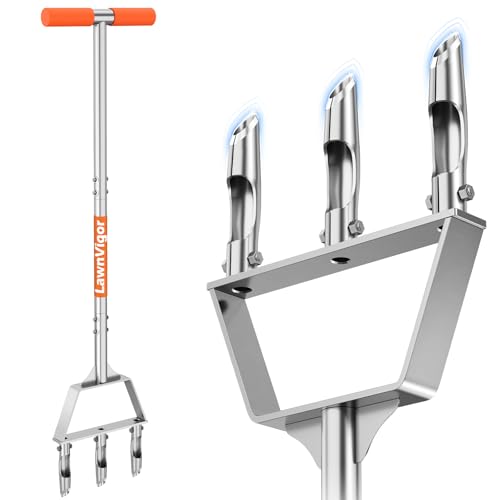
Best Manual Lawn Aerator for Small Yards: Two Core Aerators and a Spike Tool for Lawns Under a Quarter Acre

Best Manual Lawn Aerators
Groundsman Manual Lawn Aerator Review
Yard Butler MTA-4 Manual Lawn Aerator Review