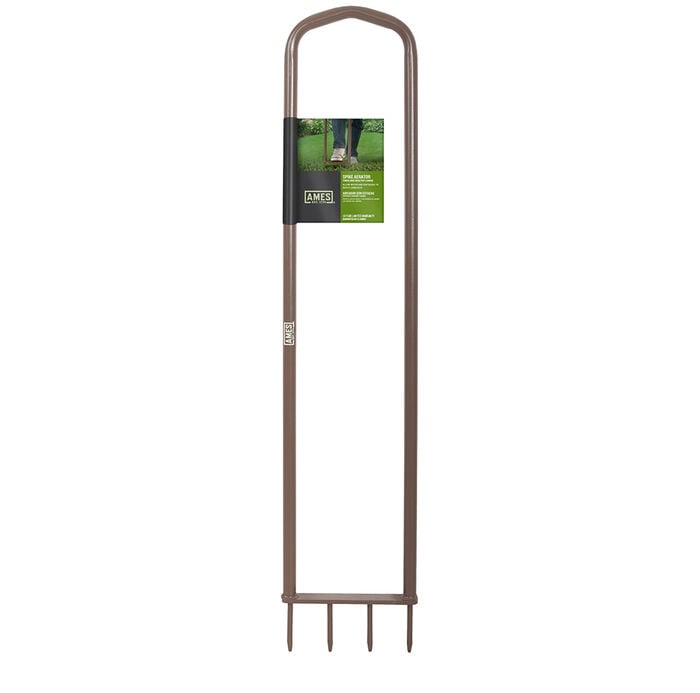
The Yard Butler MTA-4 Manual Lawn Aerator: An Honest Research-Based Review
The Yard Butler MTA-4 is a manual core aerator that has generated significant discussion among homeowners. At a price point well under fifty dollars, it promises to pull soil plugs without a gas engine or tow-behind unit. This review examines the tool’s specifications, owner-reported performance, and value proposition to help you decide if it fits your lawn care needs. The analysis draws on owner feedback, spec sheet data, and comparative research across multiple lawn care forums and retailer reviews.
Performance: The Good, The Bad, and The Sticky
On the spec sheet, the Yard Butler MTA-4 features hollow steel tines designed to extract 2- to 3-inch soil cores. In practice, owner reports consistently indicate that this tool delivers clean, consistent plugs in moist, well-maintained soil. When the ground is soft—either after rain or deep watering—the tines penetrate effectively, and users report covering a 500-square-foot area in roughly 20 minutes with moderate effort. The foot step design allows the user to push down, rock the handles back, and extract a plug, which becomes intuitive after a few repetitions.
However, the MTA-4 has well-documented limitations. In hard, dry clay soil—common in many regions during summer—the tool struggles significantly. Owners consistently report that the tines only scratch the surface or achieve less than half the desired depth, even with full body weight applied. The manufacturer recommends watering deeply a day before use or waiting for rain, which adds a preparatory step not required by powered aerators.
A second frequent complaint is plug sticking. The fixed hollow tines can become clogged when the soil is too wet or contains high organic matter. Owners report needing to stop every 15 to 20 plugs to clear the tines with a stick or screwdriver. This disrupts the workflow and reduces overall efficiency. In very wet conditions, the frequency of sticking increases. This is not a deal-breaker for most users, but it is a consistent point of feedback.
Performance breakdown based on owner reports:
- Plug Quality: Excellent in moist soil—clean cores with minimal tearing. In dry soil, plugs are short and crumbly.
- Depth: Reaches 2 to 3 inches in soft ground. Drops to 1 inch or less in hard clay, even with force.
- Effort Required: Low to moderate in good conditions. High in dry, compacted soil—users report leg and back fatigue after 30 minutes on tough ground.
- Speed: Slow compared to a machine. A small lawn can be completed in an hour; a large lawn takes a full afternoon.
- Consistency: Not perfect. The plug sticking issue means missed spots if the tines are not checked regularly.
Build Quality and Value
The Yard Butler MTA-4 is built to a price point. The frame is steel tubing with a powder coat finish, weighing only 8 pounds. The handles have foam grips, and the step plate accommodates boots up to size 10. The tines are welded onto the frame and are not replaceable. This is a significant long-term consideration: when the tines dull or bend—which owner reports suggest happens after several seasons of regular use—the entire aerator must be replaced rather than just the tines. That said, the tines are thick steel and owner feedback indicates they hold up well on hard clay without bending.
Value is the MTA-4’s strongest attribute. At under fifty dollars, it costs less than a single day’s rental of a gas aerator (typically $70–$100) or a fraction of a tow-behind unit (several hundred dollars). For a small lawn under 3,000 square feet, the math is straightforward: one rental’s cost buys a tool that lasts for years. Even for medium lawns, it is cheaper than hiring a professional service once. The trade-off is time and physical effort.
Owner feedback notes that the build is not heavy-duty. The step plate can flex under heavier users, and the welds are clean on most units. This tool is clearly designed for homeowner use on small to medium properties, not for commercial or large-scale applications.
Who This Suits
Buy it if:
- You have a small to medium lawn under 5,000 square feet.
- You have sandy or loamy soil that is easy to penetrate.
- You water your lawn regularly or aerate after rain.
- You want an inexpensive, no-maintenance tool that stores easily.
- You enjoy a in-depth workout while doing yard work.
Do not buy it if:
- You have heavy clay soil that bakes hard in summer.
- Your lawn is larger than 5,000 square feet—the physical effort becomes prohibitive.
- You want a tool that works perfectly every time without clearing stuck plugs.
- You need replaceable tines for long-term durability.
- You have physical limitations that make bending or pushing hard difficult.
The MTA-4 is also well-suited for spot aeration of compacted areas around driveways or paths, and for overseeding projects where the holes provide an ideal seed bed.
Final Verdict
The Yard Butler MTA-4 Manual Lawn Aerator is a good tool with clear limitations. It is not a replacement for a gas-powered aerator on large properties or in rock-hard soil. But for its price and weight, it is a solid option for the right user. The sharp tines out of the box are a genuine plus. The lightweight design makes it easy to handle. The plug quality in good soil is impressive for a manual tool.
The non-replaceable tines are a notable drawback. Replaceable tines would add a few dollars to the cost but extend the tool’s life significantly. The plug sticking issue is annoying but manageable—owners commonly carry a small screwdriver to clear the tines. The struggle in hard soil is the biggest downside; it requires advance watering or waiting for rain, an extra step that powered aerators do not need.
Overall, the MTA-4 is recommended for the casual homeowner with a small, well-maintained lawn. It offers fantastic value. It gets the job done with some effort. It is not perfect, but it is honest—it does what it claims to do for a very low price. For spot aeration and small areas, it is a capable tool. For whole-lawn aeration on larger properties, a rental machine remains the better choice. But for most people with small lawns, this tool is enough. It is a smart buy if you understand its limits.