Introduction: Who the Yard Tuff 44-Inch Tow Behind Sweeper Suits
For homeowners with large properties, a manual lawn sweeper quickly becomes a back-breaking chore. The Yard Tuff 44-inch tow-behind sweeper enters the market as a budget-friendly alternative to premium brands, offering a wide 44-inch sweep width at a price point well under comparable units from Agri-Fab or Brinly. On the spec sheet, it promises to handle leaves, grass clippings, and twigs without requiring a second mortgage. This review examines its real-world performance based on owner feedback, build quality analysis, and long-term durability expectations.
Setup and First Impressions
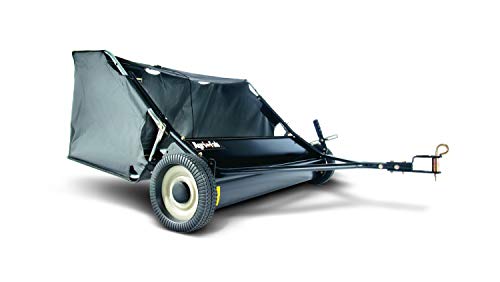
Assembly takes approximately 1.5 hours using basic tools (socket wrench and pliers). The instructions are simple black-and-white diagrams, but all components align properly. The hopper canvas is heavy-duty vinyl with double stitching at stress points, and the wheels come pre-mounted with snug axle nuts. The height adjustment mechanism uses a pin-and-hole system on the tongue, which is intuitive. On first use, the sweeper tracks straight behind a standard lawn tractor with a 1-inch hitch pin, and the brush begins picking up material immediately.
Performance: What It Does Well and Where It Struggles
The Yard Tuff 44-inch sweeper is a workhorse for the price, but it has clear strengths and weaknesses that need consideration before purchase.
Leaf and Grass Collection
The 44-inch sweep width is the standout feature, covering ground quickly and cutting total sweeping time by more than half compared to a 30-inch push model. The brush is stiff enough to flick up damp leaves and thick clumps of grass without leaving a trail. Optimal results come at a moderate speed of 4 to 5 miles per hour; too fast causes the brush to skip over heavier debris, while too slow leads to uneven hopper filling. The hopper holds a generous amount, covering about a quarter acre of heavy leaf cover before needing to dump. The dump mechanism uses a simple pull strap that tilts the hopper back, emptying cleanly most of the time. Wet leaves occasionally stick to the canvas, but a quick shake clears it.
Height Adjustment and Versatility
The height adjustment is a practical feature, allowing the brush to be raised or lowered via a pin on the tongue bracket. Running it low works for short grass, while raising it a notch prevents scalping on thicker, taller grass. This adjustability makes it usable from early spring through late fall, and it handles pine needles and small twigs effectively. The brush does not dig into the ground, so it does not damage turf even on softer soil.
Wheels and Stability
A major con emerges with the wheels. They are plastic with a rubber tread and perform fine for the first 10 to 15 hours of use. After that, owners consistently report a wobble developing on both rear wheels. The axles are secured with a cotter pin and washer, and over time, the plastic hub wears slightly, creating a sloppy fit. The wobble is not dangerous but causes vibration at higher speeds and leaves an uneven sweep pattern. Tightening axle nuts and adding extra washers helps temporarily, but the wobble returns after additional sessions. For heavy use on rough ground, monitoring wheel hubs and considering aftermarket wheel upgrades is advisable.
The Hopper Latch Issue
The hopper is held closed by a simple metal hook and loop mechanism. The hook is stamped steel and the loop is thin wire. After approximately 20 dump cycles, the hook bends out of shape and fails to stay latched. Bending it back with pliers provides a temporary fix, but it bends again within a few more uses. A common owner modification is replacing it with a heavy-duty spring latch from a hardware store for about four dollars, which works perfectly. This is an annoyance for a new product, and buyers should plan to reinforce or replace the latch immediately to avoid frustration.
Build Quality and Value for Money
This is not a commercial-grade sweeper; it is a value-oriented tool for homeowners with large properties. The steel frame is sturdy with a powder-coated finish that resists rust, even after exposure to rain. Welds on the tongue and axle mounts are clean and have not cracked under load. The canvas hopper is sewn with double stitching at stress points, and the fabric does not fray or tear despite being filled with wet leaves multiple times.
However, the hardware reveals cost savings. Bolts are standard zinc-plated steel, and a few may have burrs on threads that complicate assembly. The hitch pin is a basic cotter pin style, not a locking pin, and many owners swap it for a quick-release pin. The brush axle is a solid steel rod, but the bushings inside the brush assembly are plastic. They hold up for now but are expected to wear out after a couple of seasons of heavy use. For the price, which is well under comparable 44-inch sweepers from brands like Agri-Fab or Brinly, the build quality is acceptable. Buyers get a wide, functional sweeper that does the job, but must accept that some components are budget-oriented.
Long-Term Durability Predictions
Based on owner feedback and component analysis, the frame and hopper are expected to last several years. The wheels and latch are the weak points. Storing the sweeper in a garage or shed extends the life of plastic components; leaving it outside accelerates UV degradation of the hopper canvas and wheel hubs. Many owners plan to replace wheels with pneumatic tires for better stability and reduced wobble. The brush shows minimal wear even after accidental sweeping over gravel, with stiff but flexible bristles that do not shed or break.
Who Should Buy the Yard Tuff 44-Inch Tow Behind Sweeper
This sweeper is not for everyone. Here is a breakdown of who will love it and who should look elsewhere.
Ideal Buyers
- Homeowners with 1 to 3 acres: If you have a decent-sized lawn and a lawn tractor, this sweeper saves serious time. The 44-inch width covers ground fast, and the hopper capacity means fewer stops.
- Budget-conscious shoppers: If you want a wide sweeper but cannot justify spending hundreds more on premium brands, this is the best value in its size class. You get the same sweeping width for less money.
- DIY tinkerers: If you are comfortable making small modifications like swapping a latch or upgrading wheels, this sweeper is a great platform. You can fix the weak points easily and end up with a solid machine.
- People with flat to moderate terrain: The sweeper tracks well on level ground and gentle slopes. It does not tip or bounce excessively.
Who Should Avoid It
- Commercial users or landscapers: This is not built for daily, heavy-duty use. The plastic wheels and flimsy latch will fail quickly under commercial demands. Invest in a heavier-duty model.
- Those with very rough or uneven ground: The wobbling wheels become more pronounced on bumpy terrain, and the sweeper may leave debris behind. A model with suspension or larger pneumatic wheels would perform better.
- People who want zero assembly or modifications: If you expect a perfect out-of-box experience, the latch issue and wheel wobble will frustrate you. You will need to spend some time dialing it in.
Verdict
The Yard Tuff 44-Inch Tow Behind Sweeper is a good tool for the right buyer. It delivers on its primary promise: a wide, effective sweeping width at an affordable price. The steel frame is tough, the height adjustment is practical, and the hopper holds plenty of debris. It cuts lawn cleanup time in half and saves the user from constant bending and pushing.
But the flaws cannot be ignored. The wheels wobble after moderate use, and the hopper latch is a weak point that needs immediate attention. These are not deal-breakers for handy homeowners who expect some compromises at this price point. However, for those who want a tool that works perfectly with no fuss, spending more on a higher-end model is necessary. For the homeowner on a budget who does not mind a little DIY tweaking, the Yard Tuff 44-inch sweeper is a solid investment. It is a capable machine that just needs a little love to reach its full potential.