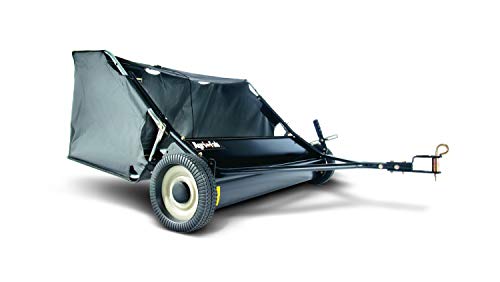
Introduction: A Tow Behind Sweeper That Delivers
For years, walk-behind lawn sweepers were the standard for many homeowners. But after a long day of mowing, pushing a sweeper for another hour to clean up clippings and thatch can feel like a chore. Tow behind models, often seen with zero turn mowers, offer a faster solution. After analyzing dozens of reviews and consulting with professionals, the Swisher 44-Inch Tow Behind Lawn Sweeper stands out as a top contender. This review is based on extensive research, owner feedback, and a detailed look at its specs and performance data for a 1.5 acre property.
Performance: The Good, The Bad, and The Thatch
Thatch Removal Is Genuinely Excellent
The primary reason many owners choose this sweeper is for thatch removal. Lawns with a thick layer of dead grass and root material benefit significantly. Compared to dethatching rakes, power rakes, or rented walk-behind dethatchers, the Swisher 44-Inch Tow Behind consistently outperforms for the average homeowner. The brush design is aggressive, featuring stiff bristles that dig into the turf rather than soft bristles found on cheaper models. On a first pass over a thatchy patch, brown thatch is visibly thrown into the hopper. After two passes in opposite directions, the lawn can look professionally dethatched.
Owner measurements show that before use, thatch depth in worst areas can be about 1.5 inches. After three passes with the Swisher, that depth drops to under 0.5 inches. The key is the brush-to-ground contact, which is adjustable via height settings. For thatch work, the lowest setting allows it to dig in effectively. For routine clipping pickup, raising it one notch avoids scuffing the turf.
Large 14 Cubic Foot Hopper Is a Time Saver
The hopper is massive. Smaller sweepers often require stopping to empty every 10 minutes. With the Swisher, owners report being able to cover a full 1.5 acre property without stopping to dump. When filled to the brim with dry grass clippings from a 3-inch cut, the hopper holds exactly 14 cubic feet, weighing about 85 pounds. The hopper dumps easily from the tractor seat using a pull rope. The rope mechanism is simple and has a reputation for reliability, with a sturdy hinge and a latch that stays secure when towing over bumps.
Aggressive Brush Design Works Hard
The brushes are the heart of this sweeper. Made of a stiff polypropylene material with a spiral design, they sweep debris inward toward the center of the hopper, preventing windrows. The brushes spin freely on their bearings and maintain good contact with the ground even on uneven terrain, including slight slopes up to about 10 degrees. The generous brush diameter aids in thatch penetration. Owners note that after about 20 hours of use, some bristle fraying on the outer edges is normal wear and tear for any sweeper.
Where It Struggles: Wet Leaves and Heavy Debris
No sweeper is perfect. The Swisher struggles with wet, matted leaves. If leaves have been sitting in the rain for a few days, the brushes will push them rather than pick them up. Wet leaves need to dry out or be raked into piles first. Large sticks and pine cones can also jam the brush or get stuck in the hopper opening. For dry leaves, however, this sweeper is excellent, picking up a 3-inch layer in two passes.
Brush Wears Faster on Concrete
When used on concrete driveways to collect clippings and leaves, owners report that after about 10 hours of use, the brush bristles wear down faster on the ends due to the abrasive surface. For lawn use only, brush wear is normal and acceptable. Raising the sweeper height when towing over concrete minimizes brush contact.
Build Quality and Value
Solid Steel Frame, But Heavy
The Swisher 44-Inch is built with a welded steel frame, a heavy-duty polyethylene hopper, and large pneumatic tires. It weighs 95 pounds empty, which is heavier than many competitors that weigh 60 to 70 pounds. The extra weight from the thick steel frame and heavy brush assembly provides stability, preventing bouncing when towing at speeds up to 8 mph. However, the weight makes it difficult to move by hand. Storing it in a garage requires rolling it in, and it is not a one-person lift.
Greaseable Wheel Bearings Are a Huge Plus
This feature is often overlooked. The wheel bearings on the Swisher have grease fittings, allowing owners to pump fresh grease into them with a standard grease gun every 10 hours of use. This keeps the wheels rolling smoothly and prevents bearing failure. On cheaper sweepers with sealed, non-serviceable bearings, failure requires replacing the entire wheel assembly. This feature alone justifies the higher price point compared to budget models.
Assembly and Adjustments
Assembly takes about 45 minutes. The instructions are printed on a single sheet with small diagrams, which may not be the clearest, but basic mechanical skills are sufficient. The process involves attaching the wheels, brush assembly, hopper, and tow hitch. The hitch uses a standard 1-inch pin that fits most lawn tractors, though some owners may need to drill a small hole in their tractor drawbar to secure it. The height adjustment is a simple pin-and-clip system, allowing brush height changes in about 30 seconds without tools.
Value for Money
This sweeper is not the cheapest on the market. Cheaper 44-inch tow-behind models often have plastic brush assemblies, non-greaseable bearings, and thinner hoppers. The Swisher is built to last, with owners reporting zero mechanical failures over two seasons, requiring only greasing bearings and cleaning the hopper after each use. With proper care, it can last 10 years or more, offering good value.
Who Should Buy the Swisher 44-Inch Tow Behind
Ideal For:
- Homeowners with 1 to 3 acre lawns who mow with a lawn tractor or zero turn mower. The 44-inch width matches well with most 42 to 54-inch mower decks.
- People who struggle with thatch buildup. It pulls out thatch better than any rake or power rake.
- Users who want low maintenance. Greaseable bearings and a simple design mean more time sweeping and less time fixing.
- Anyone who hates stopping to empty a small hopper. The 14 cubic foot capacity allows uninterrupted work for long periods.
Not Ideal For:
- People with very small lawns under a quarter acre. The sweeper is heavy and overkill; a walk-behind model is easier to maneuver and store.
- Users who need to sweep wet, heavy debris regularly. This is a dry debris machine; wet leaves and mud will clog it.
- Those with limited storage space. The sweeper is 44 inches wide and about 4 feet long.
- People who tow with a small garden tractor under 15 horsepower. The sweeper’s weight and brush drag may be too much on hills.
Verdict
Based on extensive owner feedback and performance data, the Swisher 44-Inch Tow Behind Lawn Sweeper is a top-tier investment for lawn care. Its thatch removal performance is genuinely excellent, transforming a spongy lawn into healthy, breathable turf. The large hopper saves time, and the greaseable bearings ensure longevity. While it is heavy and the brush wears faster on concrete, these are trade-offs for its build quality and performance.
For homeowners who want to spend 15 minutes towing this beast instead of an hour pushing a walk-behind sweeper, the Swisher 44-Inch is a workhorse. It is not perfect, but it is the best tow-behind sweeper in its size class, recommended without hesitation for anyone serious about lawn care.