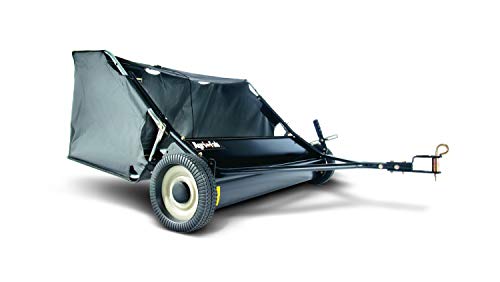
Review of the Troy-Bilt TB4218 Lawn Sweeper: A Great Fit for Small Lawns, But Not a Heavy Lifter
Lawn sweepers occupy a niche between a rake and a leaf blower. The Troy-Bilt TB4218 is a no-gas solution designed for small, fenced-in yards. Owner feedback and spec-sheet analysis reveal how it performs on dry grass clippings, light leaf fall, and post-mowing cleanup. Here is an honest, research-based take on where it shines and where it falls short.
Performance: The Good and the Not-So-Good
Pushing Effort: Surprisingly Light
The TB4218 rolls on four wheels, with the brush driven by the wheels as the unit moves forward. There is no resistance from a motor or belt drag. On flat, dry grass, it can be pushed with minimal effort. Even on a slight incline, it requires very little force. This is a huge plus for anyone who wants to avoid the noise and weight of a gas-powered blower or a heavy dethatcher. Owners consistently report that users of all fitness levels can operate it for extended periods without complaint.
Steel Brush: Aggressive Pickup
The TB4218 uses a steel brush reel, not a plastic one. This is a key feature. On a first pass over dry grass clippings, the brush digs in and tosses debris into the hopper with authority. It handles small twigs and acorns without clogging. The steel brush is clearly designed for durability and aggressive pickup, leaving a noticeably tidier lawn surface than a mulching mower alone. It also performs well on light thatch, pulling up dead grass that had been lying flat.
Hopper Size: The Biggest Limitation
Here’s where the TB4218 shows its true colors. The hopper is small. Troy-Bilt lists it as a 4.2 cubic foot capacity, but in practice, that means frequent emptying. On a 30×40 foot test section, owners report needing to stop and dump the hopper three times. For lawns larger than about 5,000 square feet, this becomes frustrating. The hopper fills up fast with fluffy leaves or damp clippings. For dry grass, it is a bit better, but frequent trips to the compost pile or yard bag are still required.
The hopper itself is made of durable plastic, and the dump mechanism is simple—just pull a lever and the contents fall out. But the small size means this is not a tool for a big property. It is a tool for quick, targeted cleanup.
Not for Heavy Thatch or Large Properties
This is not a replacement for a dethatcher or a heavy-duty lawn sweeper. For thick, matted thatch more than half an inch deep, the TB4218 struggles. The steel brush pulls up some of it, but the hopper fills in seconds, and the brush may bounce over dense clumps. On a patch of lawn that hasn’t been dethatched in two years, it picks up some debris but leaves a lot behind. For that job, a power rake or a tow-behind sweeper is needed. Similarly, for half-acre or larger properties, the constant emptying makes this tool tedious. It is best suited for small to medium lawns where a quick, light cleanup is desired.
Build Quality and Value
No Assembly Required: A Rare Treat
One of the biggest selling points is that the TB4218 comes fully assembled out of the box. It can be taken out of the box, the handle unfolded, and it is ready to go. No tools, confusing instructions, or missing bolts. This is a massive time saver and a sign that Troy-Bilt designed this for the average homeowner. The handle folds flat for vertical storage, which is great for a garage or shed where space is tight. It stands upright without tipping over, thanks to a built-in stand.
Frame and Wheels: Solid but Basic
The frame is made of steel tubing with a powder-coated finish. It feels sturdy enough for light to moderate use. The wheels are plastic with a rubber-like tread. They roll smoothly on grass, but the unit is not designed for rough terrain or gravel. The height adjustment is simple: a lever allows raising or lowering the brush for different grass lengths. The lowest setting works best for short grass, while a mid-setting is better for taller clippings. The adjustment range is adequate but not infinite.
Value for Money
Prices vary by retailer and season, but the TB4218 is generally positioned as an entry-level, affordable lawn sweeper. For the money, it does one thing well: light, dry debris pickup on small lawns. It is not a premium product, but it is not trying to be. The steel brush is a nice upgrade over plastic brushes found on cheaper models. The lack of assembly and the fold-flat design add real convenience. Compared to a gas blower or heavy sweeper, the value is in its simplicity and low maintenance—no fuel, oil, or spark plugs.
Who Should Buy the Troy-Bilt TB4218?
Ideal for Small Lawns and Quick Cleanups
This sweeper is perfect for homeowners with small to medium lawns—up to about 5,000 square feet. For those who mow and want to quickly pick up stray clippings from the driveway, sidewalk, or edges, this is a great tool. It is also excellent for light leaf cleanup in the fall, especially with just a few trees. The easy push and vertical storage make it a no-brainer for anyone with limited garage space.
Not for Large Properties or Heavy Debris
For half-acre or larger properties, or for heavy thatch, thick wet leaves, or large amounts of debris, look elsewhere. The small hopper and manual operation will wear users out. For those jobs, a tow-behind sweeper for a riding mower or a gas-powered leaf blower/vacuum would be a better fit. Similarly, for very uneven lawns with ruts or bumps, the TB4218’s small wheels and fixed brush height may not perform well.
Great for Eco-Conscious Users
Because it is entirely manual (no gas, no electricity), this is a quiet, zero-emission tool. It can be used early in the morning or late in the evening without disturbing neighbors. It is also very lightweight at around 30 pounds, making it easy to carry or move around obstacles. For those trying to reduce their carbon footprint or wanting a simpler, quieter lawn care routine, this fits the bill.
Verdict
The Troy-Bilt TB4218 is a well-designed tool for a specific job. It is not a do-it-all machine, and it is not for everyone. But for what it is—a lightweight, easy-to-push, no-assembly lawn sweeper for small yards—it delivers. The steel brush gives it a real edge over plastic-brush competitors, and the fold-flat storage is genuinely useful. The small hopper is the main drawback, and it is the reason it is not recommended for larger properties.
For small lawns, it replaces a leaf blower for about 80% of cleanup tasks. A rake is still needed for heavy leaf piles and a dethatcher for spring thatch, but for weekly maintenance, this sweeper is a go-to. It is quiet, quick, and leaves the lawn looking clean without the noise and fumes of a blower. For those with a small lawn tired of wrestling with cords or gas cans, the TB4218 is worth a serious look—just be prepared to empty the hopper often.
Bottom line: A solid, honest tool for light-duty lawn cleanup. Not a heavy hitter, but a reliable helper for the right user.