Compare zero-g vs pocket hose: lightweight woven hose using published specifications, manuals and owner feedback. See research-based findings, key trade-offs.
The Zero-G and the Pocket Hose both promise a lighter, easier hose, but they solve the problem in very different ways. The Zero-G is a full-size woven hose that stays light while keeping consistent water flow. The Pocket Hose is an expandable hose that grows with water pressure and shrinks down for compact storage. If you want steady flow and everyday durability, the Zero-G leads. If your priority is minimal storage space and a hose that all but disappears when empty, the Pocket Hose has a niche.
Quick Comparison
| Feature | Zero-G | Pocket Hose |
|---|---|---|
| Material | Woven fabric jacket over a flexible inner tube | Expandable inner tube inside a fabric web |
| Weight | Very light for a full-size hose | Extremely light, especially when empty |
| Durability | Puncture and abrasion resistant, aluminum couplings | Varies by model, expandable hoses are more prone to bursts and wear |
| Best for | Regular yard watering with steady flow | Small spaces, light watering and easy storage |
| Price tier | Mid-range | Budget to mid-range |
Material and Construction
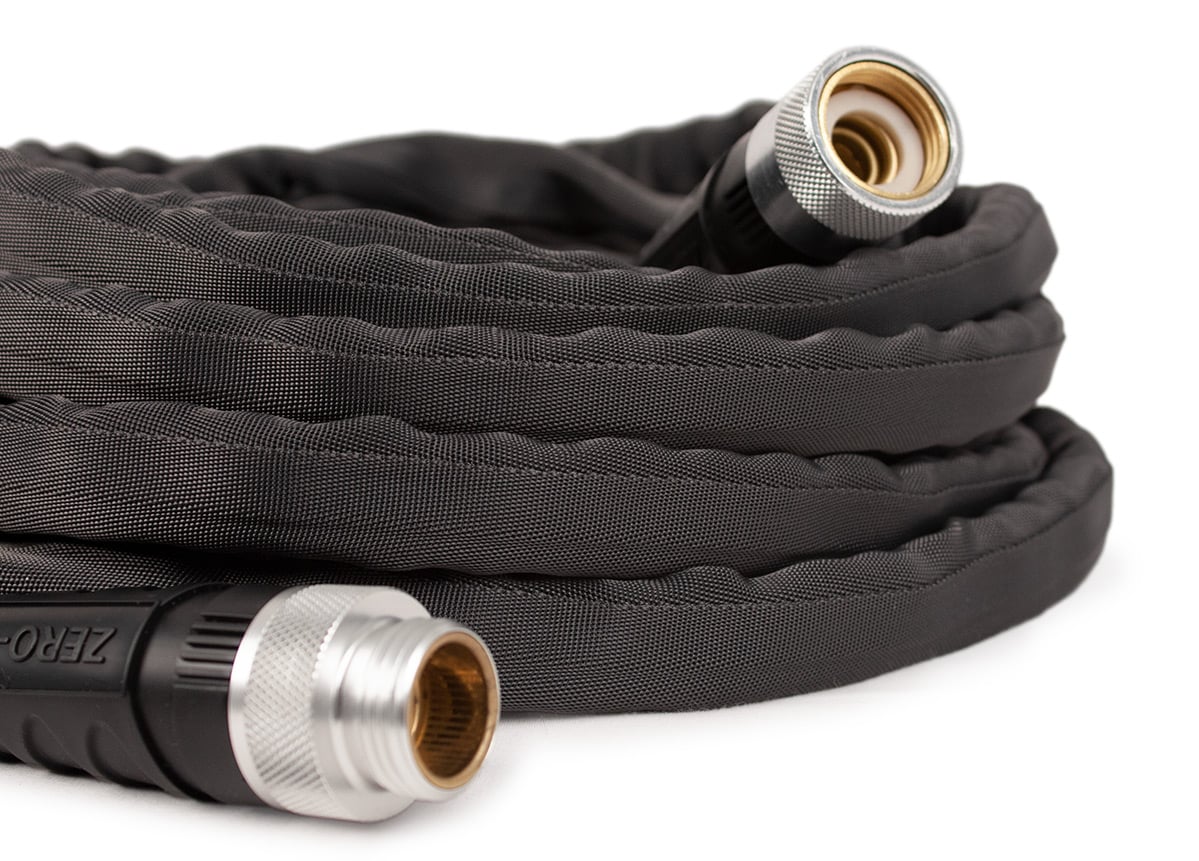
The Zero-G, made by Apex, uses a tightly woven fabric jacket around a flexible inner tube. This gives it a low weight while keeping a solid, consistent bore for water flow. It is puncture and abrasion resistant for a fabric hose, uses crush-resistant aluminum couplings, and is made with drinking-water-safe materials. It is not an expandable hose, so it holds its length whether the water is on or off. Our Zero-G garden hose review covers how it wears over time.
The Pocket Hose, a well-known expandable brand from Telebrands, works differently. An elastic inner tube sits inside an outer fabric web. When you turn the water on, pressure expands the hose to several times its resting length, and when you shut the water off it contracts back down to a compact size. Newer versions have moved toward sturdier fittings and reinforced designs to address the durability complaints that affected earlier expandable hoses. Because there is no on-site review for this brand, this comparison stays research-based on its published design and category behavior.
Weight and Handling
Both hoses are very light, which is the whole point for many buyers. The Zero-G is one of the lightest full-size hoses you can carry, and it keeps that light feel while still behaving like a normal hose. It coils onto a reel or hanger easily.
The Pocket Hose is even lighter, especially when it is empty and contracted, and its party trick is storage. An expandable hose collapses to a fraction of its working length, so it tucks into a small bin, a balcony corner or an RV compartment. The trade-off is that expandable hoses can be awkward to reposition while in use, since they flex and move as pressure changes, and they must be drained before storage so the inner tube can retract fully. If you leave an expandable hose stretched out and pressurized in the sun for long periods, you also shorten its life, so it rewards a bit more care than a standard hose.
Durability and Water Flow
This is the most important difference. The Zero-G maintains a consistent internal diameter, so water flow stays steady and strong for sprinklers, wands and nozzles. Its woven build resists punctures and abrasion reasonably well for everyday use.
Expandable hoses like the Pocket Hose, as a category, tend to deliver lower and less consistent water flow because the tube diameter changes with pressure, and they are historically more prone to bursting, splitting at the fittings and general wear than solid or woven hoses. Manufacturers have improved later models with better connectors and materials, but expandable hoses are generally best treated as light-duty. If you need a hose for frequent, heavier watering or high-pressure tools, the Zero-G is the safer long-term bet.
Best Use Cases
The Zero-G suits gardeners who water regularly across a normal yard and want a light hose that still performs like a standard one, with dependable flow and season-after-season use. The Pocket Hose suits people with limited storage, small gardens, patios, balconies or RVs, who value a hose that packs away to almost nothing and only need it for light, occasional watering. Match the hose to how hard and how often you plan to use it.
Which Should You Buy?
Choose the Zero-G if you want consistent water flow, everyday durability and a light full-size hose for regular use. Choose the Pocket Hose if compact storage and minimal weight matter more than flow and long-term ruggedness, and your watering needs are light. For most gardeners doing routine watering, the Zero-G is the more reliable pick, while the Pocket Hose fills a real niche for tight spaces.
Explore each option in our Zero-G garden hoses guide and our Pocket Hose garden hoses guide. To see how they compare with every material and budget, read our best garden hoses guide.
How we research
We compare published manufacturer specifications, official manuals, warranty information and recurring owner feedback. Rankings are research-based unless original YardToolLab test evidence is explicitly shown on the page.