Compare flexzilla vs zero-g garden hose: which using published specifications, manuals and owner feedback. See research-based findings, key trade-offs.
Choosing between the Flexzilla and the Zero-G garden hose comes down to one core trade-off. Flexzilla uses a hybrid polymer body built for all-weather toughness, while the Zero-G uses a woven fabric jacket built to be as light as possible. If you want a hose that stays flexible in cold weather and shrugs off rough concrete, Flexzilla is the stronger pick. If your priority is the lightest hose you can comfortably drag around a large yard, the Zero-G has the edge.
Quick Comparison
| Feature | Flexzilla | Zero-G |
|---|---|---|
| Material | Hybrid polymer core with abrasion-resistant outer | Woven fabric jacket over a flexible inner tube |
| Weight | Light for a polymer hose, heavier than fabric | Very light, one of the lightest full-size hoses |
| Durability | Strong all-weather flexibility, crush-resistant aluminum fittings | Puncture and abrasion resistant, less rugged than polymer under heavy drag |
| Best for | Cold climates, rough surfaces, year-round use | Large yards where carrying weight matters most |
| Price tier | Mid-range | Mid-range |
Material and Construction
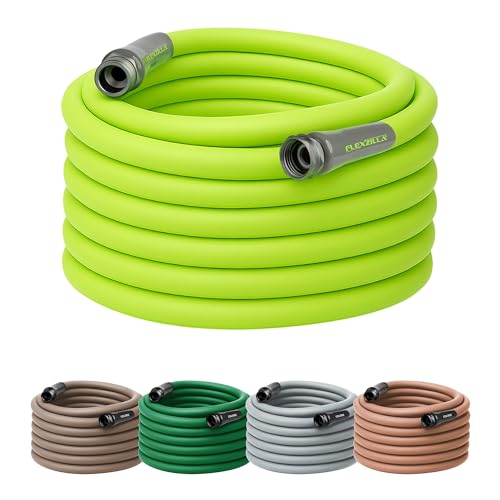
Flexzilla, made by Legacy Manufacturing, is built around a hybrid polymer. This material is designed to stay soft and flexible across a wide temperature range, which the company rates from roughly minus 40 to 140 degrees Fahrenheit. The hose keeps its shape without turning stiff in the cold or gummy in summer heat. Its fittings are anodized aircraft-grade aluminum that resist crushing, so the ends are less likely to deform if you step on them. You can read the full breakdown in our Flexzilla garden hose review.
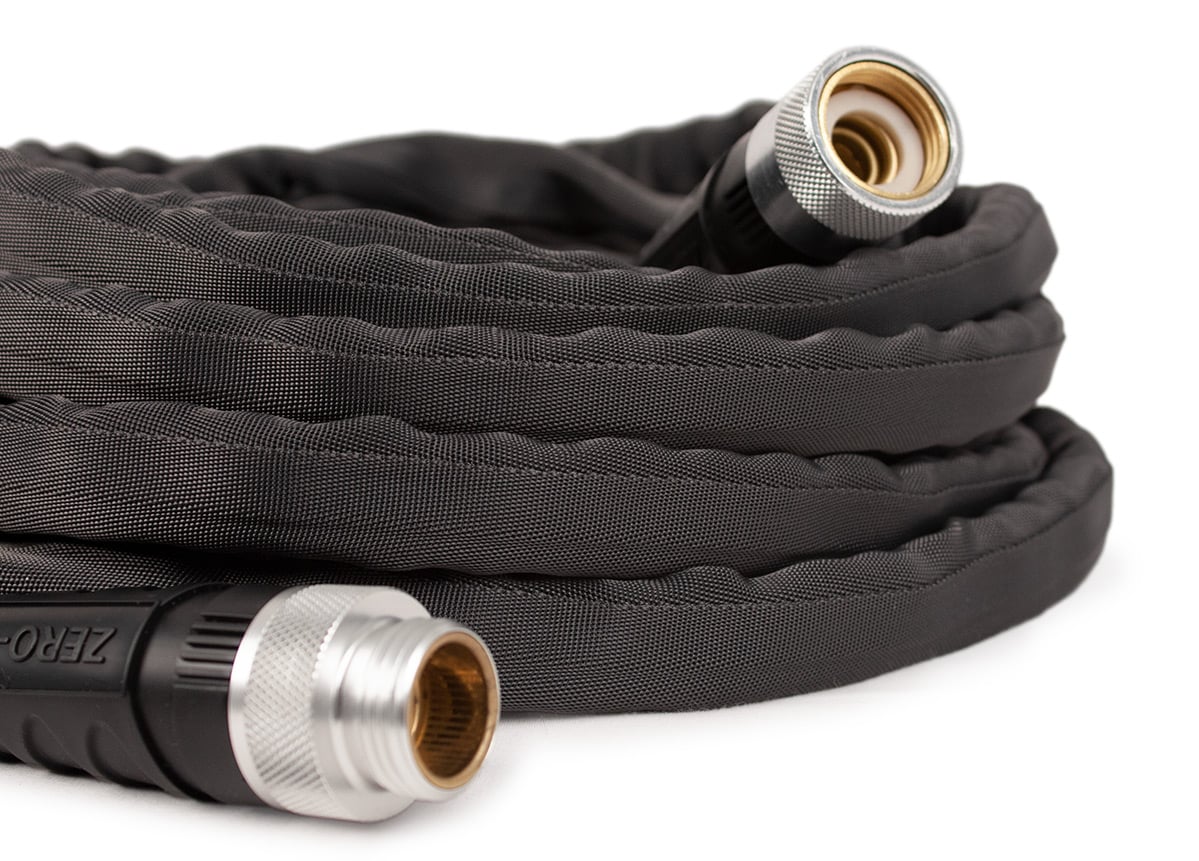
The Zero-G, made by Apex, takes a different route. Instead of a solid polymer wall, it wraps a flexible inner tube in a tightly woven fabric jacket. That woven design is what makes the hose so light, and it gives real puncture and abrasion resistance for a fabric build. The couplings are crush-resistant aluminum, similar in spirit to Flexzilla. Our Zero-G garden hose review covers how the woven jacket holds up over a full season of use.
Weight and Handling
Weight is where the Zero-G makes its name. The woven fabric build is markedly lighter than a polymer or rubber hose of the same length, which is a meaningful advantage if you routinely pull 75 or 100 feet of hose around a large property or up onto a deck. Less weight also means less strain when you coil it back onto a reel or hanger.
Flexzilla is still easy to handle and is far lighter than a traditional rubber hose, but it carries a bit more heft than the Zero-G. What Flexzilla trades in weight it returns in lay-flat behavior. The hybrid polymer wants to lie flat and follow the ground rather than coiling up and fighting you, and it resists kinking under pressure. Both hoses are kink-resistant in everyday use, so the practical handling difference is mostly about how much load you want to carry versus how flat you want the hose to sit.
Durability and Cold Weather
For long-term toughness, Flexzilla has the advantage in demanding conditions. The hybrid polymer stays pliable in freezing temperatures, so gardeners in cold regions can keep using it late into fall without the hose going rigid. It also handles being dragged over gravel, concrete and flagstone well. Both hoses use aluminum fittings rather than cheap plastic, which reduces cross-threading and leaks at the spigot.
The Zero-G is genuinely durable for a fabric hose and resists punctures better than many people expect, but a woven jacket is more exposed to snags and abrasion than a solid polymer wall when you drag it repeatedly across sharp edges. In freezing weather a fabric hose is also more vulnerable if water is left inside and allowed to freeze. For three-season use in a typical yard, the Zero-G holds up well. For year-round and rough-surface use, Flexzilla is the more forgiving choice.
Water Safety and Everyday Use
Both hoses are made with drinking-water-safe, lead-free materials, so either is suitable for filling a pet bowl, a kiddie pool or a rain barrel. Both come in common lengths from 25 to 100 feet with a standard 5/8 inch diameter, which delivers good flow for sprinklers, wands and nozzles. Neither is an expandable hose, so you get consistent water flow without the pressure drop that expandable models can suffer.
Which Should You Buy?
Pick Flexzilla if you live in a cold climate, drag your hose across rough surfaces, or simply want the most durable all-weather option and do not mind a little extra weight. Pick the Zero-G if the single most important factor is carrying and coiling the lightest possible hose across a big yard, and your conditions are less punishing. Both sit in a similar mid-range price tier, so the decision is really about climate and handling rather than cost.
To dig deeper into each brand, browse our Flexzilla garden hoses guide and our Zero-G garden hoses guide. For the full field of top picks across every material and budget, see our best garden hoses guide.
How we research
We compare published manufacturer specifications, official manuals, warranty information and recurring owner feedback. Rankings are research-based unless original YardToolLab test evidence is explicitly shown on the page.