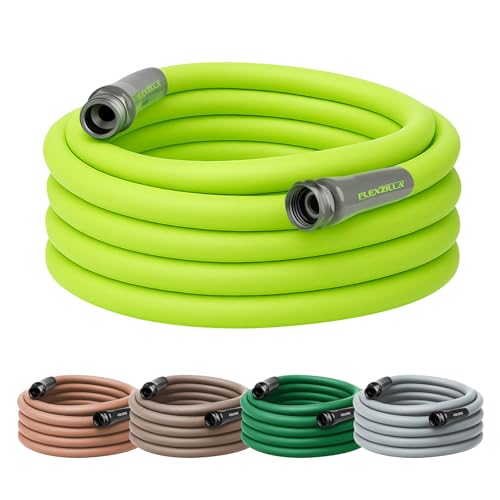
There is no universal garden-hose lifespan. Learn the signs that determine replacement and the storage habits that can prevent avoidable damage.
There is no dependable one-size-fits-all lifespan for a garden hose. Two hoses made from the same broad material can use different reinforcement, wall thickness, fittings and compounds, and they may face completely different pressure, sunlight, temperature and storage conditions. A warranty is useful evidence of manufacturer support, but it is not a promise that every hose will remain serviceable for that many years.
What actually determines hose life?
- Construction: reinforcement, cover thickness and coupling design matter alongside rubber, PVC, polyurethane or hybrid material.
- Pressure and temperature: operating outside the exact model’s published limits can damage the tube or fittings.
- Sun and weather: repeated exposure affects materials differently; look for a model-specific UV and weather rating.
- Abrasion: dragging a hose over rough masonry and sharp edges wears the cover.
- Kinks and crushing: repeated folding at the same point creates a weak area and restricts flow.
- Freezing water: water left inside can freeze and expand, damaging the hose or reel plumbing.
Replace by condition, not by a calendar
Inspect the full hose at the start of the watering season and before any high-demand job. Replacement is the safer option when you find a bulge, exposed reinforcement, a deep split, a badly flattened section that will not recover, or a coupling that is pulling away from the hose. Stop using a hose immediately if it swells under pressure.
A leak at the threaded connection does not automatically mean the hose is finished. First turn off the water, relieve pressure and inspect the washer. A worn or missing washer is inexpensive to replace. A clean end-section puncture may also be repairable with a properly sized hose mender; damage spread through the hose is a stronger reason to replace it. Our leaking garden hose guide separates these cases.
How to avoid premature failure
- Turn off the faucet and release pressure after use.
- Lay out twists before winding so they do not become tight folds.
- Use broad loops on a reel or rounded hanger instead of a small hook.
- Keep the hose away from sharp edges, vehicle tires and mower blades.
- Drain residual water and follow the maker’s winter-storage instructions.
- Do not exceed the stated working temperature or pressure.
Liberty Garden’s care instructions warn against over-tightening fittings and against exposing water-filled reel plumbing to freezing temperatures. ELEY likewise instructs owners to drain its polyurethane hose before freezing conditions. Those are manufacturer-specific directions, but the underlying routine—depressurize, drain and avoid tight bends—is a useful baseline when your own manual does not say otherwise.
Does material predict lifespan?
Material helps describe handling and suitable conditions, but it cannot produce a credible lifespan number by itself. A reinforced, well-rated vinyl hose may outlast a poorly constructed product carrying a more durable-sounding label. Compare the whole specification: working pressure, temperature range, reinforcement, fittings, warranty terms and permitted uses. See our rubber vs vinyl comparison and materials guide.
What owners report about longevity
Owner reports span a much wider range than the old page’s unsupported material-by-year table. In one Gardening discussion, people reported several years from contractor and braided hoses, but also described weight and sun damage. On Home Depot’s Continental rubber-hose page, some owners describe more than a decade of service, while others report connector failure or severe kinking within a year. These experiences identify possible outcomes, not a guaranteed lifespan.
Sources and review method
This guidance is based on published care information and owner-reported outcomes rather than an invented service-life estimate. Sources checked include Liberty Garden’s care instructions, ELEY’s hose care guidance, retailer reviews and independent owner discussions. Always follow the instructions for your exact hose and reel because freeze tolerance and other limits vary by model.
How we research
We compare published manufacturer specifications, official manuals, warranty information and recurring owner feedback. Rankings are research-based unless original YardToolLab test evidence is explicitly shown on the page.