Quick verdict
The Alloyman 20V is the strongest overall cordless cultivator because its tine design and stated runtime hold up well against similarly priced competitors while staying light enough for everyday bed maintenance. The Saker 22V is worth a look if you want slightly more motor torque for cultivating soil that has firmed up between growing seasons.

Alloyman 20V Cordless Tiller Cultivator
This 20V cordless cultivator balances tine count and cutting width with a manageable weight for repeated use across several beds, and shipping with two batteries means one can charge while the other is in use during a longer gardening session.
Battery powered cordless cultivators for maintaining garden beds, compared on cultivating width, tine design, and runtime rather than raw tilling power.
The picks at a glance
| Tool | Best for | Score | |
|---|---|---|---|
| Alloyman 20V Cordless Tiller Cultivator | Best Overall | Check price | |
| DEGGE Tiller | Best Value | Check price | |
| MZK 20V Cordless Tiller Cultivator | Best Budget | Check price | |
| GELIDALITE 20V Cordless Garden Tiller Cultivator | Best Premium | Check price | |
| Saker 22V Cordless Electric Garden Tiller Cultivator | Also Great | Check price |
The picks, reviewed
Alloyman 20V Cordless Tiller Cultivator
This 20V cordless cultivator balances tine count and cutting width with a manageable weight for repeated use across several beds, and shipping with two batteries means one can charge while the other is in use during a longer gardening session.
Reasons to buy
- 20V battery power
- Lightweight handheld design
- Tine design for mixing and loosening
- Two battery kit
Reasons to avoid
- Battery powered torque is lower than a gas mini tiller, so it is not a substitute for breaking new ground.
- Runtime figures on the listing describe light duty conditions and may run shorter in denser, unamended soil.

DEGGE Tiller
48 tines and a 9 inch width give it more cultivating coverage per pass than a simpler 2 or 4 tine design, and two 3.0Ah batteries provide a stated 50 minutes of combined runtime, useful for working through several beds without stopping to recharge.
Reasons to buy
- Two 21V 3.0Ah batteries
- 48 hardened steel tines
- 9 inch width, 6.7 inch depth
- Up to 50 minutes combined runtime
Reasons to avoid
- More tines can clog faster in wet or heavily mulched soil than a simpler design.
- 9 inches is wide enough that it may not fit the narrowest raised bed frames; measure first.
MZK 20V Cordless Tiller Cultivator
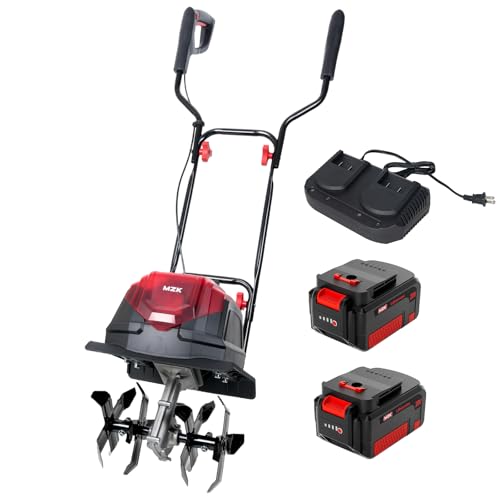
As the most affordable cordless cultivator in this comparison, it still includes adjustable wheels for depth control and a dual battery setup, covering the core features a maintenance cultivator needs without paying for the higher tine count or capacity of pricier picks.
Reasons to buy
- 20V dual battery design
- Adjustable wheels
- Built in safety switch
- Compact lightweight build
Reasons to avoid
- Lower stated capacity than the DEGGE or Saker means shorter runtime per charge.
- As a newer, less established brand, we weigh its specifications cautiously against longer standing competitors.

GELIDALITE 20V Cordless Garden Tiller Cultivator
An adjustable handle and dual safety start make this a comfortable option for longer cultivating sessions across multiple beds, and its build quality positions it as a step up from the most basic budget models while staying within the same 20V battery class as the rest of this comparison.
Reasons to buy
- 20V battery power
- Ergonomic adjustable handle
- Lightweight portable design
- Dual safety start
Reasons to avoid
- Priced higher than the MZK without a dramatically different core spec sheet.
- Still a maintenance tool; it will not substitute for a gas tiller on unworked ground.

Saker 22V Cordless Electric Garden Tiller Cultivator
A 22V motor gives it marginally more torque than the 20V models in this comparison, which helps when cultivating soil that has firmed up slightly between growing seasons rather than freshly amended mix.
Reasons to buy
- 22V motor, slightly higher voltage than 20V competitors
- No cord to manage
- Suited to routine cultivating
Reasons to avoid
- The voltage difference from 20V competitors is modest and unlikely to be noticeable on already loose soil.
- Battery runtime still limits continuous work compared with a corded or gas option.
Cordless cultivator and battery cultivator describe the same category of tool: a lightweight, battery powered machine built to loosen, mix, and aerate soil in beds you already garden in, not to break new or compacted ground. We use both terms in this guide because gardeners search for the tool both ways, but the products and the buying criteria are identical either way. A cultivator is a maintenance tool more than a ground breaking one, and understanding that distinction is the key to buying the right machine rather than expecting a light battery unit to do a heavy tiller’s job.
Because these tools run on batteries, we focused on cultivating width and depth, tine design, and how long each unit works per charge. Some listings quote generous runtime under light duty use, and we treat those as seller claims rather than evaluated figures, flagging them where the detail matters. With several newer, less established brands in this category, we weigh headline numbers cautiously against design details that are easier to verify, like tine count, cutting width, and battery capacity in amp hours.
Cordless cultivators are best suited to loosening raised beds, mixing in compost, aerating around established plants, and light weeding, not to first time ground breaking on unworked soil. If a listing’s own copy limits its recommended use to soil that has already been tilled or amended, we pass that limitation along here rather than let a generic product photo imply the tool can do more than the manufacturer claims.
All of the picks below ship with two batteries, letting one charge while the other works, which matters if you are covering several beds in a single gardening session. We chose this set for a mix of price points and tine counts so you can match a machine to whether your priority is finishing a task quickly or keeping the cost down for occasional use.
How we research
What to look for
A cultivator maintains beds, it does not break ground
Every product in this category is built for loosening, mixing, and aerating soil you already garden in, not for turning virgin sod or heavily compacted dirt into a bed. If that is your project, a gas mini tiller or a dedicated new ground guide is the right starting point instead.
Tine count and width set your cultivating speed
More tines and a wider path, like the 48 tine, 9 inch DEGGE, cover ground faster per pass than a simpler design. That speed comes at the cost of a wider footprint, which matters in a narrow raised bed.
Two batteries beat one for multi bed sessions
Every pick here ships with a pair of batteries so one can charge while the other works. Total combined runtime across both batteries matters more than any single charge's duration if you are tending several beds in one outing.
Treat stated runtime as a seller claim, not a guarantee
Manufacturer runtime figures are typically measured under light duty conditions. Expect shorter real world runtime in denser or wetter soil, and budget accordingly if you plan to cultivate several beds back to back.
Our verdict
The Alloyman 20V is the strongest overall cordless cultivator because its tine design and stated runtime hold up well against similarly priced competitors while staying light enough for everyday bed maintenance. The Saker 22V is worth a look if you want slightly more motor torque for cultivating soil that has firmed up between growing seasons.
FAQs
Yes. Cordless and battery describe the same category of tool, a lightweight machine that runs on rechargeable batteries rather than gas or a power cord. Gardeners search for the tool using both terms, but the products and buying criteria are identical.
No. A cultivator is built to loosen, mix, and aerate soil in beds you already garden in, while a tiller is built with more torque to break new or compacted ground. Using a cultivator to try to break unworked soil will generally stall the tines or take far longer than the right tool for that job.
Most listings in this category state 20 to 50 minutes of combined runtime across two batteries under light duty conditions, though real world runtime is usually shorter in denser or wetter soil. Swapping to a second battery while the first charges avoids downtime mid session.
More tines, like the 48 on the DEGGE, cultivate a wider path per pass and work faster in light soil, but they can clog more easily in wet or heavily mulched conditions than a simpler 2 or 4 tine design. Match tine count to how much bed area you typically cultivate in one session.
Budget models like the MZK cover the core functions, adjustable depth and basic cultivating, without the higher tine count or battery capacity of pricier picks. They are a reasonable choice if you only cultivate occasionally and do not need to cover several beds quickly.