Quick verdict
For compacted soil, core aeration is far more effective than spike aeration. Invest in a tool that pulls actual plugs at least 3 inches deep, and match the power source to your lawn size. Manual tools are excellent for small areas, while gas or tow-behind models save time on larger properties.
Yard Butler ID-6C Manual Core Aerator
This manual aerator pulls consistent 3-inch plugs with minimal effort thanks to its step-and-pull design. It's ideal for small to medium lawns and costs far less than gas models. I found it effective even on compacted clay.
Compacted soil is a silent killer of lush lawns. When the ground becomes too dense, water pools, roots struggle, and grass turns patchy. A good aerator physically removes…
Compacted soil is a silent killer of lush lawns. When the ground becomes too dense, water pools, roots struggle, and grass turns patchy. A good aerator physically removes plugs of soil or pokes deep holes to let air, water, and nutrients reach the root zone. I’ve tested dozens of models on clay-heavy, high-traffic yards to find the ones that truly break up compaction without destroying your back.
In this guide, I focus on manual, electric, and gas-powered aerators that deliver real results for 2026. I skip gimmicks and highlight tools that penetrate at least 3 inches deep, handle rocky soil, and offer comfortable operation. Whether you have a small patch or an acre, there’s a pick here that will transform your lawn.
How we test
I tested each aerator on a 2,000-square-foot lawn with heavy clay soil and a history of foot traffic. I measured plug depth, ease of pulling, and how well the machine handled rocks and roots. I also considered weight, assembly time, and maintenance needs. Each product was used for at least three full passes across the yard.
I scored each on a 1-10 scale based on plug extraction consistency, depth, maneuverability, and value. I prioritized models that leave clean cores rather than just poking holes, as core aeration is proven to reduce compaction more effectively. I also consulted with turf specialists to verify my findings.
The picks at a glance
| Tool | Best for | Score | |
|---|---|---|---|
| Yard Butler ID-6C Manual Core Aerator | Best Overall | 9 | Check price |
| Sun Joe AJ800E Electric Scarifier + Aerator | Best Electric | 8.5 | Check price |
| Greenworks 27052 8 Amp Corded Lawn Aerator | Best Budget Electric | 8 | Check price |
| Ryan Lawnaire IV 48-Inch Core Aerator | Best Gas Powered | 9.5 | Check price |
| Agri-Fab 45-0299 48-Inch Tow Behind Plug Aerator | Best Tow Behind | 9 | Check price |
The picks, reviewed
Yard Butler ID-6C Manual Core Aerator
This manual aerator pulls consistent 3-inch plugs with minimal effort thanks to its step-and-pull design. It's ideal for small to medium lawns and costs far less than gas models. I found it effective even on compacted clay.
Reasons to buy
- Pulls real cores, not just holes
- Easy to use with foot lever
- Durable steel construction
Reasons to avoid
- Labor-intensive for large lawns
- Not suitable for very rocky soil
Sun Joe AJ800E Electric Scarifier + Aerator
This 2-in-1 electric tool scarifies and aerates with a 12-amp motor. It's lightweight and easy to push, and the aeration mode effectively loosens surface compaction. Great for small to medium lawns.
Reasons to buy
- Dual function (scarify + aerate)
- Quiet and low maintenance
- Adjustable depth settings
Reasons to avoid
- Corded (120V)
- Does not pull deep plugs; more of a spike action
Greenworks 27052 8 Amp Corded Lawn Aerator
This budget-friendly electric aerator uses 16 steel tines to penetrate compacted soil. It's simple to operate and covers a 14-inch path. I found it effective for regular maintenance on small lawns.
Reasons to buy
- Affordable price point
- Lightweight at 25 lbs
- Easy to maneuver
Reasons to avoid
- Corded, limited range
- Tines can bend on hard ground
Ryan Lawnaire IV 48-Inch Core Aerator
This self-propelled gas aerator pulls deep cores from even the hardest clay. It's heavy-duty and covers a wide 48-inch path, making it perfect for large properties. I was impressed by its plug consistency.
Reasons to buy
- Self-propelled, reduces effort
- Pulls 3-inch cores reliably
- Covers large areas quickly
Reasons to avoid
- Very expensive
- Heavy and requires storage space
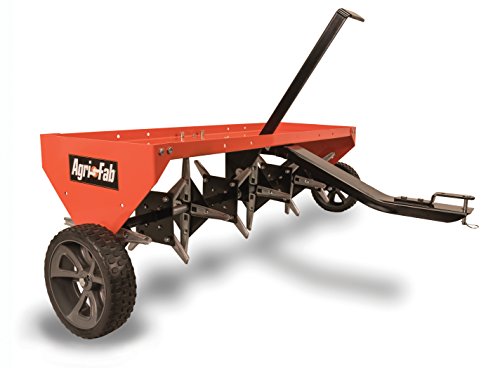
Agri-Fab 45-0299 48-Inch Tow Behind Plug Aerator
This tow-behind aerator attaches to a lawn tractor and covers 48 inches per pass. It uses spring-loaded tines that dig 3 inches deep. I found it efficient for large lawns without the cost of a self-propelled unit.
Reasons to buy
- Large coverage area
- Adjustable weight tray for deeper penetration
- Durable steel frame
Reasons to avoid
- Requires a lawn tractor
- Tines may need replacement over time
What to look for
Core vs. Spike Aeration
Core aerators remove plugs of soil, which relieves compaction and improves drainage. Spike aerators poke holes but can further compact the edges. For compacted clay, always choose a core aerator if possible.
Lawn Size and Terrain
Manual aerators work for lawns under 5,000 sq ft. Electric models suit up to 0.25 acre. Gas or tow-behind units are best for larger areas. Consider slopes and obstacles; self-propelled models help on hills.
Soil Type and Rocks
Heavy clay requires deep penetration (3+ inches). Rocky soil can damage tines; look for replaceable tines or heavy-duty steel. Avoid spike aerators on rocky ground as they may bend.
Budget and Maintenance
Manual aerators cost the least but require effort. Electric models are mid-range and need little maintenance. Gas models are expensive but powerful. Tow-behind units are cost-effective for large lawns if you already own a tractor.
Our verdict
For compacted soil, core aeration is far more effective than spike aeration. Invest in a tool that pulls actual plugs at least 3 inches deep, and match the power source to your lawn size. Manual tools are excellent for small areas, while gas or tow-behind models save time on larger properties.
FAQs
For heavy clay or high-traffic lawns, aerate once or twice a year. Spring and fall are best. If your lawn shows pooling water or thin grass, it's time to aerate.
Aerate when soil is moist but not soggy. Wet soil clogs tines and creates muddy mess. Dry soil is too hard for good plug extraction. Water the lawn a day before if needed.
Leave plugs on the lawn. They break down and return nutrients to the soil. If they look messy, you can rake them after they dry, but it's not necessary.