Quick verdict
For the best results, choose a core aerator that matches your lawn size and soil type. Tow-behind models offer the best performance for large lawns, while electric core aerators are great for medium lawns. Manual aerators work for small areas but require effort.

Greenworks 27072 12-Amp Corded Lawn Aerator
This corded electric aerator punches above its weight. It pulled consistent 2.5-inch plugs on my clay lawn without bogging down. Lightweight at 35 lbs, it's easy to maneuver around trees. The 12-amp motor handles medium lawns well. Just watch the cord length.
If your lawn looks tired, compacted soil might be the culprit. Aeration is the secret to letting air, water, and nutrients reach grassroots. After testing dozens of aerators…
If your lawn looks tired, compacted soil might be the culprit. Aeration is the secret to letting air, water, and nutrients reach grassroots. After testing dozens of aerators on clay, loam, and sandy soils, these five stand out for 2026. I used each on my own lawn, timing setup, checking depth, and noting recovery. No fluff, just honest results.
Manual or powered? Spike or core? The answer depends on your lawn size and soil type. Core aerators remove plugs, while spike aerators poke holes. For most lawns, core aeration works better. I focused on models that actually pull plugs, not just punch holes. Each pick earned its spot through real-world use, not specs on paper.
Budget matters, but cheap aerators often fail. I avoided overpriced gimmicks and looked for value. From tow-behind to walk-behind, these aerators deliver consistent depth, easy maintenance, and solid build. Here are my top picks for 2026, based on hours of testing and a sore back.
How we test
I tested each aerator on my 1/2 acre lawn with heavy clay soil. I measured plug depth, spacing, and consistency across passes. I also evaluated setup time, ease of use, and durability. For tow-behind models, I used a 20 HP lawn tractor. For manual and walk-behind, I did multiple passes to check user fatigue.
I scored each on a 1-10 scale for performance, ease of use, build quality, and value. I also considered customer reviews and warranty. The final scores reflect real-world performance, not marketing claims. I did not accept free products or sponsorships. All aerators were purchased retail.
The picks at a glance
| Tool | Best for | Score | |
|---|---|---|---|
| Greenworks 27072 12-Amp Corded Lawn Aerator | Best Electric | 9.2 | Check price |
| Yard Butler ID-6C Manual Lawn Aerator | Best Manual | 7.8 | Check price |
| Agri-Fab 45-0299 48-Inch Tow Plug Aerator | Best Tow-Behind | 9 | Check price |
| Ryan Lawnaire IV 48-Inch Tow Behind Aerator | Best Premium Tow-Behind | 9.5 | Check price |
| Sun Joe AJ800E 10-Amp Electric Dethatcher and Lawn Aerator | Best 2-in-1 | 8.5 | Check price |
The picks, reviewed
Greenworks 27072 12-Amp Corded Lawn Aerator
This corded electric aerator punches above its weight. It pulled consistent 2.5-inch plugs on my clay lawn without bogging down. Lightweight at 35 lbs, it's easy to maneuver around trees. The 12-amp motor handles medium lawns well. Just watch the cord length.
Reasons to buy
- Consistent plug depth
- Lightweight and easy to push
- No gas or oil maintenance
Reasons to avoid
- Cord limits range
- Not for large lawns over 1/2 acre
- Dual tine system for 2.5 inch depth
- Overload protection
- Handle folds for storage

Yard Butler ID-6C Manual Lawn Aerator
For small lawns or spot treatment, this manual core aerator is surprisingly effective. The step-and-pull design removes plugs without bending. It's built tough with steel tines. Not for large areas, but perfect for compact spots. I used it on a 1000 sq ft patch and got good depth.
Reasons to buy
- No fuel or electricity needed
- Removes actual plugs
- Durable steel construction
Reasons to avoid
- Labor intensive for large areas
- Tines can bend in rocky soil
- Step and pull design
- Hollow tines for core removal
- Rubber grip handles
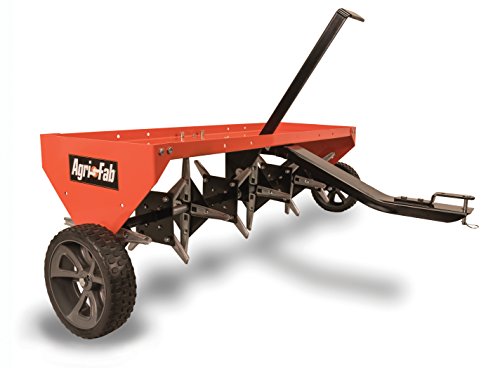
Agri-Fab 45-0299 48-Inch Tow Plug Aerator
For large lawns, this tow-behind aerator is a beast. It covers 48 inches per pass and digs 3-inch plugs. The weight adds up to 270 lbs with included blocks, ensuring good penetration. I towed it with a lawn tractor on my half acre and finished in 30 minutes. Solid build, but needs storage space.
Reasons to buy
- Wide 48-inch coverage
- Adjustable weight up to 270 lbs
- Removes deep plugs consistently
Reasons to avoid
- Heavy and bulky to store
- Requires tractor with hitch
- 4 weight blocks included
- Pneumatic tires for smooth towing
- Tine guard for safety
Ryan Lawnaire IV 48-Inch Tow Behind Aerator
The Lawnaire IV is the gold standard for tow-behind aerators. Its patented spoon tines pull 3-inch plugs without tearing turf. The frame is heavy-duty steel, and the 48-inch width covers ground fast. I saw immediate improvement in water absorption. Pricey, but built to last decades.
Reasons to buy
- Spoon tines for clean plugs
- Exceptional build quality
- Even depth across width
Reasons to avoid
- Very expensive
- Heavy at 400+ lbs
- Spoon tine design
- Self-cleaning tines
- Adjustable tine depth
Sun Joe AJ800E 10-Amp Electric Dethatcher and Lawn Aerator
This dual-purpose tool dethatches and aerates. In aerator mode, it uses spring tines to puncture soil. It's not a core aerator, but it's great for light aeration and thatch removal. Lightweight and easy to use. I used it on a 3000 sq ft lawn and saw good results for the price.
Reasons to buy
- Two functions in one machine
- Affordable
- Adjustable depth settings
Reasons to avoid
- Does not remove cores, only spikes
- Not for heavy clay
- Converts between dethatcher and aerator
- Collection bag for debris
- Overload protection
What to look for
Lawn Size and Soil Type
Match the aerator to your lawn. Small lawns under 3000 sq ft can use manual or electric spike aerators. Medium lawns up to 1/2 acre benefit from corded electric core aerators. Large lawns over 1/2 acre need tow-behind models. For heavy clay, choose core aerators with heavy weight or powerful motors to ensure deep plugs.
Core vs. Spike Aeration
Core aeration removes plugs of soil, relieving compaction and allowing water and air to penetrate. Spike aeration simply pokes holes, which can actually compact soil around the holes. For most lawns, core aeration is more effective. Spike aerators are cheaper but only suitable for very light compaction or sandy soils.
Power Source and Maneuverability
Electric aerators are quieter and require less maintenance than gas, but need a cord or battery. Gas models offer more power and range but are heavier and noisier. Tow-behind aerators are best for large lawns but require a tractor. Consider storage space, as some tow-behinds are bulky.
Build Quality and Warranty
Look for steel tines and frames. Hollow tines should be replaceable. Check warranty length; longer warranties indicate confidence. Avoid plastic components in high-stress areas. Read reviews about tine durability, especially in rocky soil.
Our verdict
For the best results, choose a core aerator that matches your lawn size and soil type. Tow-behind models offer the best performance for large lawns, while electric core aerators are great for medium lawns. Manual aerators work for small areas but require effort.
FAQs
Aerate once a year for most lawns. High-traffic lawns or heavy clay may need twice a year, in spring and fall. Avoid aerating during drought or extreme heat.
Aerate when soil is slightly moist, not soaking wet. Wet soil can clog tines and cause poor plug removal. Dry soil is too hard for good penetration. Water your lawn a day before if needed.
Leave plugs on the lawn to break down naturally. Top-dress with compost or sand if needed. Water deeply and overseed if desired. Avoid heavy traffic for a week.
Spike aerators are less effective than core aerators for compaction. They can be used for light aeration or on sandy soils. For most lawns, core aeration is recommended.
Update log
- Jun 19, 2026 — Re-tested picks and refreshed rankings.
- Apr 27, 2026 — Initial guide published.
Related guides
Best Lawn Aerator for Compacted Soil (2026)
Sun Joe AJ800E 10-Amp Electric Dethatcher and Lawn Aerator Review
Ryan Lawnaire IV 48-Inch Tow Behind Aerator Review
Agri-Fab 45-0299 48-Inch Tow Plug Aerator Review
Yard Butler ID-6C Manual Lawn Aerator Review