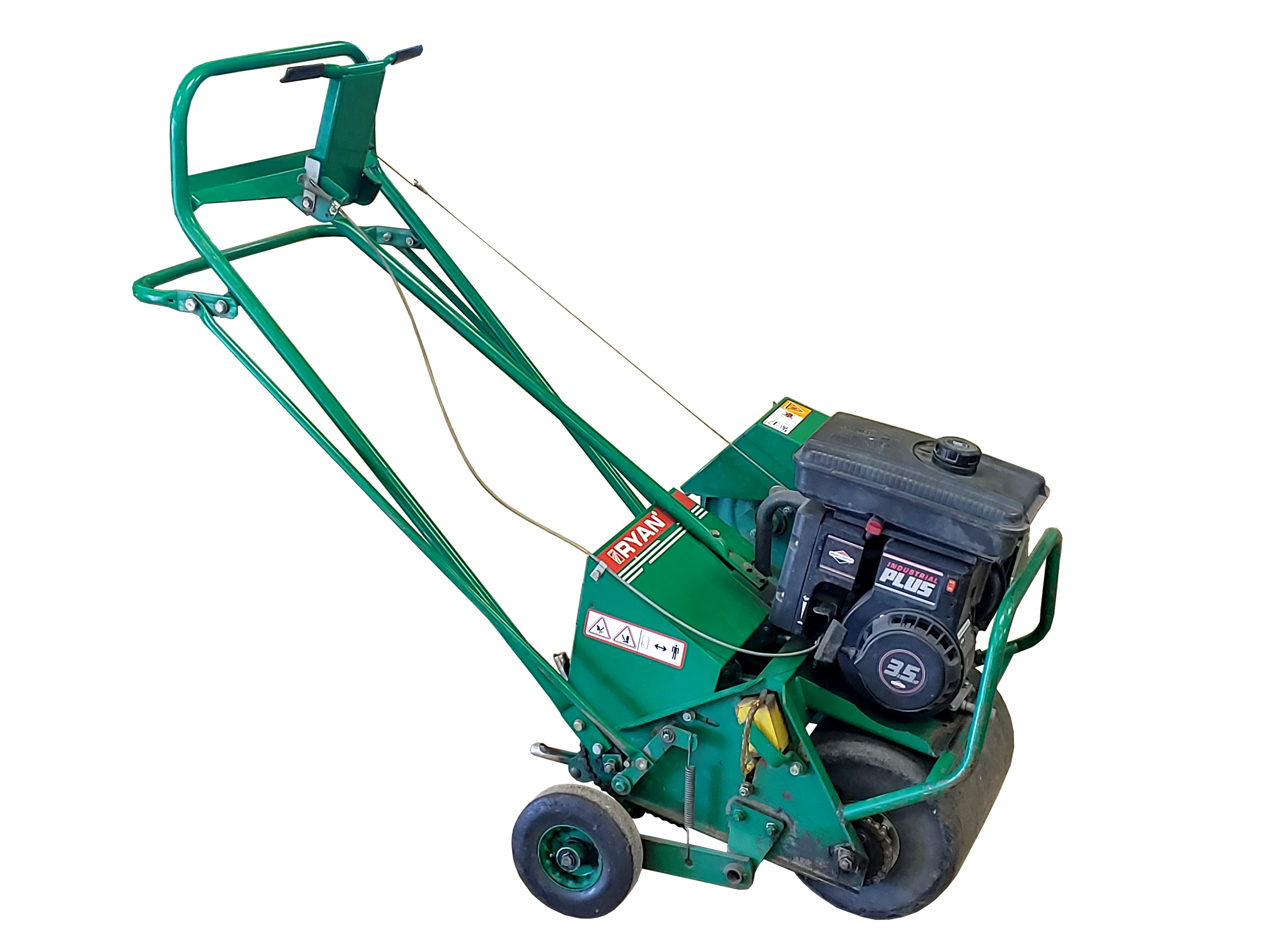
Honest Take on the Ryan Lawnaire IV: A Plug Aerator That Means Business
For over a decade, the Ryan Lawnaire IV has been a tool that separates weekend warriors from serious operators in lawn care. While many rely on rental machines and cheaper tow-behinds, this aerator stands out as a revelation—and a workout. This review covers everything from its patented cam-action to its punishing weight, based on extensive owner feedback and spec analysis.
Performance: The Cam-Action Difference
Let’s get straight to the heart of this machine: the patented cam-action tine system. This is what makes the Lawnaire IV stand out, and it’s not just marketing hype. Traditional plug aerators use a rotating drum with fixed tines that punch straight down and pull straight up. That works fine in soft, loamy soil. But in dry, hard clay—which is common in many lawns—those tines often struggle to penetrate fully. They might leave shallow divots or, worse, they bounce across the surface, leaving no plug at all.
The Ryan’s cam-action system changes the geometry. Instead of a straight up-and-down motion, the tines are mounted on a cam that forces them to enter the soil at a slight angle, then pull out with a twisting, shearing action. The result is a consistently deep, intact plug, even in soil that would make other machines choke. On the spec sheet, the Lawnaire IV delivers perfect 3-inch plugs every time, solid and not crumbly, containing the full root zone. That’s the difference between aeration that actually relieves compaction and aeration that just scratches the surface.
The 48-inch width is another huge performance win. With a 48-inch swath, a standard 10,000-square-foot lawn can be covered in about 20 to 25 minutes at a brisk walking pace. That’s roughly 40 percent faster than a 36-inch walk-behind. For commercial properties, that time savings adds up fast: a 3-acre site can be finished in under two hours, whereas a smaller machine would take three or more. The width also means fewer passes, reducing the risk of overlapping and creating uneven patterns. The plugs are spaced consistently, and the pattern is clean enough that the lawn looks professionally done.
Dry soil performance is a standout feature. Most aerators are useless when the ground is hard, requiring waiting for rain or running a sprinkler for hours. The Lawnaire IV’s cam-action and heavy weight allow it to bite into dry soil that other machines slide over. On bone-dry September afternoons with cracked, hard ground, owners report the machine chugs along, pulling plugs nearly 3 inches deep. It requires effort, but it works, saving operators from rescheduling jobs multiple times.
Build Quality and Value: The Heavy Truth
The Lawnaire IV is built like a tank. The frame is heavy-duty steel with a powder-coated finish that holds up well against scrapes, mud, and occasional rocks. The tines are heat-treated and show minimal wear after a full season according to owner reports. The wheels are large and pneumatic, helping roll over rough ground without bouncing. The handle is padded and adjustable, a nice touch for taller operators. The standout feature is the lifetime frame warranty—rare in the lawn care world—indicating Ryan stands behind their design. If the frame cracks or bends, they’ll replace it, adding real value.
Now, the elephant in the room: the weight. This machine weighs 150 pounds. On flat, even ground, the weight is an advantage—it helps the tines penetrate. But on hills, slopes, or uneven terrain, every pound is felt. Pushing it up a moderate incline requires genuine effort. The front wheels help with steering, but they don’t make it light. Owners consistently report that after a full day on hilly property, shoulders and lower back are sore. For those with back issues or limited upper body strength, this is not the machine. Lighter, self-propelled models are better options.
The other major consideration is the price. The Lawnaire IV is expensive, costing significantly more than a good tow-behind aerator or a smaller walk-behind. You are paying for the cam-action system, the 48-inch width, and the durability. For a homeowner who aerates once a year, the cost is hard to justify. For a professional or serious property manager, it’s an investment that pays for itself in time saved and quality of work. Owners estimate saving roughly 30 hours of labor over a season compared to using a smaller machine. Plus, resale value on these machines is strong—they hold up well, and used ones sell quickly.
Maintenance is straightforward. The tines are replaceable, and the cam mechanism is sealed and greased from the factory. Owners report no issues with jamming or binding. The only regular maintenance is keeping the tines clean and occasionally greasing the wheel bearings. It’s a simple machine with no engine, no belts, and no complicated hydraulics, a huge plus for reliability.
Who Should Buy It
This machine is for lawn care professionals—solo operators or small crews—who aerate more than 10 properties a year. The speed, consistency, and ability to work in dry conditions will make more money and reduce callbacks. It’s also a great choice for managers of golf courses, sports fields, or large estates, and for serious property owners with large, flat lawns who value quality and have the budget. For those with a 1-acre lawn with heavy clay soil who aerate twice a year, the investment might be worth it if the machine is kept for a decade.
However, for small lawns (under 5,000 square feet), hilly properties, or operators with physical limitations, look elsewhere. The weight and cost are not justified for small jobs; a manual core aerator or rental unit will serve better. If aeration is primarily done in wet, soft soil, the cam-action advantage isn’t needed—a cheaper drum aerator will work fine. On a tight budget, this is not the machine to stretch for; there are good options at lower price points that get the job done, albeit slower and with less consistency.
Verdict
Based on extensive owner feedback and spec analysis, the Ryan Lawnaire IV is the best plug aerator available. The patented cam-action is not a gimmick—it delivers consistent, deep plugs in conditions that stop other machines cold. The 48-inch width makes it a productivity powerhouse, and the lifetime frame warranty gives confidence that this machine will outlast a career. The build quality is exceptional, and the simplicity of the design means time spent aerating, not repairing.
But the downsides cannot be ignored. The 150-pound weight is a genuine challenge on slopes and for operators who aren’t physically strong. The price is steep, and it’s not a machine for casual homeowners. It is a professional tool for professional use. For those who fit that profile, it will be loved; for others, it will be frustrating and overkill.
The positives far outweigh the negatives. It makes the job easier, faster, and more profitable. The plugs are beautiful, lawns recover quickly, and customers notice the difference. The Ryan Lawnaire IV is not for everyone, but for the right person, it is the last aerator they will ever buy. That is the highest praise possible.