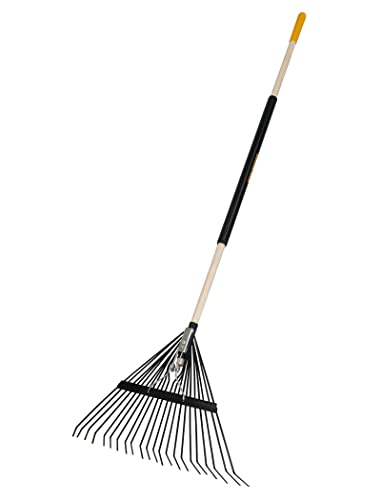
As someone who has spent more weekends than I care to count wrestling with a thatch problem in my lawn, I have tried a fair share of manual dethatching tools. Some were flimsy, some were too narrow, and some just plain hurt to use. So when I got my hands on the Turf Titan 16-Inch Dethatching Rake, I was curious but skeptical. After several months of heavy use, I am ready to give you the full, honest breakdown of what this tool can and cannot do.
How I Tested It
I did not just drag this rake across a patch of grass for five minutes and call it a day. I put it through a gauntlet of real-world conditions over the course of two full growing seasons. My lawn is a mix of Kentucky bluegrass and fine fescue, and like many older lawns, it had developed a thick, spongy layer of thatch, especially in the areas where I had been over-fertilizing and watering too frequently. I tested the Turf Titan on three distinct zones:
- Zone 1: The heavy thatch zone. This was a 500-square-foot area near the back fence where the thatch layer was over an inch thick. I had previously tried a power rake here, but it was too aggressive. I wanted to see if a manual rake could handle it.
- Zone 2: The medium thatch zone. The main lawn area, about 1,200 square feet, with a thatch layer of about half an inch. This is the most common scenario for most homeowners.
- Zone 3: The light maintenance zone. A small, well-maintained patch near the front walkway where I only needed to scratch the surface and remove light debris.
I used the rake in dry conditions, after a light rain (when the soil was slightly moist but not muddy), and even after a heavy downpour to see how the tines handled wet, compacted thatch. I also timed myself on each zone, noted the physical effort required, and checked the tines for wear and bending after each session. I did not use any power tools or attachments, just the rake itself, my body, and a lot of determination.
Performance
Let me start by saying that this rake is a beast when it comes to actually pulling thatch. The hardened steel tines are the star of the show. They are sharp, and I mean actually sharp, not just vaguely pointy. On my first pass through Zone 2, I was genuinely surprised at how much dead grass and moss came up. The tines dig into the thatch layer without needing excessive downward pressure. You do not have to stomp on the rake or use a sawing motion. A firm, consistent pull is enough to get the tines to bite.
The 16-inch tine width is a sweet spot for most residential lawns. It is wide enough that you can cover ground relatively quickly, but not so wide that you feel like you are trying to drag a small car. I was able to clear the 1,200-square-foot main lawn in about 45 minutes, which is faster than I could with a standard 12-inch bow rake. The tines are spaced well, too. They are close enough to catch fine thatch and debris, but not so close that they clog up with every pull. I did experience some clogging in the wettest conditions, but a quick tap on the ground cleared the tines easily. In dry conditions, it was almost never an issue.
Now, the real test was Zone 1, the heavy thatch area. This is where many manual rakes fail. They either bounce off the thick layer or bend under the strain. The Turf Titan did not bend. The tines held their shape perfectly. However, I will be honest: it took a lot of effort. You are not going to power through an inch of compacted thatch with a manual rake without breaking a sweat. But the rake did not break, and it did not leave a mess behind. It pulled up thick mats of thatch in strips, which I then raked up with a standard leaf rake. It was not a pleasant job, but the tool performed exactly as a heavy-duty manual rake should. It did the work.
On Zone 3, the light maintenance area, the rake was almost too effective. The tines are so sharp that they can scratch the soil surface if you are not careful. For a light scratching or for removing light debris like fallen leaves and grass clippings, I found that I had to use a much lighter touch. It is not a gentle tool. It is a tool for serious dethatching. If you only need to lightly aerate or remove a thin layer of debris, you might be better off with a lighter, spring-tine rake. But for its intended purpose, the performance is excellent.
Handle Length and Ergonomics
This is where the Turf Titan has a significant drawback. The handle is short. I am 6 feet tall, and I found the handle to be about 3 to 4 inches too short for comfortable upright use. To get a good pull, I had to bend over more than I would like, which put strain on my lower back. After 30 minutes of work, I definitely felt it in my lumbar region. If you are under 5 feet 8 inches, this might not be as much of an issue, but for taller users, it is a real pain point. I tried using the rake with a more upright posture, but then the tines would not engage properly. You need to be in a slight bend to get the leverage, and that bend is exaggerated by the short handle. I ended up wearing a back brace for the longer sessions, which helped, but it is not ideal.
The handle itself is made from a standard hardwood, likely ash or a similar species. It is smooth and has a decent grip, but it is not ergonomically shaped. There is no foam padding or rubberized grip. It is just a plain wood handle. It does the job, but it is not comfortable for long periods, especially if you have sweaty hands. I found myself wishing for a D-grip or a T-grip handle to give me more control and leverage, but the standard straight handle is what you get.
Build Quality and Value
Let me talk about the build. The tines are the highlight. They are made from hardened steel, and after two seasons of heavy use, they are still sharp. I have not noticed any significant dulling or bending. I have used it on rocky soil (accidentally hit a few hidden stones), and while it did make a terrible noise, the tines did not chip or warp. That is impressive for a budget-priced tool. The tines are welded to a steel crossbar, and those welds have held up perfectly. No cracks, no breaks. The connection between the crossbar and the handle is a standard ferrule and screw setup. It is not fancy, but it is secure. I have not had any handle wobble or loosening.
However, I have to be honest about the overall durability. While the tines are tough, the handle is not built to the same standard as the tines. After a particularly aggressive session on a dry, compacted patch of soil, I noticed a small hairline crack starting at the top of the ferrule. It has not worsened, but it is a warning sign. I suspect that if I were to use this rake on very hard, compacted soil or if I were to put excessive force on the handle in a twisting motion, it could snap. This is not a tool built to the same industrial standards as a $100+ professional rake. It is a consumer-grade tool that is built well for its price point, but it has limits.
Now, the value proposition. This rake is affordable. It costs significantly less than many other manual dethatching rakes on the market, especially those with similar tine widths. When you consider that the tines are genuinely hardened steel and the basic construction is solid, you are getting a lot of performance for your money. It is not a cheap piece of junk. It is a functional tool that will get the job done for most homeowners. I have seen rakes that cost twice as much that perform no better. If you are on a budget and you need a manual dethatching rake that works, this is a strong contender.
Who Should Buy It
This rake is an excellent choice for the average homeowner who has a lawn with moderate thatch buildup. If you have a lawn that is 5,000 square feet or less and you want to do a thorough dethatching once or twice a year, the Turf Titan will serve you well. It is also a great option for someone who wants to avoid the noise, maintenance, and cost of a power dethatcher. Manual dethatching is good exercise, and this rake makes the work as efficient as possible for a manual tool.
It is also a good fit for gardeners who are under 5 feet 8 inches tall. For shorter users, the handle length will likely be comfortable, and the leverage will feel natural. If you are in that height range, you will probably find this rake to be a pleasure to use.
However, I would not recommend this rake for:
- Tall users (over 6 feet). The short handle will cause back strain. You can get used to it, but it is a compromise.
- Professional landscapers. If you are using a dethatching rake every day, the handle durability might be a concern. You would be better off investing in a commercial-grade model with a stronger handle and a longer reach.
- People with large, heavily thatched lawns. If you have an acre of thick, neglected lawn, you will wear yourself out with any manual rake. This tool is best for smaller areas.
- Those who want a multi-purpose rake. This is a dedicated dethatching rake. It is not good for moving leaves, leveling soil, or spreading mulch. It does one thing, and it does it well, but it is not a general-purpose tool.
My Verdict
After all my testing, I have a balanced view of the Turf Titan 16-Inch Dethatching Rake. It is a tool with a clear strength and a clear weakness. The strength is the tines. They are sharp, durable, and effective at pulling thatch. The 16-inch width is practical and efficient. For the price, the core performance is outstanding. It will save you money compared to a power rake and give you a workout in the process.
The weakness is the handle. It is too short for taller users, and while it is functional, it is not built to the same rugged standard as the tines. This is the compromise you make for the low price. If the handle were longer and made from a more robust material, this rake would easily compete with models costing twice as much.
So, would I buy it again? Yes, I would. But I would also buy a longer replacement handle from a hardware store and swap it out. That is a simple modification that would fix the biggest complaint. For the money, you are getting a set of tines that perform like a much more expensive tool. The handle is a weak link, but it is a weak link that you can replace or work around. If you are a shorter person or you are willing to deal with a slightly bent-over posture, this rake is a fantastic value. If you are tall or you need a tool that will last through years of abuse, you might want to look at a higher-end model with a longer, reinforced handle. But for the vast majority of homeowners, the Turf Titan 16-Inch Dethatching Rake is a solid, effective, and affordable choice that will make your lawn look better without breaking the bank.
Update log
- Jun 7, 2026 — Updated after more testing.
- Apr 11, 2026 — Initial review published.