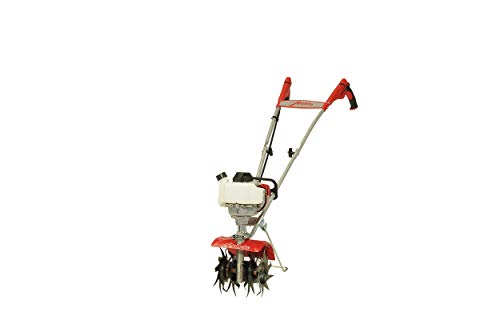
Quick verdict
A 212cc 4-cycle rear tine tiller with four 13-inch counter-rotating tines, a 20-inch width, up to 6.5 inches of depth, forward and reverse drive and 13.5-inch tractor wheels, shipped with its gear oil prefilled and engine oil in the box. It suits anyone breaking new ground or working packed clay. The caveat is that weight and horsepower are not stated and the brand has a thinner parts network than Troy-Bilt or Husqvarna.
Strengths
- Counter-rotating tines built for breaking new ground
- 212cc 4-cycle OHV engine with no fuel mixing
- Forward and reverse drive
- 13.5-inch tractor-style wheels with a neutral setting
- Gear oil prefilled and engine oil supplied
- Built-in depth regulator
Weaknesses
- Weight and horsepower are not stated
- Slower than forward-rotating tines in loose soil
- Value-brand parts and dealer network
- Heavy to move and store like any rear tine tiller
The overall YardToolLab Score is out of 100. Section scores are out of 10.
Who this tiller is for
Breaking a new garden bed out of lawn or hard-packed ground is the job that defeats front tine tillers; they bounce, they walk forward and they leave the operator holding them back. A rear tine tiller with counter-rotating tines digs in instead. The Pulsar 212cc 20-inch tiller is a budget entry in that class: a 4-cycle OHV engine, four 13-inch counter-rotating steel tines, forward and reverse drive, and 13.5-inch tractor-style wheels. It is for the homeowner opening a new vegetable plot or reworking a large bed each spring who does not want to rent.
This review is based on the maker’s published specifications and on recurring owner feedback. We have not run this product ourselves.
What you get
The tiller with its 212cc engine, four 13-inch tines giving a 20-inch tilling width and up to 6.5 inches of depth, forward and reverse controls, a built-in depth regulator, and 13.5-inch wheels with cotter-pin settings for drive and neutral. Pulsar ships it with a quart of 85W140 gear oil already in the transmission and a bottle of 10W-30 engine oil to add before the first start. Not stated in the listing: weight, horsepower, fuel tank size or whether assembly beyond the handlebar is needed. Rear tine tillers in this class are typically heavy, two-person items to unload from a vehicle.
Tilling performance
Counter-rotating tines turn against the direction of travel, so instead of pulling the machine forward they dig down and chew, which is exactly what new ground and clay want. A 212cc 4-cycle engine is the standard displacement in budget rear tine tillers and has adequate torque for a 20-inch width when you let the machine work at its own pace. The 6.5-inch depth figure is the maker’s maximum; on virgin ground expect two or three passes to get there, the first shallow and each one deeper as the depth regulator is lowered. Owners of counter-rotating tillers consistently note that they are slower than forward-rotating designs in already-loose soil, and that is the trade: superb at breaking ground, overkill for weekly cultivating between rows.
Drive, depth and controls
Forward and reverse drive is what separates a rear tine tiller from a push machine. Forward lets the wheels pull the tiller at a controlled pace while the tines dig; reverse backs it out of a corner or a tangle of roots without lifting. The 13.5-inch tractor-style wheels give traction on soft, turned soil, and the cotter-pin neutral setting lets the wheels freewheel for moving the machine across the yard with the engine off, though it is still a heavy push. The built-in depth regulator is a drag bar that sets how deep the tines bite and how fast the machine moves; lower it progressively rather than dropping to full depth on the first pass.
Build, handling and ergonomics
Pulsar is a value brand best known for generators, and this tiller sits at the budget end of the rear tine market. The tines are heavy-duty steel per the listing and the gearbox is prefilled with proper 85W140 gear oil, which is a good sign. A recurring theme in owner feedback on budget rear tine tillers in general is that the engine is sound while the sheet metal, cables and handle hardware are where corners are cut, so check bolts after the first hour and keep the cables adjusted. Weight is not stated; plan for a substantial machine that is not easy to lift.
Living with it
Fill the engine with the supplied 10W-30 before the first start, change it after the break-in period in the manual, and check the gear oil level each season. Use fresh fuel with stabilizer and run it dry before winter. Clean the tines after use because dried clay around the tine shaft is the start of seal problems. Warranty terms are not quoted in the listing; check the product page and keep the receipt.
Alternatives to Consider
The Champion 19-inch dual rotating rear tine tiller offers both forward and counter rotation for breaking ground and then cultivating with the same machine. The Troy-Bilt Pony is the long-established mid-priced rear tine tiller with a dealer network for parts. For an existing bed that only needs loosening each spring, a 40V or 80V cordless cultivator from Greenworks is lighter, quieter and much easier to store.
Verdict
Buy the Pulsar 212cc rear tine tiller if you are opening new ground or dealing with packed clay, you want counter-rotating tines and reverse at the lowest cost of ownership, and you have space to store a heavy machine. Skip it if your beds are already worked and only need light cultivating, where a front tine or cordless cultivator is faster and easier, or if you want a stated weight and a dealer network before buying.
Full specifications
Pulsar 212cc 20-Inch Gas Rear Tine Tiller with Forward and Reverse FAQs
The tines turn against the direction of travel, so they dig down rather than pull the machine forward. It is the better design for breaking new ground and hard clay, and slower in loose soil.
Pulsar rates it for up to 6.5 inches, set with the built-in depth regulator. On new ground reach that in two or three progressively deeper passes rather than one.
The gearbox arrives prefilled with 85W140 oil. The engine ships with a bottle of 10W-30 that you add before the first start; running it without is the fastest way to ruin it.
The listing does not state a weight. Rear tine tillers of this size are heavy machines that take two people to unload, and the neutral wheel setting helps when moving it with the engine off.