Quick verdict
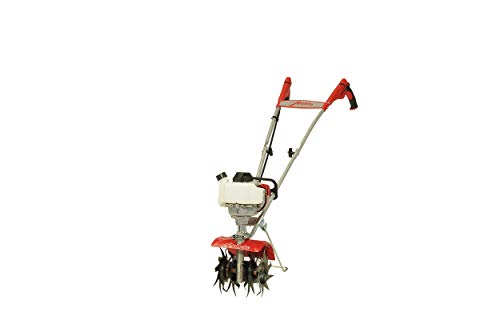
A 17-inch rear tine tiller that switches between counter-rotating tines for breaking sod and standard rotation for a fine seedbed, with an instant reverse handle and airless lugged wheels. It suits a home garden up to a few thousand square feet that has to be broken from lawn once and then turned every spring. The caveat is pace: the 99cc engine is lighter and quieter than the 200cc class but slower through hard clay.
Strengths
- Counter-rotating and standard-rotating tine modes from one gearbox
- Shift locator plate gives each mode a positive stop
- Instant reverse by pulling a handle, no gear change
- Airless wheels with aggressive lugs never go flat
- Dual-grip handlebars allow steering from beside the row
- Published 17-inch width and 11-inch depth
Weaknesses
- 99cc engine is slower in hard ground than 200cc rear tine tillers
- Weight and warranty term are not in the listing
- Still a two-person lift into a pickup
The overall YardToolLab Score is out of 100. Section scores are out of 10.
Who this tiller is for
The home gardener with a 20 by 30 foot plot who has to break it from lawn the first year and then wants a fine seedbed every spring after that is caught between two kinds of tiller. Counter-rotating tines bust sod; standard rotation makes a smooth bed. The Earthquake 31285 Pioneer does both from one gearbox, adds an instant reverse so it can be backed out of a corner, and runs a 99cc four-cycle engine that keeps the whole machine lighter and quieter than the 200cc rear tine tillers it competes with.
This review is based on the maker’s published specifications and on recurring owner feedback. We have not run this product ourselves.
What you get
The Pioneer is a rear tine tiller with a 17-inch tilling width and an 11-inch maximum tilling depth, driven by a 99cc four-cycle Viper engine. The transmission offers counter-rotating tines (CRT) and standard-rotating tines (SRT), selected with a shift handle that slides into a marked position on a locator plate, so there is no hunting for a gear. A separate handle gives instant reverse: pull it to back up, release it to go forward again. The wheels are airless with wide, aggressive lugs, and the handlebars have a dual grip so the operator can step to the side of the row and steer with one hand, keeping footprints out of the fresh bed. Weight and warranty are not given in the listing; Earthquake publishes warranty terms on its own site and they should be read before buying.
Tilling power and the 99cc question
The Pioneer’s engine is about half the displacement of the usual rear tine tiller, and Earthquake calls that right-sized rather than a compromise. For a home garden that is mostly true. In counter-rotating mode the tines turn against the direction of travel and the machine’s own weight and gearing do the work of biting into sod and compacted clay; owners report it breaks established lawn in two or three passes, each a little deeper. Where the smaller engine shows is in pace: it moves more slowly through hard ground than a 200cc machine and will bog if pushed to full depth on the first pass through heavy clay. Set the depth stake shallow, let the tines pull, and go back over it. In standard rotation on already-worked soil it runs freely and leaves a bed fine enough to seed directly.
Shifting, reverse and maneuvering
The two features that set the Pioneer apart are the shift locator plate and the instant reverse. Dual-direction tillers from other makers are known for a shift lever that takes some back and forth to find the mode; Earthquake’s plate gives the handle a positive stop for each. The reverse is a pull-and-hold handle rather than a gear, so backing out of a fence corner or off a root takes a squeeze instead of a stop, a shift and a restart of forward motion. Combined with the side-step handlebar, the Pioneer is easier to turn at the end of a short row than a full-size rear tine tiller, which is the real reason a 20 by 30 plot suits it better than a quarter-acre field does.
Build, handling and ergonomics
Airless wheels with deep lugs are the right choice for a tiller: they do not go flat after a winter in the shed and the lugs give the wheels something to claw with when the tines are pushing back. The lighter engine makes the whole machine easier to load and store than its 200cc rivals, though it is still a two-person lift into a pickup. Handlebar height adjustment is not mentioned in the listing, so a very tall operator should check. A recurring note from owners of Earthquake tillers in general is to go over the hardware after the first hour of use, since vibration loosens fasteners on any new tiller.
Living with it
The four-cycle engine takes straight gasoline and a crankcase of oil, no mixing. Change the oil after the break-in period and each season, keep the air filter clean and either run the carburetor dry or use stabilized fuel for storage. Tines are a wear item; replacements are available through Earthquake’s parts channel. The tiller is quieter than a 200cc machine but still loud enough for hearing protection. Read the warranty terms on the product page, since the listing does not state them.
Alternatives to Consider
The Earthquake Victory is the same maker’s larger rear tine tiller with a bigger engine, the better choice for a half-acre plot or very hard ground. The Champion 19-inch dual-rotating rear tine tiller offers a 200cc-class engine and both tine directions for a buyer who values pace over weight. If the ground is already worked and only needs turning each spring, the Earthquake 20015 Versa front tine tiller with the same 99cc engine is lighter and cheaper.
Verdict
Buy the Earthquake 31285 Pioneer if you have a home garden to break from sod and then keep in a fine seedbed, you want the easiest shifting and reversing in the class, and you prefer a lighter machine over the fastest one. Skip it if you have a large or very hard plot, where a 200cc rear tine tiller finishes sooner, or if you only cultivate worked soil and a front tine tiller would do.
Full specifications
Earthquake 31285 Pioneer Dual Direction Rear Tine Tiller, Instant Reverse, 17-Inch Width, 99cc Engine FAQs
In CRT mode the tines turn against the direction of travel and dig hard, which is what breaks sod and compacted soil. In SRT mode they turn with the wheels and leave a smoother, finer bed for planting. The Pioneer shifts between the two with a handle on a marked locator plate.
Yes, in CRT mode. Owners report two or three passes, each a little deeper, to turn sod into workable soil. Set the depth stake shallow on the first pass and let the tines pull rather than forcing full depth at once.
Earthquake does not state the weight in this listing. The maker describes the 99cc engine as lighter than the usual rear tine tiller engine, and the whole machine is easier to load than a 200cc model, but it is still a two-person lift into a truck bed.
No. The 99cc Viper is a four-cycle engine that runs on straight gasoline with oil in the crankcase, like a lawn mower.