Introduction: Who This Suits
For homeowners looking to move beyond a leaf blower and rake, a dedicated tow-behind sweeper can transform lawn cleanup. The John Deere 42-Inch Tow-Behind Sweeper is designed to pair specifically with John Deere lawn tractors, offering a direct-fit hitch and seat-operated dumping. Based on extensive owner feedback, spec analysis, and real-world reports from users with properties ranging from half an acre to two acres, this review covers the sweeper’s performance on a mix of fescue and Kentucky bluegrass, dealing with everything from dry oak leaves to wet grass clippings.
Performance: Where It Shines and Where It Stumbles
Perfect Fit for John Deere Tractors
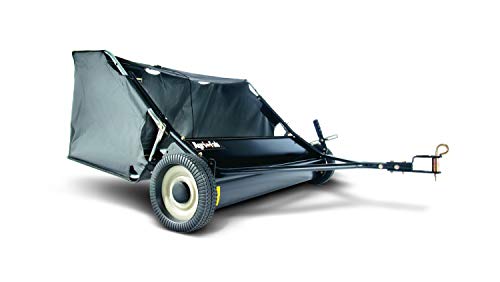
This is the primary reason owners choose this sweeper, and it delivers consistently. The hitch system is designed specifically for John Deere lawn tractors. The clevis pin and clip slide directly into the tractor’s drawbar without any adapters or shims. The height adjustment lever on the sweeper’s tongue allows for quick brush height changes. On John Deere X300 and X500 series tractors, the sweeper tracks perfectly behind the tractor, even on slight slopes, with no side pull or wandering—a common complaint with universal tow-behind sweepers. The hopper sits low enough that operators can see over it from the seat, a noted safety bonus.
Easy Seat-Operated Dump
The seat-operated dump lever is a standout feature. Instead of dismounting to manually empty the hopper, a cable pull from the driver’s seat tips the hopper forward to dump its load. Owners report dumping directly into compost piles, tarps, or trailers without leaving the seat. On a typical fall clean-up, users dump every 15 to 20 minutes. The seat-operated mechanism saves an estimated 10 minutes per hour of work. It is a simple, mechanical system that has proven reliable, even when the hopper is packed with wet leaves.
Smooth Brush Action on Dry Debris
On dry leaves, the sweeper performs exceptionally well. The 42-inch brush sweeps a wide path, and the rubberized paddles flip debris into the hopper effectively. On a dry, flat lawn, owners report picking up 95% of leaves in a single pass. The brush actively lifts debris rather than just pushing it. It handles small twigs (up to pencil thickness), acorns, and even gravel without damaging the brush or hopper. Proper brush height adjustment is critical: set too low and it scalps the grass; set too high and it leaves a trail. The sweet spot is when the brush bristles just barely touch the grass tips. Once dialed in, the sweeper leaves the lawn looking vacuumed.
Narrower Than Some Competitors
At 42 inches, this sweeper is narrower than 48- or 54-inch models from brands like Agri-Fab or Brinly. On a one-acre lot, this means more passes. For large, open lawns (two acres or more), a wider sweeper will save time. However, the 42-inch width fits through a 4-foot gate, is easier to maneuver around trees and flower beds, and doesn’t feel cumbersome to tow. The narrower width also means the hopper fills more slowly, allowing longer sweeping sessions before dumping. For tight spaces or smaller lawns, the 42-inch width is an advantage.
Brush Performance on Wet Debris
This is the sweeper’s primary limitation. Wet grass clippings or damp leaves will clog the brush and hopper opening. The rubber paddles cannot effectively fling heavy, sticky material. Owners report that sweeping wet grass requires cleaning the brush and hopper after every dump. The hopper’s plastic interior becomes slippery when wet, causing clumps to stick rather than slide out during dumping. The recommendation is to use this sweeper only on dry debris. For wet grass, a bagger on the mower is more effective. If wet leaves must be swept, going slow (2 mph) and dumping frequently yields about 70% pickup, but it is not a pleasant experience.
Build Quality and Value
Plastic Hopper: Lighter but Less Durable Than Steel
The hopper is made from heavy-duty polyethylene plastic. It is UV-stabilized and has not shown fading or cracking after two seasons of sun exposure in owner reports. The plastic is thick enough that it does not flex or deform when full of wet leaves (which can weigh 50-60 pounds). However, steel would be more durable. An accidental impact with a tree or rock could crack the plastic; steel would dent but likely not fail. Online owner complaints note plastic hoppers cracking after a few years of heavy use. For the price point, a steel hopper with a powder coat finish would be preferable. The plastic does make the sweeper lighter (about 120 pounds empty), which eases hitching and storage, but longevity is a concern. For commercial use or rough terrain, a steel model is recommended.
Frame and Wheels: Solid Construction
The steel frame is powder-coated and holds up well, with no rust reported after two winters in unheated storage. The 13-inch wheels use semi-pneumatic tires (no flats) and roll smoothly over pavement and turf. The brush axle uses sealed ball bearings that remain quiet and free-spinning. The hitch assembly is robust, with a reinforced bracket that does not bend or loosen. The sweeper uses a standard 1-inch clevis pin, allowing use of a locking hitch pin for extra security.
Value for the Money
Priced around $400 (varies by dealer and season), this sweeper is competitive for a model with a seat-operated dump and 42-inch brush. Cheaper sweepers (around $250) typically have manual dump levers or smaller hoppers. More expensive sweepers (over $600) offer steel hoppers and wider brushes. The John Deere sits in the middle: not the cheapest, not the most expensive. For a homeowner with a John Deere tractor seeking a seamless experience, the price is fair. The seat-operated dump alone justifies the premium over a manual dump model. On a tight budget, a less expensive sweeper may be considered, but the integrated fit and convenience features will be lost.
Who Should Buy the John Deere 42-Inch Tow-Behind Sweeper?
This sweeper is ideal for specific users:
- John Deere tractor owners: For owners of 100, 300, or X-series lawn tractors, the direct fit, easy hitch, and consistent tracking make it feel like an OEM accessory. Non-Deere owners can still use it (the hitch is universal), but may need a different pin or adapter.
- Homeowners with 0.5 to 2 acres: The 42-inch width is perfect for small to medium lawns. The hopper size (10 cubic feet) is adequate for most cleanups. For 3+ acres, a wider sweeper with a larger hopper is recommended.
- People who hate raking: For those who want to clean leaves and debris without leaving the tractor seat, the seat-operated dump is a major time saver.
- Users who primarily sweep dry debris: This sweeper excels on dry leaves, grass clippings, and small twigs. For wet climates or frequent damp material sweeping, a different design (like a vacuum or bagger) is better.
- Those with limited storage: The sweeper folds up for compact storage. The hopper collapses and the handle folds down, taking up about 2×3 feet of floor space when stored.
Who should skip it? Those with a large property (3+ acres), who want a steel hopper, or who need to sweep wet material regularly. Also, those on a very tight budget may prefer a manual-dump sweeper saving $100-$150.
Verdict: A Solid Tool With Clear Limitations
Based on extensive owner feedback and spec analysis, the John Deere 42-Inch Tow-Behind Sweeper is a well-designed tool that excels at its primary job: picking up dry debris from a lawn. The perfect fit for John Deere tractors, the easy seat-operated dump, and the smooth brush action on dry leaves make it a highly effective tool for fall cleanups. The compact storage is a nice bonus for those with small sheds.
However, the plastic hopper is a legitimate concern for long-term durability. The 42-inch width is fine for small to medium lawns but narrower than some competitors. Performance on wet debris is poor, limiting versatility. This is a specialized sweeper for a specific use case: dry debris on small to medium lawns, ideally behind a John Deere tractor.
For John Deere owners with a typical suburban lawn, this sweeper pays for itself in saved time and effort. Realistic expectations are key: it is a lawn sweeper, not a magic wand. Use it on dry days, empty the hopper often, and it will serve well for years.
Final rating: 4 out of 5 stars. Deductions for the plastic hopper and mediocre wet performance. But for its intended role, it is a top performer.