How to run a catch cup test to measure your sprinkler's real output rate and coverage evenness, step by step, with no special equipment needed.
A catch cup test, also called a catch can test, is the standard way to find out exactly how much water your sprinkler actually delivers and how evenly it spreads that water across your lawn. It takes about half an hour and needs nothing more than identical straight-sided containers, a ruler, and a working sprinkler.
Why guessing sprinkler output does not work
A sprinkler’s stated flow rate or box label tells you almost nothing about what your lawn actually receives, because real-world output depends on your water pressure, nozzle wear, spacing, and overlap with neighboring heads or pattern. Two identical sprinklers on two different homes can deliver noticeably different amounts of water. A catch cup test measures your actual setup instead of relying on a manufacturer estimate.
What you need
- 6 to 10 identical straight-sided, flat-bottomed containers of the same size, such as tuna cans, cat food cans, or purpose-made rain gauges. Straight sides matter because tapered cups distort the depth reading.
- A ruler or measuring tape marked in tenths or sixteenths of an inch.
- A timer or stopwatch.
- Your sprinkler and hose or irrigation zone, set up exactly as it runs normally.
Step 1: Place the cups across the watering pattern
Set the cups out in a grid or straight line across the area the sprinkler covers, spacing them evenly from close to the sprinkler head out to the edge of its throw. For an oscillating sprinkler, place cups along the full length of the fan pattern since output typically varies from the center to the ends. For a rotor or impact sprinkler covering a circle, place cups along a line from the head out to the maximum radius.
Step 2: Run the sprinkler for a fixed, known time
Turn on the sprinkler and let it run for a set period, commonly 15, 20, or 30 minutes. Keep the time consistent across the whole test since you will use it to convert the collected depth into an hourly rate. Avoid research on a windy day, since wind will blow the pattern off the cups and skew your results.
Step 3: Measure the depth in each cup
After the timer stops, measure the water depth in each cup with your ruler, recording each reading to the nearest sixteenth or tenth of an inch. Do this immediately, before evaporation or spillage changes the readings.
Step 4: Calculate the average output rate
Add up all the depth readings and divide by the number of cups to get the average depth collected during your test period. Then convert to an hourly rate: if your test ran 20 minutes and the average depth was one sixth of an inch, multiply by 3 to get roughly 0.5 inches per hour. Use this hourly figure with our lawn watering time calculation guide to set an accurate run time going forward, or plug it directly into how long you should run the sprinkler per our sprinkler run time guide.
Step 5: Check uniformity, not just the average
The average tells you how much water fell overall, but the spread between your highest and lowest cup readings tells you how evenly it fell. A large gap between the wettest and driest cups means parts of your lawn are being overwatered while others are underwatered, even though the average looks fine. Significant unevenness usually points to incorrect spacing between sprinkler heads, wind distortion, low or fluctuating pressure, a worn or partially clogged nozzle, or a sprinkler that is not rotating through its full pattern; see our guides on a stuck oscillating sprinkler or a non-rotating impact sprinkler if a specific area consistently reads dry.
What to do with uneven results
If certain cups consistently read much lower, try adjusting the sprinkler’s position, overlapping the pattern of a second sprinkler head to cover the gap, or switching to a sprinkler style better suited to your lawn’s shape, such as the options in our sprinklers for narrow and rectangular lawns guide. Retest after any adjustment to confirm the change actually improved coverage rather than assuming it did.
How often to repeat the test
A catch cup test is not a one-time chore. Nozzles wear, sprinkler heads drift out of alignment after being bumped, and your household water pressure can shift over time. Repeating the test once or twice a growing season, and again any time a section of lawn looks noticeably drier or greener than the rest, keeps your watering schedule based on real, current data instead of an assumption from months earlier.
How we research
We compare published manufacturer specifications, official manuals, warranty information and recurring owner feedback. Rankings are research-based unless original YardToolLab test evidence is explicitly shown on the page.
FAQs
Tuna cans, cat food cans, or any identical straight-sided, flat-bottomed containers work well. Avoid tapered cups or bowls, since their shape distorts the depth reading and makes results inconsistent between containers.
Six to ten cups spread across the sprinkler's coverage area is generally enough for a residential lawn. More cups improve accuracy, especially for spotting uneven coverage, but even a handful placed thoughtfully gives a useful estimate.
Fifteen to thirty minutes is typical. The exact duration matters less than keeping it consistent and known, since you will use that time to convert the collected depth into an inches-per-hour rate.
Uneven catch cup readings mean your sprinkler is not distributing water evenly, often due to incorrect head spacing, wind, low pressure, a clogged nozzle, or a mechanism that is not moving through its full pattern. Some areas of your lawn are likely getting too much water while others get too little.
Related guides
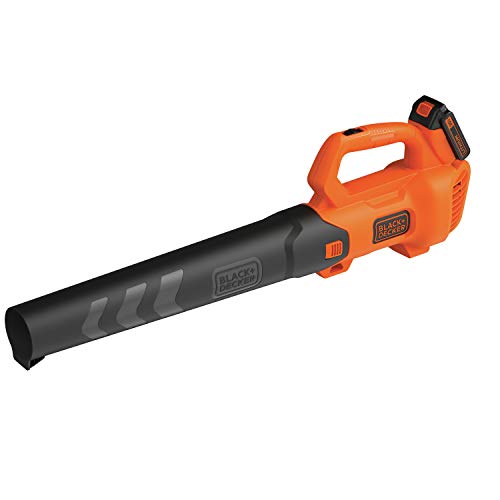
Leaf Blower Buying Guide for Beginners: Three 20V Kits With Battery and Charger in the Box

Budget Oscillating Sprinklers That Still Adjust: Melnor Turbo 2800, Eden Essential and Eden Metal

Small Yard? These Three Oscillating Sprinklers Dial Down to a Strip of Lawn

Lightweight Cordless Lawn Mowers: Three Models at 21, 22 and Under 30 Pounds

Cordless Lawn Mowers for Beginners: Three Complete Kits That Start With a Button

Garden Insect Netting for Raised Beds Buying Guide: Three Fine-Mesh Covers That Fit a 4×8 Bed

Short on Space? The Three Best Compost Tumblers for Small Spaces, All 18.5 Gallons
