A leaf blower is the safest way to clear leaves from artificial turf without disturbing the infill. Here is the right technique and what to avoid.
A leaf blower is actually the recommended tool for clearing leaves off artificial grass, more so than raking, because it removes debris without disturbing the infill material or stressing the turf fibers the way a stiff rake can. The technique differs slightly from clearing a natural lawn, mainly around throttle setting, direction of travel, and avoiding sustained heat exposure on the synthetic fibers.
Why Raking Is Riskier Than It Looks
Artificial turf systems rely on an infill layer, typically sand, crumb rubber, or a mix of both, sitting between the fibers to keep them upright and provide cushioning. A metal-tined rake can drag infill material out of place, displace it unevenly, or in worse cases snag and pull at the turf fibers themselves, gradually flattening or damaging sections of an otherwise durable surface. A leaf blower’s airflow moves debris off the top of the turf without physically contacting or dragging across the fiber layer, which is why most artificial turf manufacturers recommend blowers over rakes for routine leaf and debris removal.
Choosing the Right Throttle Setting
Full throttle is rarely necessary for turf and can be counterproductive, since very high velocity air aimed directly down at close range can occasionally disturb lighter infill materials like sand, similar to the way full power can scatter loose gravel. A low to medium throttle setting is normally enough to lift and move dry leaves off the surface, and it is gentler on the infill layer underneath. If the turf area is small, a handheld blower rather than a backpack unit typically offers enough airflow while giving better close-range control.
Work With the Grain of the Turf
Artificial grass fibers are manufactured with a slight directional lay, similar to natural grass after mowing in one direction. Blowing leaves in the same direction as this grain, rather than against it, moves debris more efficiently and helps keep the fibers looking upright and consistent rather than repeatedly pushing them the opposite way they are designed to sit. If you are unsure which direction the grain runs, look at the turf from a low angle in different directions, the grain is usually visible as a subtle sheen difference depending on viewing angle.
Avoid Concentrated Heat on One Spot
Gas leaf blowers produce warm exhaust air in addition to the intake airflow, and holding a running gas blower stationary directly over one section of turf for an extended period can, in rare cases, contribute to localized heat buildup on synthetic fibers, which are more heat sensitive than natural grass. Keeping the blower moving steadily across the surface rather than hovering in one place avoids this entirely and is good practice regardless of turf material, since sustained concentrated airflow in one spot is inefficient for actually clearing leaves too.
Handling Wet Leaves on Turf
Leaves that have gotten wet and stuck to artificial turf behave similarly to wet leaves on any other surface, requiring more airflow velocity to break the surface adhesion before they can be moved. The same higher CFM and MPH combination that helps with moving wet leaves generally applies here, though it is worth using a slightly lower throttle than you might on concrete or grass to protect the infill, and accepting that stubborn wet leaves on turf may need a light hand-picking pass in addition to blowing.
Frequency of Cleanup Matters
Clearing leaves off artificial turf promptly, rather than letting them accumulate over weeks, makes each cleanup session faster and reduces the chance of leaves decomposing directly against the fibers, which can occasionally cause staining on lighter-colored turf if left long enough. A quick pass every few days during heavy leaf drop season is generally easier on both the turf and the operator than a single large cleanup once leaves have piled up for an extended stretch, since a thin, fresh layer of leaves responds to airflow far more easily than a thick, settled one.
Choosing a Blower for Regular Turf Maintenance
For a small to medium artificial lawn used mainly for leaf and light debris cleanup, a compact handheld blower with variable speed control is usually the most practical choice, offering enough airflow for the job while keeping close, controlled handling around turf edges and borders. This is one of several situations, alongside general small-yard cleanup, where the models covered in a small yard leaf blower guide tend to be a better fit than a larger, higher-output unit built for acreage.
How we research
We compare published manufacturer specifications, official manuals, warranty information and recurring owner feedback. Rankings are research-based unless original YardToolLab test evidence is explicitly shown on the page.
FAQs
Yes, and it is generally the recommended method over raking, since airflow removes debris without dragging across or disturbing the turf fibers and infill layer the way a metal rake can.
A low to medium setting is usually enough to clear dry leaves and is gentler on the infill layer than full throttle, which can occasionally disturb lighter infill materials like sand at close range.
Yes. Working in the same direction as the turf's natural fiber grain moves debris more efficiently and helps keep the fibers looking upright and consistent, rather than repeatedly pushing them against their manufactured lay.
The risk is low with normal use, but holding a running gas blower stationary over one spot for an extended period could contribute to localized heat exposure on synthetic fibers, so keeping the blower moving is good practice.
A leaf blower is the primary recommended tool for routine debris removal. For infill maintenance or deeper grooming, turf manufacturers typically recommend a specialized turf rake or brush rather than a standard metal garden rake.
Related guides

LIKEPAY 10 Ft Cantilever Umbrella Reviewed: Offset Shade With an 8-Rib Frame

BLACK+DECKER BEHT150 17-Inch Hedge Trimmer Reviewed for Light Yearly Trimming
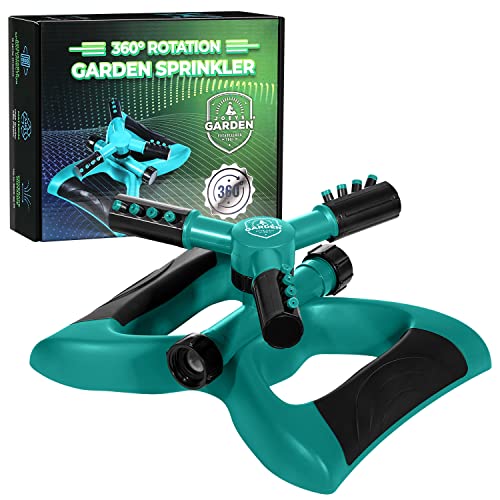
What the Joeys Garden 360 Rotating Sprinkler Does Well and Where It Falls Short
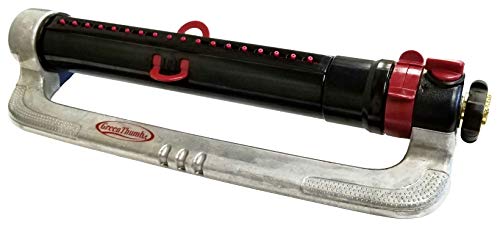
Green Thumb 4200MGT Metal Oscillating Sprinkler Reviewed for a 3900 Sq Ft Lawn

FXFOUCS 50 Ft Hybrid Garden Hose Review: Kink Resistant and Rated to a 700 PSI Burst

Real Hose Storage 4-Wheel Hose Reel Cart Review for a 250-Foot Hose

Gilmour Heavy Duty Graphite Fireman Nozzle Reviewed for 8 Spray Patterns and a Swivel Connect
