A leaf blower can move wet leaves, but it takes more CFM and MPH than dry leaves need. Here is what actually works and where a blower reaches its limit.
Yes, a leaf blower can move wet leaves, but it takes noticeably more airflow than dry leaf cleanup requires, and the result depends heavily on how wet the leaves actually are. A light dew coating is very different from leaves that soaked through an overnight rain, and both are different again from a leaf mat that has been wet for days and started to decompose. The blower’s spec, the technique used, and the leaf condition all determine whether the job is quick or nearly impossible.
Why Wet Leaves Resist Airflow
Water adds weight, and it also creates surface tension that glues a wet leaf to whatever it is resting on, whether that is pavement, grass, or another leaf. A dry leaf can be moved by a light gust because there is almost nothing holding it in place. A wet leaf needs enough air velocity to physically break that surface adhesion before it can be pushed anywhere, and it needs enough air volume to keep the leaf moving once it is airborne rather than letting it drop a few inches away. This is why the same blower that clears a dry lawn effortlessly can feel almost useless on a soaked pile.
What Actually Works
Blowers in the 400 CFM and higher range, paired with a nozzle that produces at least 150 to 180 MPH, handle moderately wet leaves reasonably well. Gas backpack blowers are the most consistent option because their output does not fade under load the way a depleting battery can. The exact airflow numbers to target are covered in more detail in a dedicated look at how much CFM wet leaves actually need, but the short version is that entry-level blowers under 300 CFM will move scattered damp leaves on a dry surface but will struggle with anything fully saturated or piled thick.
Technique Makes a Real Difference
Holding the nozzle at a low, near-parallel angle to the ground works far better than blasting straight down, since a steep angle just presses wet leaves flatter instead of rolling them forward. Working in short overlapping passes, rather than trying to clear a large wet area in one sweep, keeps the leaves moving instead of letting momentum stall out halfway across the yard. Breaking up large wet clumps by hand or with a rake before blowing also helps, since a compacted mat of wet leaves behaves more like a solid object than individual pieces that air can catch and separate.
Where a Blower Reaches Its Limit
There is a point past which no amount of CFM or MPH will help. Leaves sitting in standing water, frozen into a wet mat overnight, or decomposed into a slick, matted layer have lost the structural leaf shape that air needs to catch and push. In these cases, raking, dragging a tarp, or using a wet-dry vacuum will outperform any blower, and pushing a machine at full throttle against a fully saturated mat mostly just wastes fuel or battery charge without meaningfully moving the pile.
Signs Your Blower Is Underpowered for the Job
A common frustration is running a blower at full throttle and watching wet leaves barely shift, or watching them lift a few inches and immediately drop back in place. This usually means the nozzle velocity is not high enough to fully break the surface adhesion, rather than a problem with the machine itself. Switching to a narrower nozzle attachment, if the blower has one, increases velocity at the cost of coverage width, which is often the right tradeoff for stubborn wet spots even if it slows down the rest of the job. If leaves lift and travel but only for a short distance before dropping again, that points more toward insufficient CFM, meaning the volume of air is not enough to carry the added weight of the water across a longer distance in one pass.
Seasonal Timing Also Matters
Leaves that fall during a dry stretch and are cleared within a day or two are far easier to manage than leaves left to sit through multiple rain cycles. Once leaves have been rained on, dried out, and rained on again several times, they start to break down structurally even before visible decomposition sets in, which makes them heavier, more fragile, and more prone to tearing apart under blower pressure rather than moving as a whole piece. Clearing leaves promptly after they fall, rather than waiting for a large accumulated pile, reduces how often you have to deal with the hardest wet-leaf scenarios in the first place.
Practical Guidance by Situation
For leaves that are only lightly damp, most mid-range blowers handle the job fine with no special technique required. For leaves soaked from a recent rain, a higher CFM unit and the low-angle sweeping technique described above will usually clear them, though it takes noticeably longer than dry leaf cleanup. For leaves that have been wet for multiple days, plan on raking the worst sections first and reserving the blower for finishing touches once the bulk of the compacted material is already broken up and removed. If wet leaf cleanup is a recurring problem on your property rather than an occasional inconvenience, it is worth comparing models built specifically for this in a leaf blower guide focused on wet leaves rather than relying on a general-purpose dry-leaf unit season after season.
How we research
We compare published manufacturer specifications, official manuals, warranty information and recurring owner feedback. Rankings are research-based unless original YardToolLab test evidence is explicitly shown on the page.
FAQs
Aim for at least 400 CFM combined with 150 MPH or higher for reliably moving wet leaves. Lower-powered blowers under 300 CFM can handle lightly damp, scattered leaves but struggle with a fully soaked pile.
This usually happens when the airstream hits the leaves at too steep an angle, pressing them flat against the surface instead of rolling them forward. A lower, more parallel nozzle angle produces much better results.
Generally yes, because a gas engine holds its output steady under the heavier load wet leaves create, while a battery pack can drain faster and lose peak power during sustained high-effort use.
Occasional wet leaf use will not damage a well-maintained blower, but moisture and organic debris pulled into the intake screen over time should be cleaned out to keep airflow and cooling working properly.
For leaves that are fully saturated, matted, or partially decomposed, raking or a tarp drag is often faster and more effective than a blower, since the leaves no longer separate easily even with strong airflow.
Related guides

LIKEPAY 10 Ft Cantilever Umbrella Reviewed: Offset Shade With an 8-Rib Frame

BLACK+DECKER BEHT150 17-Inch Hedge Trimmer Reviewed for Light Yearly Trimming
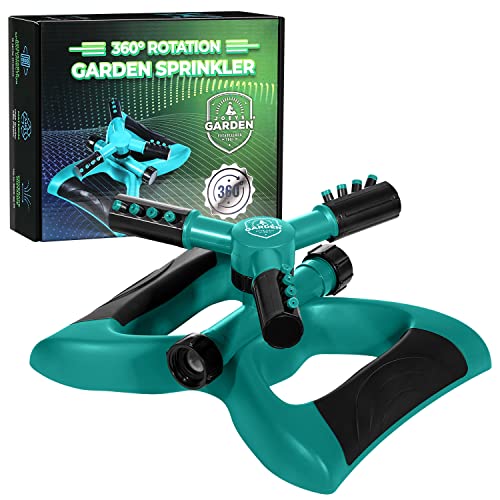
What the Joeys Garden 360 Rotating Sprinkler Does Well and Where It Falls Short
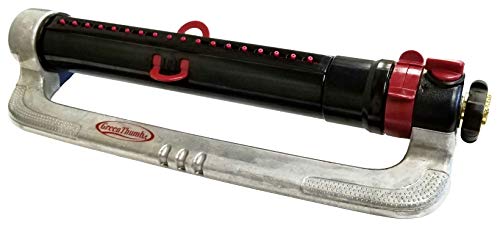
Green Thumb 4200MGT Metal Oscillating Sprinkler Reviewed for a 3900 Sq Ft Lawn

FXFOUCS 50 Ft Hybrid Garden Hose Review: Kink Resistant and Rated to a 700 PSI Burst

Real Hose Storage 4-Wheel Hose Reel Cart Review for a 250-Foot Hose

Gilmour Heavy Duty Graphite Fireman Nozzle Reviewed for 8 Spray Patterns and a Swivel Connect
