How often to mow depends on grass species, season, and growth rate. Use the one third rule to set a schedule that keeps your lawn healthy.
There is no single number of days that works for every lawn, because mowing frequency is driven by how fast the grass is growing, not by the calendar. The most reliable guideline is the one third rule: never remove more than one third of the total blade height in a single cut. Once you know how fast your grass grows toward that limit, the correct mowing interval follows naturally.
The One Third Rule in Practice
If you keep a cool season lawn at a 3 inch cutting height, the grass should be mowed again once it reaches about 4.5 inches, since cutting it back down to 3 inches removes exactly one third of the height. During a fast growth period that might mean mowing every 4 to 5 days. During a slow stretch, the same lawn might not need attention for 10 to 14 days. The schedule is a moving target that follows growth, not a fixed weekly appointment.
Why Growth Rate Changes Through the Season
Cool season grasses such as Kentucky bluegrass, tall fescue, and perennial ryegrass grow fastest in spring and again in early fall when soil temperatures are moderate and rainfall is typically higher. Growth slows sharply in the heat of summer, especially in lawns that are not irrigated, and slows again as temperatures drop toward dormancy in late fall. Warm season grasses like bermuda, zoysia, and St. Augustine follow the opposite pattern, growing fastest in the heat of summer and going dormant or nearly dormant once temperatures drop in fall and winter.
Fertilization also changes the equation. A lawn that was recently fertilized with a nitrogen heavy product will often need mowing more frequently for a couple of weeks afterward, since nitrogen pushes leaf growth. Rainfall has a similar effect, and a rainy stretch in spring can mean mowing twice in one week even on a lawn that normally goes seven to ten days between cuts.
Signs You Are Mowing Too Infrequently
Scalping is the most visible consequence of waiting too long between mows. When grass has grown well past the one third limit and is then cut back down to the normal height in one pass, the mower removes so much leaf tissue at once that the plant is stressed, and the cut often exposes brown, thatch covered stems rather than clean green blades. Skipping mows also allows grass to fall over and mat, which can shade and thin the turf underneath, and it produces a heavier volume of clippings that are more likely to clump on the surface instead of settling into the canopy.
Signs You Are Mowing Too Often
Mowing more frequently than the grass needs is mostly a time and wear cost rather than a health risk, but it is worth watching for a couple of things. If you are mowing so often that you are barely removing any leaf tissue each time, you may be compacting the soil with extra mower passes and unnecessarily wearing down blades and drive components. In very hot, dry weather, mowing an already stressed lawn on a tight schedule can add stress rather than help, since drought stressed grass grows slowly and does not need frequent cutting.
Building a Practical Schedule
Rather than committing to a fixed once a week routine, check the grass height against your mower’s cutting height setting before each mow. In peak spring growth for cool season lawns, that often works out to every 5 to 6 days. In the heart of summer, especially without supplemental irrigation, the same lawn might stretch to every 10 to 12 days. For warm season lawns, expect the reverse pattern, with the tightest mowing interval landing in mid to late summer.
Keeping blades sharp also matters for how well the schedule works in practice, since a dull blade tears rather than slices and makes any given mow look worse regardless of timing. For more on that maintenance side, see how often lawn mower blades should be sharpened. Cutting height itself is the other half of the equation, covered in detail in what height to cut grass in summer.
If your current mower struggles to keep pace with a fast growing lawn, particularly one with thick or dense turf, it may be worth comparing options built for that kind of workload, such as the picks in our best lawn mower for thick grass guide.
Special Cases
New lawns from seed or sod should not be mowed until the grass has established a root system deep enough to anchor it, typically once the seedlings reach about 3 to 3.5 inches, and even then the first mow should remove only a small fraction of that height. Lawns coming out of winter dormancy should be mowed on the low end of the recommended height range for the first cut or two to help clear dead growth, then raised back to the normal height as the season progresses.
How we research
We compare published manufacturer specifications, official manuals, warranty information and recurring owner feedback. Rankings are research-based unless original YardToolLab test evidence is explicitly shown on the page.
FAQs
Mowing more often at a taller height is healthier for the lawn. Frequent light trims keep you within the one third rule, protect the root system, and reduce stress, while infrequent low cuts scalp the grass and expose bare stems that are slower to recover and more vulnerable to weeds.
Drought stressed grass grows very slowly and often does not need mowing on a normal schedule. If growth has nearly stopped, raise the cutting height and mow only when the grass has clearly grown past it, since mowing dormant or stressed turf unnecessarily adds mechanical stress without any benefit.
Mow a day or two before applying fertilizer so the product reaches the soil rather than sitting on top of long grass, then hold off on mowing again for at least two to three days afterward to let the lawn absorb the nutrients before any clippings are removed.
Wait until new grass reaches about 3 to 3.5 inches before the first mow, then only trim a small amount off the top. After that first cut, follow the same one third rule as an established lawn, checking height every few days rather than mowing on a fixed schedule.
Related guides

LIKEPAY 10 Ft Cantilever Umbrella Reviewed: Offset Shade With an 8-Rib Frame

BLACK+DECKER BEHT150 17-Inch Hedge Trimmer Reviewed for Light Yearly Trimming
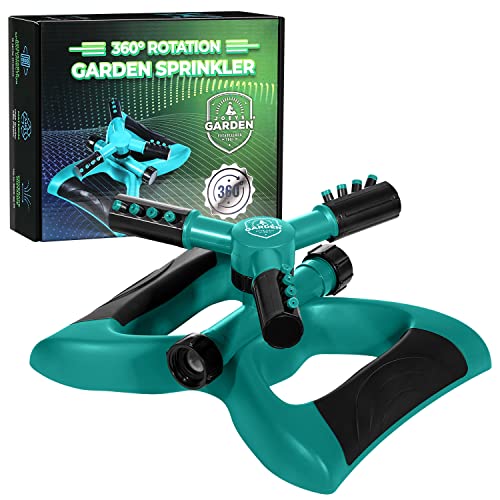
What the Joeys Garden 360 Rotating Sprinkler Does Well and Where It Falls Short
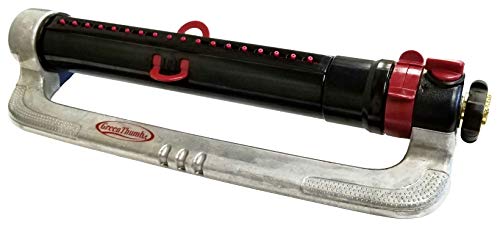
Green Thumb 4200MGT Metal Oscillating Sprinkler Reviewed for a 3900 Sq Ft Lawn

FXFOUCS 50 Ft Hybrid Garden Hose Review: Kink Resistant and Rated to a 700 PSI Burst

Real Hose Storage 4-Wheel Hose Reel Cart Review for a 250-Foot Hose

Gilmour Heavy Duty Graphite Fireman Nozzle Reviewed for 8 Spray Patterns and a Swivel Connect
