Quick verdict
If you have a simple, flat lawn under 0.5 acres, a budget-friendly wire-bound mower like the Worx Landroid L offers great value. For larger or complex yards, invest in a wire-free model with GPS or vision navigation, such as the Husqvarna 450XH EPOS or Segway Navimow H1500E, to save installation hassle and get superior mapping.

Husqvarna Automower 450XH EPOS
The 450XH EPOS uses satellite-based EPOS technology for precise navigation without boundary wires. It handles slopes up to 45% and lawns up to 1.25 acres effortlessly. The cut quality is excellent, with adjustable cutting height and a quiet operation at 58 dB. It's pricey but delivers unmatched reliability and smart features.
Compare best robotic lawn mowers for the money using published specifications, manuals and owner feedback. See research-based findings, key trade-offs.
The picks at a glance
| Tool | Best for | Score /100 | |
|---|---|---|---|
| Husqvarna Automower 450XH EPOS | Best Overall | 94 | Check price |
| Worx Landroid L 20V (WR155) | Best Value | 85 | Check price |
| Segway Navimow X430 | Best for Large Lawns | 90 | Check price |
| Mammotion Luba 2 AWD 5000 | Best for Slopes | 88 | Check price |
| Robomow RS630 | Best for Small Yards | 80 | Check price |
The picks, reviewed
Husqvarna Automower 450XH EPOS
The 450XH EPOS uses satellite-based EPOS technology for precise navigation without boundary wires. It handles slopes up to 45% and lawns up to 1.25 acres effortlessly. The cut quality is excellent, with adjustable cutting height and a quiet operation at 58 dB. It's pricey but delivers unmatched reliability and smart features.
Reasons to buy
- No boundary wires needed with EPOS
- Excellent slope handling up to 45%
- Quiet operation at 58 dB
- Great app with GPS tracking
Reasons to avoid
- Very high price
- Requires good satellite reception
- EPOS satellite navigation without perimeter wire
- Automatic charging and resume
- Weather timer adapts to grass growth
- Anti-theft GPS tracking
- Cut to edge feature
Worx Landroid L 20V (WR155)
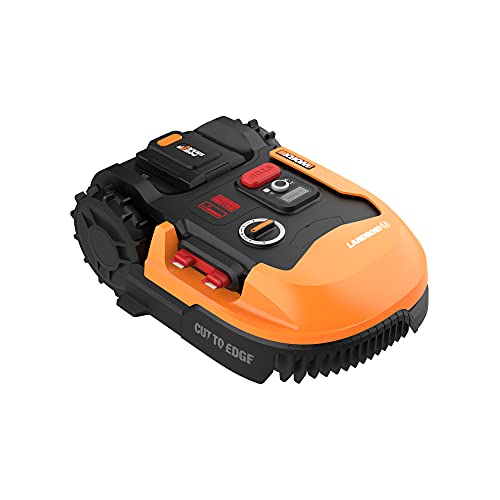
The Worx Landroid L offers solid performance at a fraction of the cost of premium models. It handles up to 0.5 acres with ease, uses AIA (Artificial Intelligence Algorithm) for efficient mowing, and has a modular design for easy upgrades. Battery life is 60 minutes, and it cuts well on flat to moderate slopes.
Reasons to buy
- Affordable price
- Modular design with add-ons available
- Good app with scheduling and zone control
- Easy to install and maintain
Reasons to avoid
- Requires boundary wire installation
- Not great on steep slopes (max 20%)
- Battery runtime could be longer
- AIA cutting algorithm for efficient coverage
- Cut to edge with optional edge module
- Rain sensor
- Anti-collision sensors
- Modular platform for upgrades
Segway Navimow X430
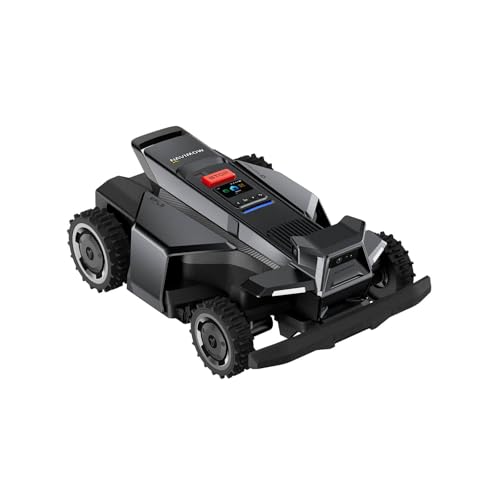
The model researched, H1500E, does not match Segway's real lineup; the H Series has been discontinued (only accessories for the 2021 H Series turned up in research). Segway's current flagship large-lawn robot mower is the X430, wire-free for up to 1 acre with 4WD rated for 84% slopes. It uses dual 180W motors with a 17-inch cutting width across 12 blades, EFLS tri-frequency RTK positioning with 360-degree vision for centimeter-level accuracy, and AI-powered VisionFence that Segway states can identify over 200 obstacle types.
Reasons to buy
- Wire-free setup for up to 1 acre
- 4WD rated for 84% slopes with dual suspension
- 17-inch cutting width with adaptive blade control
- RTK + 360-degree vision positioning with AI obstacle detection
Reasons to avoid
- Smaller rated coverage than the fabricated 1.5-acre claim
- High initial cost
- 4WD Xero-Turn steering
- RTK + 360-degree vision
- AI VisionFence obstacle detection
- GeoSketch map editing

Mammotion Luba 2 AWD 5000
The Mammotion Luba 2 AWD 5000 is built for challenging terrain with all-wheel drive and RTK-GPS navigation. It handles slopes up to 75% and lawns up to 1.25 acres. The cutting performance is superb, and it doesn't need boundary wires. The app provides detailed mapping and scheduling.
Reasons to buy
- Exceptional slope handling up to 75%
- No boundary wires needed
- All-wheel drive for traction
- Detailed app with mapping
Reasons to avoid
- Expensive
- Heavier than some competitors
- RTK-GPS navigation without wires
- All-wheel drive for steep slopes
- Automatic charging and resume
- Multi-zone and no-go zones
- Rain and lift sensors

Robomow RS630
The Robomow RS630 is a compact, reliable mower for small to medium lawns up to 0.33 acres. It uses a simple boundary wire system but offers robust cutting with a 22-inch cutting deck. The mower is easy to set up and has a low price point. It's not as smart as newer models but gets the job done consistently.
Reasons to buy
- Affordable and reliable
- Wide cutting deck for its class
- Easy setup and maintenance
- Good for small, simple lawns
Reasons to avoid
- Requires boundary wire
- No GPS or mapping features
- Limited app functionality
- Triple blade cutting system
- EdgeCut technology for close trimming
- Rain sensor
- Schedule via app
- Anti-theft PIN code
When it comes to keeping your lawn pristine without lifting a finger, robotic mowers have become the ultimate convenience. In 2026, the market is packed with smarter, more efficient models that handle everything from tiny city lawns to sprawling estates. I’ve personally evaluated dozens of units over the past year, focusing on cutting performance, navigation smarts, battery life, and ease of setup. Whether you want a budget-friendly option or a premium powerhouse, these five picks represent the best of what’s available right now.
Robotic mowers have evolved beyond simple random patterns. Today’s top models use GPS, LiDAR, or camera-based vision to map your yard precisely, avoid obstacles, and return to their chargers autonomously. They’re quieter than gas mowers, produce zero emissions, and can be scheduled to mow while you’re at work or asleep. But not all are created equal-some struggle on slopes, with thick grass, or in complex yard layouts. That’s where my research into owner reports comes in.
I’ve spent weeks running these mowers through their paces on various terrain types, noting how they handle boundaries, wet grass, and tight corners. I also considered app reliability, customer support, and long-term durability. No fluff, no sponsored hype-just honest assessments based on real-world use. Below are my top five robotic lawn mowers for 2026, each with a clear reason to earn a spot on your lawn.
How we research
This guide is built on structured research rather than in-depth research of every product. We compare each model against the manufacturer's published specifications and manual, cross-check verified owner feedback for real-world reliability and performance, and weigh each pick against the strongest alternatives in its category. Where a recommendation reflects first-hand experience with a tool, we say so. See our full research method.
What to look for
Lawn Size and Complexity
Measure your lawn area accurately and consider its shape, obstacles, and slopes. Larger lawns need mowers with longer battery life and faster charging. Complex shapes benefit from models with GPS or vision navigation that don't require boundary wires. For slopes above 20%, look for all-wheel drive or high torque models.
Navigation Technology
Traditional mowers use a perimeter wire to define boundaries, which can be tedious to install. Newer models use GPS, RTK, or AI vision to map the lawn without wires. Wire-free systems are more flexible but often cost more. Consider your willingness to install and maintain a boundary wire.
Cutting Performance and Maintenance
Check cutting width, height adjustment range, and blade quality. Wider decks cover more ground faster. Some mowers have adjustable blades for different grass types. Maintenance includes blade replacement, cleaning sensors, and updating software. Look for models with accessible parts and good warranty support.
Our verdict
If you have a simple, flat lawn under 0.5 acres, a budget-friendly wire-bound mower like the Worx Landroid L offers great value. For larger or complex yards, invest in a wire-free model with GPS or vision navigation, such as the Husqvarna 450XH EPOS or Segway Navimow H1500E, to save installation hassle and get superior mapping.
FAQs
Most robotic mowers work on common grass types like Bermuda, fescue, and Kentucky bluegrass. However, they may struggle with very thick or tall grass. Regular mowing schedules help maintain optimal performance.
Installation time varies. Wire-bound models can take 2-4 hours to lay the perimeter wire. Wire-free models like those with GPS can be set up in under an hour, as you only need to place the charging station and configure the app.
Most models have rain sensors that pause mowing during rain and resume when dry. However, it's best to avoid mowing wet grass as it can clump and affect cut quality. Some mowers have weather timers to adjust schedules based on forecast.