Quick verdict
Loppers crush old rose canes and leave a ragged wound; a sharp pull saw cuts them clean. The Corona 10-inch folding RazorTooth is the all-round rose saw; the Fiskars 10-inch with two blade positions reaches canes at the base of a dense crown; the Corona 13-inch renovates an overgrown climber. Wear gauntlets, cut canes to an outward bud and saw on the pull stroke.

Corona RazorTooth 10-Inch Folding Pruning Saw RS16150B
Thick old rose canes are hard, dense and surrounded by thorns, and the Corona RazorTooth 10-inch folding saw cuts them with a curved blade that keeps more teeth in the wood on every stroke and a non-slip handle that holds in gloves. It folds and locks closed to go in a pocket between bushes, and locks open to cut.
The best pruning saws for thick rose bushes: Corona RazorTooth 10-inch folding, Fiskars 10-inch folding with dual position blade and Corona RazorTooth 13-inch, compared on blade shape, reach into the crown and cut size.
The picks at a glance
| Tool | Best for | Score /100 | |
|---|---|---|---|
| Corona RazorTooth 10-Inch Folding Pruning Saw RS16150B | Best for Old Rose Canes | 9.0 | Check price |
| Fiskars 10-Inch Folding Pruning Saw with Dual Position Blade | Best for Cuts Deep in the Crown | 8.7 | Check price |
| Corona RazorTooth 13-Inch Pruning Saw | Best for Renovating a Big Old Rose | 8.6 | Check price |
The picks, reviewed
Corona RazorTooth 10-Inch Folding Pruning Saw RS16150B
Thick old rose canes are hard, dense and surrounded by thorns, and the Corona RazorTooth 10-inch folding saw cuts them with a curved blade that keeps more teeth in the wood on every stroke and a non-slip handle that holds in gloves. It folds and locks closed to go in a pocket between bushes, and locks open to cut.
Reasons to buy
- Curved RazorTooth blade cuts fast
- Locks open and closed
- Non-slip handle in gloves
- Folds to fit a pocket
Reasons to avoid
- 10 inches is long for a tight crown
- Blade is not easily replaced
- Aggressive teeth tear green wood if rushed
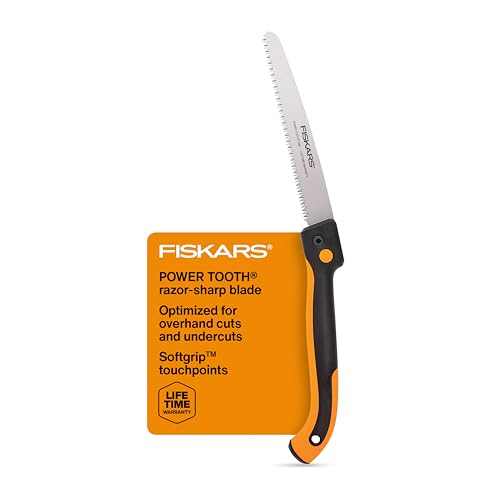
Fiskars 10-Inch Folding Pruning Saw with Dual Position Blade
The Fiskars folding saw locks its blade in two positions, straight for an overhand cut and angled for an undercut, which is how a cane at the base of a dense rose is reached without a hand in the thorns. The triple-ground power tooth blade cuts fast and Fiskars backs it with its lifetime warranty.
Reasons to buy
- Two blade positions for awkward cuts
- Triple-ground teeth
- Fiskars lifetime warranty
- Folds
Reasons to avoid
- Straight blade is slower than curved
- Handle is less grippy wet
- Ten inches is long in a small bush

Corona RazorTooth 13-Inch Pruning Saw
A climbing rose or a shrub rose left for years has canes as thick as a wrist at the base, and the Corona 13-inch RazorTooth cuts limbs to 7 inches with a chrome-plated SK5 steel blade designed for one hand, so the other hand holds the cane clear. It is a fixed blade with a sheath, for the renovation rather than the weekly tidy.
Reasons to buy
- Cuts limbs to 7 inches
- SK5 steel, chrome plated
- One-handed design
- Fast curved blade
Reasons to avoid
- Fixed blade needs a sheath
- Too long for small bushes
- Aggressive for green canes
Why old rose canes need a saw
A rose bush more than a few years old has canes at the base thicker than loppers can cleanly cut, and crushing them with loppers leaves a ragged wound that dies back down the cane. A sharp pruning saw with pull-cut teeth severs an inch-thick cane in a few strokes and leaves a clean face that heals. The job is done in thick gauntlets among thorns, so the saw must fold or sheath safely, hold in a glove and reach the base of a dense crown. The three here are the saws rose growers reach for, and they differ in length and blade position.
This guide is built from the published specifications of each saw and from recurring owner feedback. We have not run these saws ourselves.
How the three compare
| Saw | Blade | Type | Best for | Capacity |
|---|---|---|---|---|
| Corona 10 in folding | 10 in curved | Folding, lock-back | Most roses | Canes to about 4 in |
| Fiskars 10 in folding | 10 in, two positions | Folding | Cuts deep in the crown | Canes to about 4 in |
| Corona 13 in | 13 in curved | Fixed with sheath | Renovating climbers | Limbs to 7 in |
Corona 10-inch folding: the rose saw
The curved RazorTooth blade keeps more three-sided teeth in the wood on every pull stroke, which is why it cuts a hard old cane in a few strokes where a straight blade takes a dozen. The handle is contoured and non-slip in gloves, the blade locks open to cut and closed to carry, and it folds into a pocket while the other hand moves the thorns. It is the all-round rose saw and the one to buy first.
Fiskars 10-inch: two positions for the base
The oldest canes are at the base in the middle of the bush, where a straight cut from above is blocked by every other cane. The Fiskars folding saw locks its blade straight for an overhand cut or angled for an undercut from below, which reaches those base canes without a hand in the thorns. The triple-ground teeth cut fast and the lifetime warranty is Fiskars. The straight blade is a little slower than the Corona curve.
Corona 13-inch: for the renovation
A climbing rose or a shrub rose left for a decade has base canes as thick as a wrist, and the 13-inch RazorTooth cuts limbs to 7 inches with a chrome-plated SK5 blade built for one hand, so the other holds the cane clear. It is a fixed blade in a sheath, too long for a small bush and exactly right for cutting an overgrown climber back to three young canes.
Pruning old roses well
Prune in late winter as buds swell. Remove dead and damaged wood first, then the oldest canes at the base, leaving three to five young vigorous canes. Cut a quarter inch above an outward-facing bud at a slight angle. Saw on the pull stroke with the blade in the full cane, not nibbling at the edge. Wear gauntlets and sleeves, carry the saw folded, and disinfect the blade between bushes if any had canker.
Which one should you buy
Buy the Corona 10-inch folding saw for most roses. Buy the Fiskars 10-inch for canes at the base of a dense crown. Buy the Corona 13-inch for renovating an old climber.
How we research
This guide is built from the published specifications, manuals and warranty terms of each product and from recurring owner feedback. We have not run these products ourselves; where a maker does not publish a figure we say so rather than guess.
What to look for
Pull-cut teeth
Japanese-style three-sided teeth cut on the pull stroke, which is faster and cleaner on hard old canes than push teeth.
Blade length
Ten inches suits most bushes; thirteen suits a climber. Shorter blades fit a dense crown.
Folding and locking
A folding saw goes in a pocket between bushes and locks so it cannot close on fingers.
Grip in gloves
Rose pruning is done in thick gauntlets. The handle must hold in them.
Our verdict
Loppers crush old rose canes and leave a ragged wound; a sharp pull saw cuts them clean. The Corona 10-inch folding RazorTooth is the all-round rose saw; the Fiskars 10-inch with two blade positions reaches canes at the base of a dense crown; the Corona 13-inch renovates an overgrown climber. Wear gauntlets, cut canes to an outward bud and saw on the pull stroke.
FAQs
Late winter or early spring, just as buds swell, removing dead, damaged and old unproductive canes at the base.
Loppers crush canes over about three quarters of an inch and leave a wound that dies back. A saw cuts clean.
A clean cut on a healthy cane needs no sealing. Some growers dab large cuts with wood glue against cane borers.
Gauntlet gloves to the elbow, long sleeves, and a folding saw that locks closed in a pocket between cuts.
Related guides
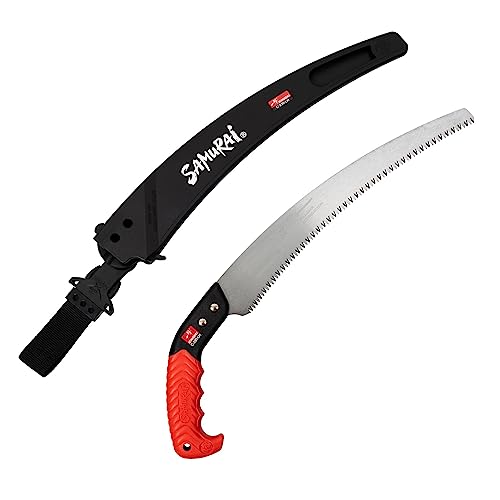
Need a Heavy Duty Pruning Saw? These Three 13-Inch Curved Blades Take Limbs of 4 to 8 Inches
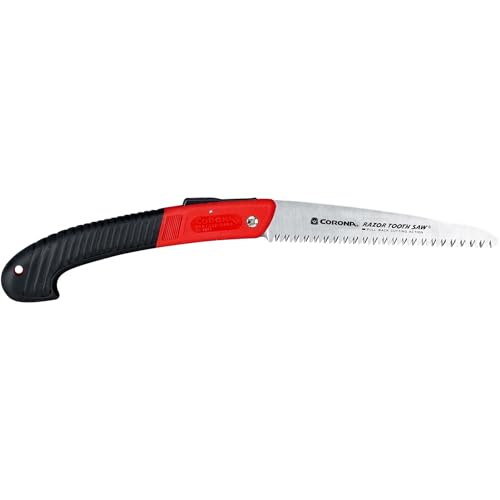
The Three Budget Pruning Saws Worth Buying: Corona, Fiskars and REXBETI Folders Compared

Best Folding Saw for Hardwood Branches: Three Pull Saws That Bite Oak, Maple and Hickory
