Quick verdict
The Large Compost Bin Outdoor at 160 gallons is the top pick for fall leaves, purpose-built with mesh panels for stacking leaves and yard waste with strong airflow.

Large Compost Bin Outdoor 160 Gallon Wire Mesh
This bin is marketed specifically for stacking leaves and yard waste, built from powder-coated steel mesh panels secured with metal clips and rated for 20 cubic feet, about 160 gallons. Two usable size configurations let you set it up taller and narrower or wider and shorter depending on where it fits in your yard, and it folds flat for off-season storage.
Wire mesh and expandable compost bins built for fall leaves and leaf mold, compared by capacity and airflow using real Amazon listing specifications.
The picks at a glance
| Tool | Best for | Score | |
|---|---|---|---|
| Large Compost Bin Outdoor 160 Gallon Wire Mesh | Best Overall | Check price | |
| BUKLIYN 285 Gallon Metal Wire Mesh Compost Bin | Best Premium | Check price | |
| Metal Compost Bin Outdoor 172 Gallon | Best Value | Check price | |
| Garden Wire Compost Bin 30x30x24 Inches | Best Budget | Check price | |
| Geobin Compost Bin 246 Gallon Expandable | Also Great | Check price |
The picks, reviewed
Large Compost Bin Outdoor 160 Gallon Wire Mesh
This bin is marketed specifically for stacking leaves and yard waste, built from powder-coated steel mesh panels secured with metal clips and rated for 20 cubic feet, about 160 gallons. Two usable size configurations let you set it up taller and narrower or wider and shorter depending on where it fits in your yard, and it folds flat for off-season storage.
Reasons to avoid
- Assembly involves securing multiple mesh panels with clips, which takes a few more minutes than a single-piece bin
- As an open mesh design it has no lid, so very windy conditions can scatter drier, lighter leaves

BUKLIYN 285 Gallon Metal Wire Mesh Compost Bin
At 285 gallons this is the largest capacity bin in this guide, built from powder-coated steel with a baffle structure the manufacturer says improves air circulation and increases surface area for faster fermentation. Thickened steel plates and multi-hole screws are built in for stability once the bin is loaded.
Reasons to avoid
- Its large footprint, roughly 41 by 41 inches, needs a correspondingly large flat spot in the yard
- The manufacturer recommends gloves during assembly, so plan for that extra step

Metal Compost Bin Outdoor 172 Gallon
This 172-gallon wire mesh bin is built from powder-coated steel and the manufacturer specifically lists it for leaves, grass clippings, cardboard, and kitchen scraps. A dense mesh structure is designed to improve airflow and speed decomposition, and a plug-in, tool-free assembly system is built for quick setup and teardown.
Reasons to avoid
- Like other mesh bins, there is no sealed lid, so heavy rain can add extra moisture to the pile
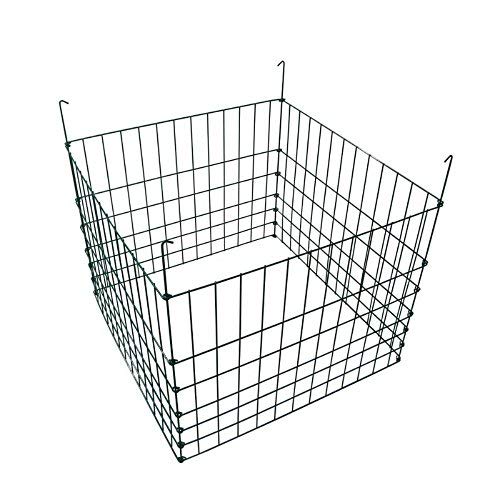
Garden Wire Compost Bin 30x30x24 Inches
This is the most compact and affordable wire bin in this guide, a 30 by 30 by 24-inch square formed from four mesh panels linked by anchor spikes at each corner, with no tools needed to assemble. Green powder-coated steel wire is built for durability, and the manufacturer notes it can double as garden bed fencing when not in use for composting.
Reasons to avoid
- Its smaller footprint holds less bulk leaf volume than the larger bins in this guide
- The lighter-gauge wire suits leaf composting well but is less heavy-duty than the largest steel bins
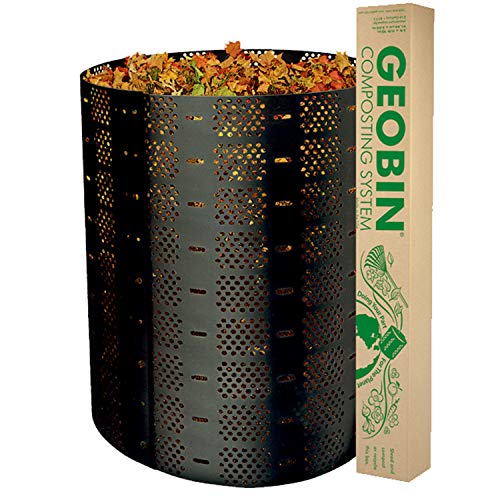
Geobin Compost Bin 246 Gallon Expandable
The Geobin expands to 246 gallons and the manufacturer notes it assembles and reassembles easily using closure keys rather than tools, with excellent ventilation built into its design. It is made in the USA and positioned by the manufacturer as one of the best-value composting bins in its category.
Reasons to avoid
- It is a single expandable panel design rather than the reinforced mesh clips used on some other picks
- Very large bulk leaf drops may still need packing down periodically to fit within the expanded size
Why you should trust this guide
Composting fallen leaves into leaf mold works differently than mixing kitchen scraps and grass clippings in a rotating tumbler. Leaves compost best in a bin with plenty of airflow and enough volume to hold a season’s worth of bulk material, which is why this guide focuses on wire mesh and expandable bins rather than the sealed rotating tumblers built for mixed kitchen and yard waste. We compared each bin on capacity, mesh construction, and how the manufacturer describes assembly, using the specifications listed on Amazon.
Wire and mesh bins came up as the clear fit for this search because several listings specifically market themselves for stacking leaves and yard waste, with open sides that let air reach the pile from every direction. That matters more for leaves than for a mixed compost pile, since a thick, packed layer of leaves can mat down and slow decomposition without enough oxygen reaching the middle of the pile.
How we evaluated
Capacity was the primary factor, since leaves take up far more volume than the equivalent weight of kitchen scraps, especially right after they are raked and before they settle. We favored bins in the 160 to 285-gallon range that manufacturers specifically describe as suited to bulk yard waste, over the smaller rotating tumblers built for continuous kitchen-scrap composting.
We also compared construction and ease of setup: powder-coated steel wire mesh for weather resistance and rust prevention, panel-based designs that fold flat for off-season storage, and whether a listing mentions tool-free assembly. Several of these bins double as garden fencing or raised-bed borders when unfolded, which some buyers may find useful beyond leaf season, and we noted that where a manufacturer mentioned it.
Leaf mold versus regular compost
Leaves break down more slowly than kitchen scraps or grass clippings because they are higher in carbon and lower in nitrogen, so a dedicated leaf bin is often left to sit for a longer stretch, sometimes a full season, rather than turned every few days like an active kitchen-scrap tumbler. The payoff is leaf mold, a crumbly, soil-like material gardeners use as a mulch or soil amendment. None of the manufacturers here publish an exact leaf mold timeline, so treat any composting speed as a general expectation rather than a fixed schedule, and expect it to run slower than the four to six week claims common on kitchen-scrap tumblers.
Because these bins are open mesh rather than sealed, moisture management works differently too. Rain reaches the pile directly, which can help keep leaves from drying out, but a very wet stretch may mean adding drier material or checking that the pile is not compacting into a soggy mat. Placing the bin on bare soil rather than pavement also lets excess moisture drain and gives beneficial organisms in the ground a path into the pile.
How we research
What to look for
Why leaves need a mesh bin, not a sealed tumbler
A sealed rotating tumbler is built for continuous kitchen-scrap composting in a smaller volume. Leaves take up more bulk and compost best with open airflow on all sides, which is what wire mesh and expandable panel bins are specifically designed to provide.
Capacity for a full leaf season
Freshly raked leaves are bulky before they settle, so the bins here run from a compact budget size up to 285 gallons. Choose based on how many trees you are raking under and whether you plan to fill the bin once a season or gradually over several weeks.
Mesh material and weather resistance
Powder-coated steel wire, used across most of these picks, is built to resist rust through repeated wet and dry seasons. That matters for a bin that will likely sit outdoors year-round holding damp, decomposing material.
Assembly and off-season storage
Every pick here is designed to fold flat or disassemble when not in use, which is useful once leaf season ends. Panel-and-clip designs like the Geobin and Garden Wire Compost Bin are built specifically around quick, tool-free setup and teardown.
Our verdict
The Large Compost Bin Outdoor at 160 gallons is the top pick for fall leaves, purpose-built with mesh panels for stacking leaves and yard waste with strong airflow.
FAQs
A wire mesh or expandable bin works better than a sealed tumbler for leaves, since leaf mold needs airflow on all sides and more bulk volume than a typical kitchen-scrap tumbler provides. The Large Compost Bin Outdoor at 160 gallons is our top pick, built specifically for stacking leaves and yard waste.
Leaf-focused bins prioritize open mesh sides for airflow and larger bulk capacity, since raked leaves take up more volume than the equivalent weight of kitchen scraps. Regular compost tumblers are often sealed and rotating, built for smaller, continuous batches of mixed kitchen and yard waste instead.
It depends on how many trees you are raking under. A compact 30-inch wire bin suits a small yard with light leaf drop, while the 172 to 285-gallon bins in this guide suit larger properties or anyone collecting leaves from several mature trees at once.
Open mesh bins are built for airflow first, not a sealed pest barrier. They work well for leaves and dry yard waste, which are less attractive to pests than food scraps, but if you also compost kitchen waste, consider pairing one with a sealed bin for that material.
Yes, several manufacturers note their mesh bins double as garden bed fencing or a raised-bed border when unfolded and not in seasonal use for composting, which the Garden Wire Compost Bin and similar picks specifically mention.
Related guides

Best Log Splitters for Firewood

Best Garden Shredders for Compost Material

The Best Champion Electric Wood Chipper

Best Earthquake Electric Wood Chipper Worth Buying

Best Log Splitter Wedge for the Money

Best Manual Log Splitter We Recommend
Best Hydraulic Log Splitter of 2026
