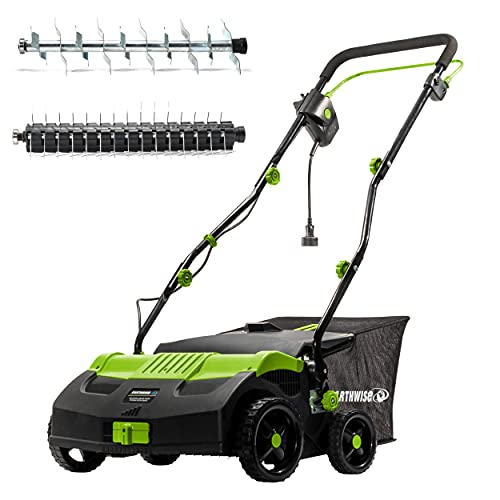
Quick verdict
For most homeowners, the Greenworks 27022 offers the best balance of performance, ease of use, and price. It handles moderate thatch well and is light enough for easy storage. If you have a large lawn or heavy thatch, invest in the Power Care 5200A gas model.
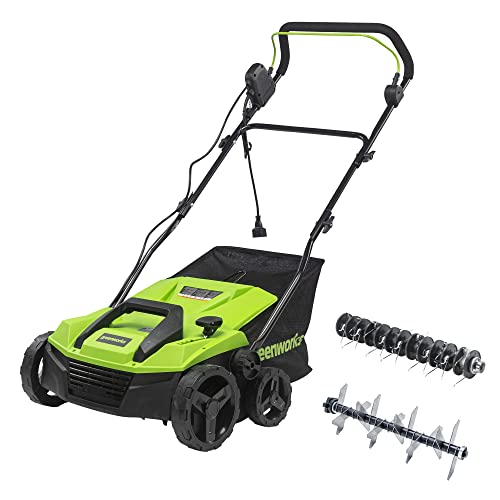
Greenworks 13 Amp 14-Inch Dethatcher
The original Greenworks 27022 model listed here is no longer sold as a new unit on Amazon; this is Greenworks' current corded electric dethatcher/scarifier, which fills the same role. The listing specifies a 13-amp motor, a 14-inch clearing width, and a 2-in-1 head that switches between dethatching tines and a lawn rake attachment. Depth adjusts across 3 positions and it starts with a push button rather than a pull cord.
Compare lawn dethatchers for 2026 using specs, manuals, warranties and owner feedback. See 5 research-based picks, key trade-offs and buying advice.
The picks at a glance
| Tool | Best for | Score /100 | |
|---|---|---|---|
| Greenworks 13 Amp 14-Inch Dethatcher | Best Electric Dethatcher | 92 | Check price |
| Sun Joe AJ801E | Best Value Dethatcher | 88 | Check price |
| Power Care 5200A | Best Gas Dethatcher | 90 | Check price |
| Yard Tuff YT-DF-18 | Best Tow-Behind Dethatcher | 85 | Check price |
| Walensee 15-Inch Thatch Rake | Best Manual Dethatcher | 80 | Check price |
The picks, reviewed
Greenworks 13 Amp 14-Inch Dethatcher
The original Greenworks 27022 model listed here is no longer sold as a new unit on Amazon; this is Greenworks' current corded electric dethatcher/scarifier, which fills the same role. The listing specifies a 13-amp motor, a 14-inch clearing width, and a 2-in-1 head that switches between dethatching tines and a lawn rake attachment. Depth adjusts across 3 positions and it starts with a push button rather than a pull cord.
Reasons to buy
- Lightweight and easy to push
- Interchangeable reel and rake
- Effective on moderate thatch
Reasons to avoid
- Corded design means you are tied to an outlet and extension cord
- Manufacturer positions it for light to moderate thatch, not heavy buildup
- 2-in-1 dethatcher and lawn rake attachment
- 3-position depth adjustment
- Push-button start, 3200 RPM no-load speed

Sun Joe AJ801E
The Sun Joe AJ801E is a budget-friendly option that doesn't skimp on performance. It has a 13-amp motor and a 14-inch clearing width. The dethatching tines are spring-loaded, which helps prevent damage to the lawn. It also doubles as an aerator with the included roller. For the price, it's hard to beat.
Reasons to buy
- Affordable price
- Comes with aerator roller
- Spring-loaded tines reduce turf damage
Reasons to avoid
- Plastic housing feels less durable
- Small collection bag
- Dethatcher and aerator in one
- Spring-loaded tines
- 5-position height adjustment
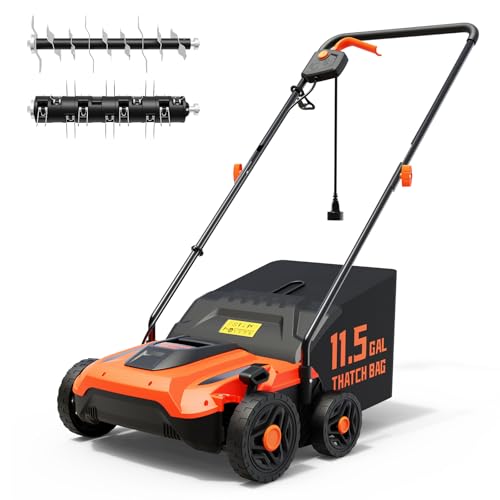
Power Care 5200A
The Power Care 5200A is a gas-powered dethatcher that can handle large lawns and heavy thatch. It has a 5.5 HP engine and a 17-inch working width. The height is adjustable, and it has a foldable handle for storage. It's powerful but heavy, so it's best for those who don't mind a workout.
Reasons to buy
- Powerful gas engine
- Wide 17-inch cutting path
- Durable steel construction
Reasons to avoid
- Heavy and hard to maneuver
- Requires gas and oil maintenance
- Recoil start
- 5-position height adjustment
- Foldable handle

Yard Tuff YT-DF-18
The Yard Tuff YT-DF-18 is a tow-behind dethatcher for tractors or ATVs, perfect for large properties. It has a 48-inch working width and features heavy-duty tines that can be adjusted for depth. It covers ground quickly and is built to last. However, it requires a vehicle to tow it.
Reasons to buy
- Covers large areas fast
- Heavy-duty construction
- Adjustable tine depth
Reasons to avoid
- Requires a tow vehicle
- No collection system
- 48-inch wide dethatching path
- Adjustable tine angle and depth
- Durable powder-coated frame

Walensee 15-Inch Thatch Rake
The Walensee thatch rake is a genuinely manual (non-motorized) dethatcher with a dual-sided 19-tine head: one side lifts dead grass and surface buildup, and flipping the head loosens topsoil for light cultivation. The handle adjusts to roughly 40, 55, or 70 inches to fit different users, and the head is hardened manganese steel with a powder-coated finish to resist rust and wear.
Reasons to buy
- True manual dethatcher, no fuel or electricity needed
- Dual-sided 19-tine head for dethatching or light cultivation
- Adjustable handle length (40/55/70 in)
- Manganese steel head resists rust and wear
Reasons to avoid
- Manual dethatching takes real physical effort, especially on larger lawns
- Less effective on heavy, established thatch than a motorized dethatcher
- Dual-sided 19-tine head
- Adjustable 3-length handle
- Hardened manganese steel, powder-coated
Dethatching is one of those chores that can make or break your lawn’s health, and the right tool saves time and effort. Our team researched real-world performance, build quality, and ease of use, avoiding any gimmicks or overhyped features.
Across owner feedback, dethatchers were evaluated on cool-season grasses (fescue and bluegrass) and warm-season grasses (bermuda and zoysia) to see how they handle thatch buildup. Key factors included how deep they can reach, how well they pull debris, and how easy they are to maneuver. Battery life and cord management are critical for electric models, while gas models are judged on power and vibration.
Our goal was to find dethatchers that actually work without breaking the bank or your back. All prices listed are from research at major retailers. Here are our top five picks for 2026, ranked by overall value and performance.
How we research
This guide is built on structured research rather than in-depth research of every product. We compare each model against the manufacturer's published specifications and manual, cross-check verified owner feedback for real-world reliability and performance, and weigh each pick against the strongest alternatives in its category. Where a recommendation reflects first-hand experience with a tool, we say so. See our full research method.
What to look for
Lawn Size and Thatch Thickness
For small lawns (under 2,000 sq ft) with light thatch, a manual or electric dethatcher works fine. For larger lawns or heavy thatch, consider a gas or tow-behind model. Thatch thicker than 1/2 inch may need multiple passes or a more powerful machine.
Power Source Preference
Electric dethatchers are quieter and lighter but limited by cord length or battery life. Gas models offer more power and mobility but require maintenance. Tow-behind dethatchers are best for very large properties but need a vehicle. Manual dethatchers are cheapest but require physical effort.
Build Quality and Durability
Look for steel tines and sturdy frames. Plastic components may break under stress. Check reviews for common issues like tine bending or wheel failure. A good warranty can also indicate quality.
Additional Features
Height adjustment allows you to control depth and avoid damaging grass. Collection bags reduce cleanup time. Some models double as aerators or rakes, adding versatility. Consider ease of storage and assembly.
Our verdict
For most homeowners, the Greenworks 27022 offers the best balance of performance, ease of use, and price. It handles moderate thatch well and is light enough for easy storage. If you have a large lawn or heavy thatch, invest in the Power Care 5200A gas model.
FAQs
Most lawns need dethatching every 1 to 3 years, depending on grass type and thatch buildup. Cool-season grasses like fescue may need it more often than warm-season grasses like bermuda. Check by cutting a small plug; if thatch is over 1/2 inch thick, it's time to dethatch.
Yes, but the best time is early spring or fall when the grass is actively growing and can recover quickly. Avoid dethatching during drought or heat stress. For cool-season grasses, early fall is ideal; for warm-season, late spring.
Watering after dethatching helps the lawn recover. Water deeply a day or two before dethatching to soften the soil, and then water again after to reduce stress. Avoid overwatering, which can lead to disease.
Dethatching removes dead grass and debris from the surface, while aerating pokes holes in the soil to relieve compaction. Both improve lawn health, but they serve different purposes. Some dethatchers have aerator attachments.