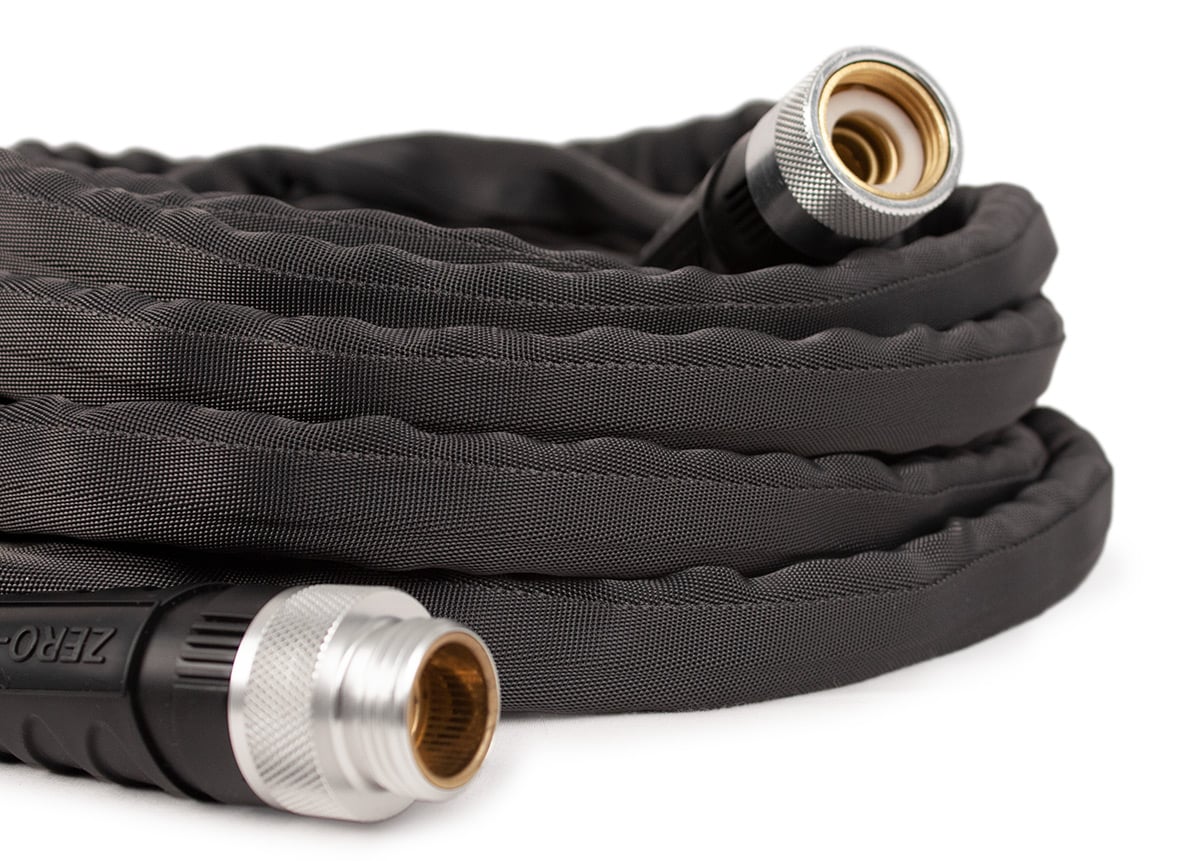
Quick verdict
The Flaronro 75 ft is the top pick because its manufacturer-stated 5/8 inch high-flow inner diameter is built specifically to deliver more volume than a standard hose of the same length, which is exactly what an underperforming sprinkler needs. For shorter runs, the 50 ft version of the same hose offers identical flow technology at a lower price.

Flaronro 5/8 in. x 75 ft. High Flow Garden Hose
Flaronro specifies a high-flow 5/8 inch inner diameter that the listing states delivers 25 percent more water flow than a standard hose, which directly addresses the most common reason a sprinkler underperforms at the end of a long run. The 75 ft length also reaches most mid-size lawn zones without needing to be run at an awkward partial extension.
Garden hoses picked by inside diameter and flow rate so a sprinkler head actually gets the GPM it needs instead of underperforming on a thin, long hose.
The picks at a glance
| Tool | Best for | Score /100 | |
|---|---|---|---|
| Flaronro 5/8 in. x 75 ft. High Flow Garden Hose | Best Overall | Check price | |
| Flaronro 5/8 in. x 50 ft. High Flow Garden Hose | Best Value | Check price | |
| VUNDARA 50 ft Hybrid Rubber Garden Hose | Best Premium | Check price | |
| Eden 94051 Rubber Garden Hose 1/2 in. x 50 ft. | Best Budget | Check price | |
| Melnor Multi-Adjustable Watering Set | Also Great | Check price |
The picks, reviewed
Flaronro 5/8 in. x 75 ft. High Flow Garden Hose
Flaronro specifies a high-flow 5/8 inch inner diameter that the listing states delivers 25 percent more water flow than a standard hose, which directly addresses the most common reason a sprinkler underperforms at the end of a long run. The 75 ft length also reaches most mid-size lawn zones without needing to be run at an awkward partial extension.
Reasons to buy
- 25 percent more flow claimed versus standard hose per the listing
- Solid brass fittings with 360 degree rotation
- UV and abrasion resistant outer layer
Reasons to avoid
- 75 ft may still be short for very large properties
- Heavier than a thinner standard-diameter hose of the same length

Flaronro 5/8 in. x 50 ft. High Flow Garden Hose
This is the same high-flow 5/8 inch construction as the 75 ft pick above, in a shorter length for sprinkler zones closer to the spigot. The manufacturer lists the same 25 percent flow improvement claim, spring guards at the fitting joints, and a triple-layer build rated to 800 PSI burst pressure.
Reasons to buy
- Same high-flow diameter as the premium pick at a lower price
- Spring guards protect the fitting joints
- Zero-memory material resists kinking
Reasons to avoid
- 50 ft may not reach distant sprinkler zones without a second hose
- No option to extend length without adding a coupling

VUNDARA 50 ft Hybrid Rubber Garden Hose
VUNDARA lists a full 5/8 inch diameter with a three-layer hybrid rubber structure designed to maintain steady flow across the lawn, along with a 360 degree swivel fitting that reduces the twisting that can choke off flow right at the sprinkler connection point. The listing also notes flexibility from negative 40 to 150 degrees Fahrenheit for year-round sprinkler setups.
Reasons to buy
- Full 5/8 inch diameter for steady flow
- Swivel fitting reduces kinking at the connection
- Wide temperature flexibility per the listing
Reasons to avoid
- 150 PSI working pressure rating is lower than dedicated high-pressure hoses
- Costs more than the Eden budget pick

Eden 94051 Rubber Garden Hose 1/2 in. x 50 ft.
Eden markets this hose as compatible with Eden sprinklers and most watering tools, with three-ply braided construction for durability. Its 1/2 inch diameter is narrower than the 5/8 inch picks above, so it suits a single sprinkler head on a short run rather than a longer or higher-demand setup, which the buying factors below explain in more detail.
Reasons to buy
- Compatible connectors included, no tools required
- Three-ply braided reinforcement
- Lower price than the 5/8 inch picks
Reasons to avoid
- 1/2 inch diameter delivers less flow than a 5/8 inch hose at the same pressure
- Better suited to a single sprinkler head than multiple or long runs

Melnor Multi-Adjustable Watering Set
For anyone setting up a new sprinkler zone from scratch rather than replacing a hose for an existing sprinkler, this set pairs three adjustable sprinklers with two 15 ft hoses that the manufacturer says cover up to 1,800 square feet. It is a useful starting point rather than a long-run feed hose, since the included hoses are short leads meant to position the sprinklers rather than supply water over distance.
Reasons to buy
- Includes three adjustable sprinklers plus hose
- Covers up to 1,800 sq ft per the listing
- Backed by a 2 year limited warranty
Reasons to avoid
- Included 15 ft hoses are short leads, not a full-length supply hose
- Requires a separate main hose to reach the set from the spigot
A sprinkler is only as good as the hose feeding it. An oscillating or impact sprinkler is designed around a certain flow rate, usually measured in gallons per minute, and if the hose supplying it cannot deliver that volume, the sprinkler underperforms no matter how well built it is. This is the reason a sprinkler that worked fine on a short hose near the house can suddenly throw a weak, uneven pattern once it is moved to the far end of a 100 foot run: the hose itself has become the bottleneck, not the sprinkler.
Inside diameter is the main factor here. A 1/2 inch hose noticeably restricts flow compared to a full 5/8 inch hose at the same pressure, and that gap widens as hose length increases, since a narrower, longer path adds more cumulative friction. The picks below were chosen by comparing manufacturer-listed inside diameter and flow claims, prioritizing 5/8 inch hoses explicitly marketed as high flow over standard hoses that do not specify a diameter at all. Several listings quantify this directly, stating a percentage flow improvement over a standard hose of the same length, which was treated as a meaningful signal of a hose built with sprinkler-feeding volume in mind.
Length matters just as much as diameter for this use case, since every additional foot between the spigot and the sprinkler head adds friction the water has to overcome. A hose long enough to reach a distant sprinkler zone but no longer than necessary will generally outperform an oversized hose run at less than its full length. For anyone setting up a new zone from scratch, a couple of picks here pair a wide-bore hose with an actual sprinkler, which is worth considering if you do not already own one.
It also helps to distinguish a supply hose feeding a sprinkler head from a perforated soaker or sprinkler hose itself, which are two different products often surfaced under similar search terms. A perforated hose replaces the sprinkler entirely, releasing water along its length for garden beds, while the hoses recommended here are standard supply hoses meant to carry full flow to a separate oscillating or impact sprinkler head at the end of the line.
How we research
What to look for
Inside diameter versus sprinkler demand
A 5/8 inch hose delivers substantially more flow than a 1/2 inch hose at the same pressure, and most oscillating and impact sprinklers are designed around the higher end of that range. Check your sprinkler's rated GPM against the hose diameter before assuming a thinner hose will keep up.
Length and cumulative friction
Every additional foot of hose between the spigot and the sprinkler adds friction that reduces the pressure and flow actually reaching the sprinkler head. A hose sized to just reach the zone, rather than a much longer one run at partial length, generally performs better.
Manufacturer flow claims
Some hoses explicitly state a flow improvement percentage over a standard hose of the same diameter and length, which is a useful signal that the hose was engineered with high-volume delivery in mind rather than just marketed as heavy duty.
Connection point kinking
A kink or tight twist right at the hose-to-sprinkler connection can choke flow as badly as an undersized hose. Swivel fittings at the connection point reduce this by letting the hose rotate freely instead of twisting under pressure.
Multiple sprinkler heads or zones
If a single hose is feeding more than one sprinkler head, or a sprinkler with multiple adjustable arms, the flow demand is higher than a single-head setup. A full 5/8 inch high-flow hose becomes more important as the number of heads being fed increases.
Our verdict
The Flaronro 75 ft is the top pick because its manufacturer-stated 5/8 inch high-flow inner diameter is built specifically to deliver more volume than a standard hose of the same length, which is exactly what an underperforming sprinkler needs. For shorter runs, the 50 ft version of the same hose offers identical flow technology at a lower price.
FAQs
The hose itself is likely restricting flow before it ever reaches the sprinkler. A narrow or standard-diameter hose adds more cumulative friction as length increases, so a sprinkler that performs fine on a 25 ft hose can underperform badly at the end of a 100 ft run of the same diameter.
If the hose cannot deliver the sprinkler's rated GPM, the sprinkler cannot perform to its design regardless of quality. A 5/8 inch hose carries meaningfully more water than a 1/2 inch hose at the same pressure, so diameter is often the actual bottleneck when a sprinkler seems weak.
Yes, a 1/2 inch hose can work adequately for a single sprinkler head on a shorter run, which is why the Eden pick above suits that specific case. For longer runs or multiple heads, a full 5/8 inch high-flow hose delivers noticeably better and more consistent pressure at the sprinkler.
It compares the hose's flow rate at a given pressure against a standard hose of the same diameter and length, usually based on the wider effective inner bore of the fittings and hose wall. A hose stating a 25 percent flow improvement is engineered to move more water through the same nominal diameter than a typical hose.
Not necessarily. Extra unused length adds friction even when coiled, so a hose sized to reach your sprinkler zone with a small margin generally outperforms an oversized hose kept mostly coiled. If you expect to expand your sprinkler setup later, buying a second hose at that point is usually better than running one very long hose now.