Quick verdict
The HDKing 50 ft is the top pick for most pressure washer setups because its non-expanding, fixed structure delivers the consistent flow a pump needs without the variable output an expandable hose can introduce. For a washer positioned further from the spigot, the Flexzilla 100 ft offers the same reliable flow principle with more reach.

HDKing Garden Hose 50FT Non-Expanding
HDKing markets this as a non-expanding, fixed-structure hose, which the listing states delivers consistent, powerful water flow rather than the variable flow an expandable hose can produce as its inner tube stretches under pressure. Consistent flow is exactly what a pressure washer pump needs to avoid cavitating on startup or during use.
Garden hoses picked to feed a pressure washer pump with steady flow and kink resistance, since the washer itself creates the high pressure, not the hose.
The picks at a glance
| Tool | Best for | Score /100 | |
|---|---|---|---|
| HDKing Garden Hose 50FT Non-Expanding | Best Overall | Check price | |
| Flexzilla Garden Hose 5/8 in. x 100 ft. | Best for Long Reach | Check price | |
| Flexzilla Garden Hose 5/8 in. x 50 ft. | Best Value | Check price | |
| PUUKU Garden Hose 25ft x 5/8 in | Best Budget | Check price | |
| Guitrees 50FT 5/8 Heavy Duty Rubber Garden Hose | Also Great | Check price |
The picks, reviewed
HDKing Garden Hose 50FT Non-Expanding
HDKing markets this as a non-expanding, fixed-structure hose, which the listing states delivers consistent, powerful water flow rather than the variable flow an expandable hose can produce as its inner tube stretches under pressure. Consistent flow is exactly what a pressure washer pump needs to avoid cavitating on startup or during use.
Reasons to buy
- Fixed non-expanding structure for consistent flow
- Lightweight at 3.2 lb for easy handling
- Anti-kink patented winding structure per the listing
Reasons to avoid
- Manufacturer does not list a specific inside diameter
- 50 ft may be short if your spigot is far from where you use the washer

Flexzilla Garden Hose 5/8 in. x 100 ft.
This is the 100 ft version of Flexzilla's award-winning hybrid polymer hose, giving a pressure washer set up far from the spigot the reach it needs without switching to a thinner, more restrictive hose. The full 5/8 inch bore and zero-memory coil keep flow steady across the longer run, and the crush-resistant fittings hold a tight seal at the washer's inlet.
Reasons to buy
- Full 5/8 inch bore even at 100 ft
- Zero-memory coil resists kinking over the longer length
- Crush-resistant aluminum fittings
Reasons to avoid
- Longer length adds some friction loss versus a shorter feed hose
- Heavier to coil and store than the 50 ft version
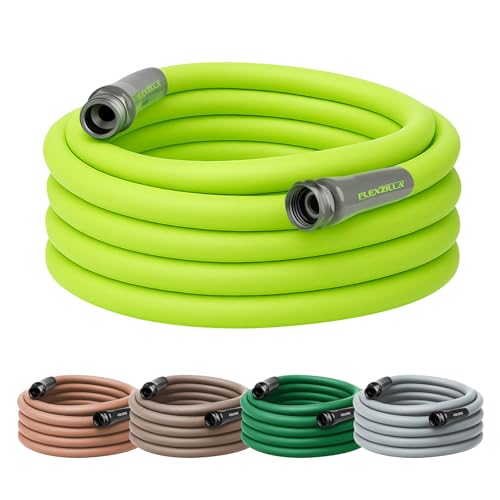
Flexzilla Garden Hose 5/8 in. x 50 ft.
The 50 ft version of the same hybrid polymer construction suits a pressure washer used near the spigot, keeping the full 5/8 inch flow capacity in a shorter, easier-to-manage length. Its lightweight coil also makes it simple to move the feed hose out of the way while working with the washer's own high-pressure hose.
Reasons to buy
- Full 5/8 inch bore for steady pump supply
- Lightweight and easy to coil out of the way
- Leak-free O-ring connection per the listing
Reasons to avoid
- 50 ft may not reach a spigot on the opposite side of the house
- Costs more than basic vinyl feed hoses

PUUKU Garden Hose 25ft x 5/8 in
This shorter 5/8 inch hose is built with a hybrid PVC and rubber-polymer construction the listing describes as anti-kink and high flow, at a lower price than the premium picks. It suits a pressure washer used consistently close to a single spigot rather than one moved around a larger property.
Reasons to buy
- Full 5/8 inch standard diameter
- Anti-kink reinforcement per the listing
- 360 degree swivel handle reduces twisting
Reasons to avoid
- 25 ft is short for anything beyond a single fixed washing spot
- Rated to 600 PSI burst, plenty for a feed hose but not a premium spec

Guitrees 50FT 5/8 Heavy Duty Rubber Garden Hose
Guitrees lists five-layer braided reinforcement and hot and cold water compatibility, which gives this hose more resilience against years of being dragged across a driveway while feeding a pressure washer than a basic vinyl option. Its solid brass fittings also hold a tighter seal at the washer's inlet than plastic couplings tend to.
Reasons to buy
- Five-layer braided reinforcement
- Solid brass fittings for a tight inlet seal
- Hot and cold water rated
Reasons to avoid
- Heavier than the hybrid polymer picks at the same length
- No specific inside diameter published beyond the standard 5/8 in size
A pressure washer makes its own high pressure inside the pump, so the garden hose feeding it does not need to be a high-pressure hose at all. Its real job is to deliver enough cold water at a steady flow so the pump never runs short. Starve a pressure washer of water and it can cavitate, pulse, or wear out early, which means the two things that matter most in a feed hose are inside diameter and kink resistance, not the burst-pressure number printed on the label.
Most residential pressure washers call for somewhere around 1 to 3 gallons per minute, and the pump can only reach its rated output if the supply hose keeps pace with that demand. A full 5/8 inch inside diameter moves noticeably more water than a 1/2 inch hose at the same pressure, so diameter was the main factor in choosing these picks, followed closely by kink resistance, since a single pinched section can starve the pump exactly like an undersized hose would. Reach also matters in a specific way here: the feed hose runs from the spigot to the washer’s inlet, not from the washer to the surface being cleaned, so a length that comfortably reaches your outdoor spigot without excess coiled slack is usually the better choice over buying the longest hose available.
Reinforcement and burst rating, which matter enormously for a hose carrying pressurized water directly to a nozzle, are a secondary consideration for a feed hose since the pressure washer’s pump generates its output downstream of this connection. That said, a hose with some kink resistance and a reasonable working-pressure spec still holds up better over years of being coiled, uncoiled, and dragged across a driveway than a bare minimum vinyl hose would.
It is also worth double-checking your specific pressure washer’s manual for a minimum inlet flow requirement, since some larger gas-powered units demand closer to 3 GPM while smaller electric models may run comfortably on 1 to 1.5 GPM. A feed hose that comfortably exceeds your unit’s minimum requirement gives the pump a buffer against the friction losses that come with hose age, minor kinks, or a slightly lower household pressure than usual.
How we research
What to look for
Inside diameter over burst rating
A pressure washer pump creates its own high pressure downstream of the feed hose, so a full 5/8 inch inside diameter that keeps volume steady matters far more than a high burst-pressure spec, which is a priority for hoses carrying pressurized water directly, not for a feed line.
Kink resistance
A pinched or kinked section of feed hose can starve the pump of water just as effectively as an undersized hose, potentially causing the pump to cavitate or run rough. Hoses marketed with anti-kink or zero-memory construction hold their shape better under the tension of a working washer setup.
Matching length to your spigot, not maximum reach
The feed hose only needs to run from the spigot to the washer's water inlet, which is usually a short distance from where you are actually cleaning. Buying the shortest hose that comfortably covers that distance avoids unnecessary coiled slack and friction loss.
Fitting quality at the inlet connection
A loose or corroded coupling at the pressure washer's water inlet can let air into the line, which causes the same cavitation problems as insufficient flow. Brass or crush-resistant metal fittings hold a tighter, more reliable seal than basic plastic couplings.
Flow rate versus your washer's GPM rating
Check your pressure washer's rated gallons per minute, typically 1 to 3 GPM for residential models, and make sure the feed hose's diameter and length combination can comfortably supply that rate without excessive friction loss.
Our verdict
The HDKing 50 ft is the top pick for most pressure washer setups because its non-expanding, fixed structure delivers the consistent flow a pump needs without the variable output an expandable hose can introduce. For a washer positioned further from the spigot, the Flexzilla 100 ft offers the same reliable flow principle with more reach.
FAQs
No. The pressure washer's pump generates its own high pressure downstream of the feed hose, so the hose only needs to deliver adequate flow and resist kinking. A high burst-pressure rating matters for hoses carrying pressurized water directly to a nozzle, not for a feed line running to the washer's inlet.
The pump can run short of water, which may cause it to cavitate, pulse unevenly, or wear out prematurely from running dry momentarily. A full 5/8 inch inside diameter avoids this by keeping enough volume flowing to match the pump's rated gallons per minute.
It is not the best choice. Expandable hoses can deliver less consistent flow as their inner tube stretches under pressure, and a pressure washer benefits from steady, predictable volume rather than the variable flow an expandable design can introduce.
It only needs to comfortably reach from your outdoor spigot to the pressure washer's water inlet, which is usually a shorter distance than the area you are actually cleaning. A shorter hose sized to that distance reduces friction loss compared to an unnecessarily long one left partially coiled.
Yes. A loose or worn coupling at the washer's inlet can let air into the line, which causes similar cavitation problems to low flow. Brass or crush-resistant metal fittings create a tighter, more reliable seal than basic plastic connectors over repeated connect and disconnect cycles.

