Quick verdict
The SPECILITE Hot/Cold hose is the strongest pick for genuinely cold climates because its manufacturer-listed range down to negative 50 degrees Fahrenheit is the widest of this group. Households that want to remove cold-cracking risk entirely should consider the Bionic Steel metal hose, since steel does not go brittle the way plastic or rubber can.

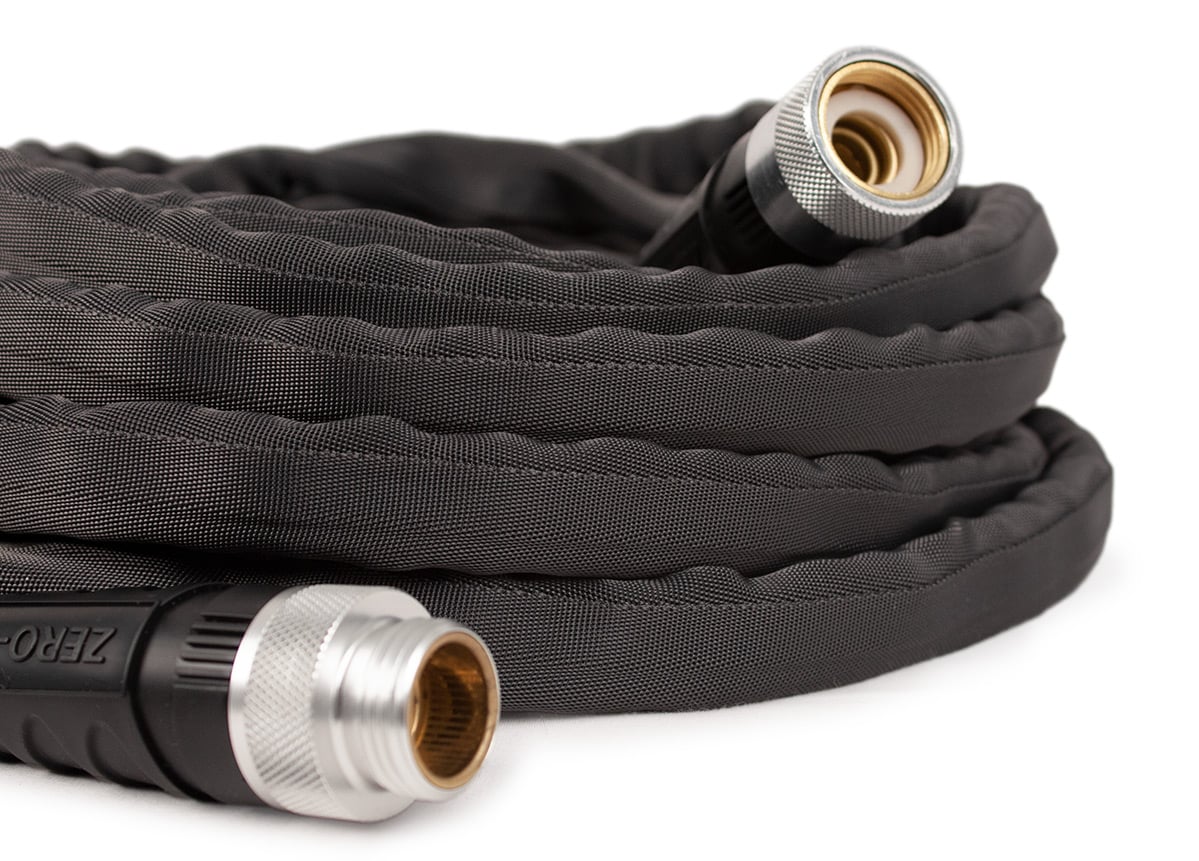
SPECILITE Hot/Cold Garden Water Hose 50 ft x 5/8 in
The manufacturer specifies a working range down to negative 50 degrees Fahrenheit without cracking or hardening, the widest cold-weather rating among the hoses compared here. It uses a three-material layered construction the listing says improves both strength and flexibility, which reduces the kinking risk that stiffened hoses face in freezing conditions.
Garden hoses picked for manufacturer-evaluated cold weather flexibility, from hybrid polymer builds rated to negative 40F to steel hoses that cannot go brittle.
The picks at a glance
| Tool | Best for | Score /100 | |
|---|---|---|---|
| SPECILITE Hot/Cold Garden Water Hose 50 ft x 5/8 in | Best Overall | Check price | |
| Bionic Steel 100 Ft Metal Garden Hose | Best for Brittleness Resistance | Check price | |
| Guitrees 50FT 5/8 Heavy Duty Rubber Garden Hose | Best Value | Check price | |
| HDKing Garden Hose 50FT Non-Expanding | Best Budget | Check price | |
| Heavy Duty Garden Hose 25ft Hybrid | Also Great | Check price |
The picks, reviewed
SPECILITE Hot/Cold Garden Water Hose 50 ft x 5/8 in
The manufacturer specifies a working range down to negative 50 degrees Fahrenheit without cracking or hardening, the widest cold-weather rating among the hoses compared here. It uses a three-material layered construction the listing says improves both strength and flexibility, which reduces the kinking risk that stiffened hoses face in freezing conditions.
Reasons to buy
- Rated to negative 50 degrees F per the listing
- Solid brass connector resists corrosion
- Stays flexible for easier winter coiling
Reasons to avoid
- Heavier than lightweight hybrid polymer hoses
- Still requires draining before a hard freeze

Bionic Steel 100 Ft Metal Garden Hose
Stainless steel does not develop the brittleness that plastic or rubber hoses can after repeated winters of freeze-thaw cycling, since the material itself is not affected by cold the same way. The listing notes the hose stays lightweight at under 3 lb and resists kinking regardless of temperature.
Reasons to buy
- Steel construction does not go brittle in cold
- Lightweight under 3 lb
- 100 ft length for larger properties
Reasons to avoid
- Gets cold to the touch in winter use
- Stiffer to coil into tight loops than polymer hoses

Guitrees 50FT 5/8 Heavy Duty Rubber Garden Hose
Guitrees lists this rubber hose as all-weather flexible down to negative 40 degrees Fahrenheit, backed by five-layer braiding for reinforcement. It is a lower-cost alternative to the SPECILITE pick for households that do not need the extra 10 degrees of cold tolerance.
Reasons to buy
- Rated to negative 40 degrees F
- Five-layer braided reinforcement
- Solid brass fittings
Reasons to avoid
- 10 degree narrower cold rating than the top pick
- Rubber is heavier than hybrid polymer alternatives

HDKing Garden Hose 50FT Non-Expanding
HDKing lists a cold-proof outer coating and built-in thermal expansion joints specifically meant to prevent brittleness in low temperatures down to 0 degrees Fahrenheit. It suits households in moderately cold regions who do not need the extreme negative-degree ratings of the premium picks.
Reasons to buy
- Cold-proof coating per the listing
- Thermal expansion joints for temperature swings
- Lightweight at 3.2 lb
Reasons to avoid
- 0 degree F rating is far narrower than the SPECILITE or Guitrees picks
- Not suited to extreme winter climates

Heavy Duty Garden Hose 25ft Hybrid
This hybrid rubber and PVC hose is listed as remaining flexible in extreme temperatures rather than stiffening into kinks, with copper-plated aluminum fittings that resist the corrosion winter moisture can cause. The shorter 25 ft length also makes it easier to fully drain and coil for storage before a freeze.
Reasons to buy
- Hybrid construction stays flexible in cold per the listing
- Corrosion-resistant fittings
- Shorter length is easier to drain fully
Reasons to avoid
- No specific negative-degree rating published
- 25 ft is short for larger yards
Freezing weather is hard on a garden hose in two separate ways. First, the material itself changes: vinyl in particular stiffens as the temperature drops, sometimes to the point where coiling it is nearly impossible without the hose cracking. Second, any water trapped inside a hose can freeze, expand, and split the wall or crack a fitting from the inside, which is a risk regardless of how flexible the outer material stays. A hose bought for freezing conditions needs to address both, and no hose fully replaces the habit of draining it before a hard freeze.
The picks below were selected by comparing manufacturer-published low-temperature flexibility ratings, since that number is the clearest signal a hose was actually engineered for winter use rather than just marketed as durable. Hybrid polymer and reinforced rubber hoses that carry a stated rating of negative 40 degrees Fahrenheit or colder were prioritized over hoses with no cold-weather spec at all, since staying pliable at that range is what prevents cracking when a hose is coiled or moved in freezing conditions. Materials that go rigid in the cold are more likely to split at a stress point the first time they are bent.
Metal hoses were also considered here for a different reason: steel does not develop the brittleness that plastic and rubber can after repeated freeze-thaw cycles over several winters, even though the hose itself gets cold to the touch. Whichever material a household chooses, none of it substitutes for draining standing water out of the hose before storage, since trapped water freezing inside the hose or a fitting can crack it regardless of how flexible the outer wall stays in the cold.
It is also worth separating a cold-weather rating from a hot-weather one, since a manufacturer that only publishes a high-temperature ceiling has not necessarily evaluated the hose for freezing use, and the reverse is true as well. Where a listing did not specify any negative-degree number, that gap is treated as a real limitation here rather than assumed to be covered by a general all-weather claim, since the two ends of the temperature range require different material properties to handle well.
How we research
What to look for
Published cold-weather rating
Look for a specific low-temperature number, ideally negative 20 degrees Fahrenheit or colder, rather than a generic all-weather label. A hose rated to negative 50 degrees F has been engineered and evaluated differently than one with no cold spec listed at all.
Material flexibility
Vinyl stiffens dramatically in freezing temperatures and is prone to cracking when coiled cold. Hybrid polymer and reinforced rubber stay more pliable, while steel hoses do not stiffen at all, though they get uncomfortably cold to handle.
Draining before a freeze
No hose material fully prevents damage from water that freezes and expands while trapped inside the hose or a fitting. Draining the hose completely before the first hard freeze of the season matters more than the hose material itself for preventing splits.
Fitting corrosion resistance
Winter moisture and salt from nearby walkways can corrode cheap fittings faster than in other seasons. Brass or corrosion-resistant aluminum couplings hold up better through repeated freeze-thaw cycles than basic plated metal.
Storage habits
Even a cold-rated hose benefits from being stored indoors, in a garage, or in a hose box rather than left exposed to direct freeze-thaw cycling all winter. This extends the life of any hose regardless of its published temperature range.
Our verdict
The SPECILITE Hot/Cold hose is the strongest pick for genuinely cold climates because its manufacturer-listed range down to negative 50 degrees Fahrenheit is the widest of this group. Households that want to remove cold-cracking risk entirely should consider the Bionic Steel metal hose, since steel does not go brittle the way plastic or rubber can.
FAQs
Yes. A cold-weather rating describes how flexible the hose material stays in freezing temperatures, not whether trapped water inside it can freeze and crack the hose or a fitting. Draining the hose before a hard freeze is still necessary regardless of its temperature rating.
A rating of negative 20 degrees Fahrenheit or colder is a reasonable target for most winter climates, while hoses rated to negative 40 or negative 50 degrees F, like several picks here, suit genuinely harsh winters. Hoses with no published cold rating at all are the highest risk for cracking.
Steel hoses do not stiffen or go brittle in cold the way plastic or rubber can after repeated winters, which is a real advantage for longevity. The tradeoff is that metal gets cold to the touch and is stiffer to coil into tight loops than a flexible hybrid polymer hose.
It is safer to disconnect and drain the hose, then shut off and drain any outdoor spigot that allows it. Leaving a hose connected can trap water in both the hose and the spigot line, and that trapped water freezing is one of the most common causes of winter plumbing damage.
Vinyl loses flexibility as temperatures drop, becoming stiff enough that bending or coiling it can crack the material at a stress point. Hybrid polymer and reinforced rubber hoses use different formulations specifically to resist that stiffening, which is why their published cold-weather ratings extend much further below freezing.