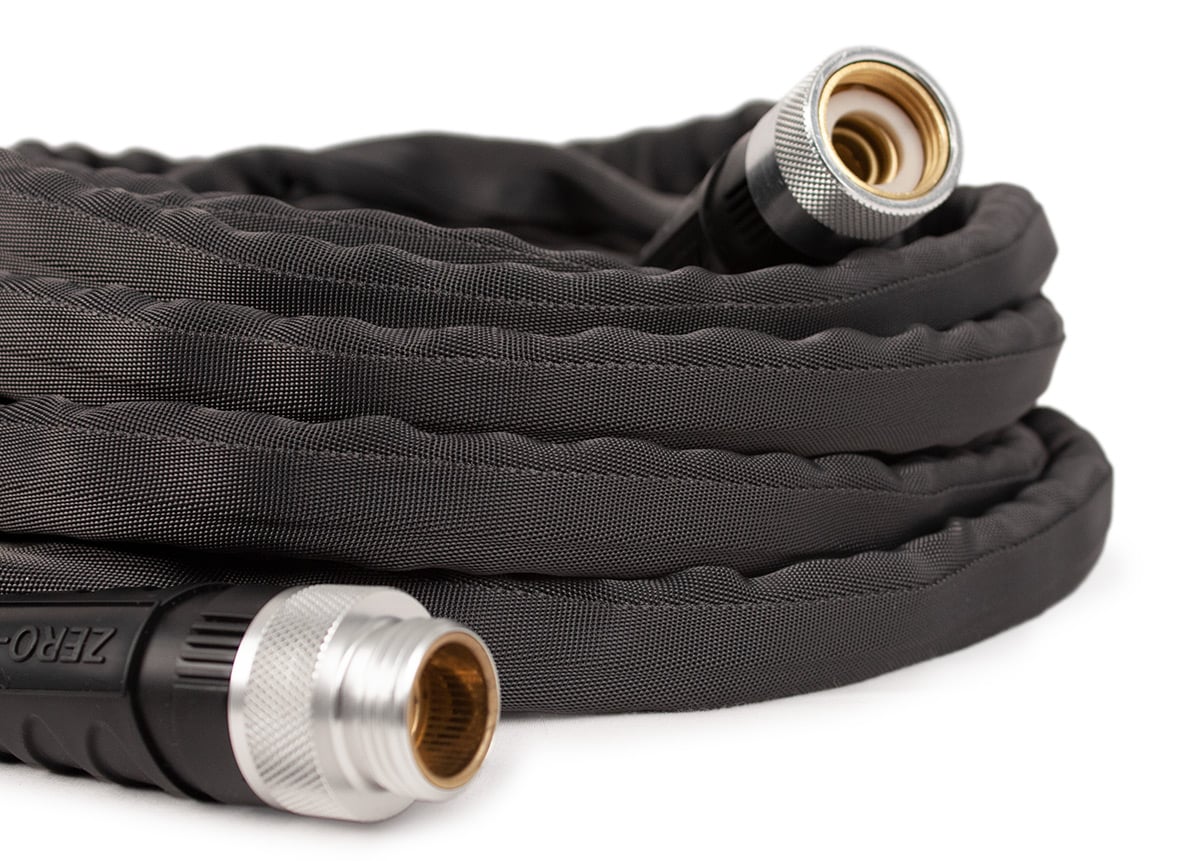
Compare commercial garden hose for 2026 using specs, manuals, warranties and owner feedback. See our research-based picks, key trade-offs and buying advice.
A homeowner’s hose gets used a few times a week. A commercial hose gets dragged across pavement, run for hours, coiled and uncoiled by different crew members, and left out in the sun and cold day after day. That workload chews through consumer-grade vinyl quickly. A commercial or professional-grade garden hose is built for continuous heavy use: a thick, abrasion-resistant wall, crush-proof metal fittings, real kink resistance, and a material that lasts for years rather than a season. For landscapers, contractors, farms, and anyone whose hose is a daily tool, durability and reliability outrank price.
What matters in a commercial garden hose
Heavy-duty is more than a label. The features that actually earn it are:
- Durable material: rubber, reinforced hybrid polymer, and industrial polyurethane hold up to daily abuse where thin vinyl fails fast.
- Thick, abrasion-resistant wall: a heavier jacket survives being dragged over concrete, gravel, and edges without wearing through.
- Kink and crush resistance: crews rarely handle a hose gently, so it needs to resist kinks and shrug off being stepped on or driven over.
- Crush-proof metal fittings: solid brass or aluminum couplings survive drops and cross-threading that destroy plastic ends.
- A strong warranty: a long or lifetime warranty signals the maker expects the hose to endure hard use.
There is also a cost argument that professionals understand better than most. A budget hose bought on price looks cheap on the shelf, but if it kinks, splits, or wears through in a season, the real cost is the repeated replacements plus the downtime of a hose failing mid-job. A durable commercial hose spreads its higher upfront price over years of daily use, which usually makes it the cheaper option over time. For a crew, reliability has its own value: a hose that does not kink or blow a fitting keeps the work moving and does not leave someone hunting for a repair coupling on a busy day. That is why the features above are worth paying for on a hose that earns its keep.
Research-based picks
These reviewed hoses are built around the heavy-duty features professional use demands.
- Teknor Apex NeverKink 5/8 in x 100 ft Heavy-Duty: a professional-grade hose whose reinforcing mesh resists kinks and crushing, with tough couplings and a build aimed squarely at heavy, repeated use. The 100 foot length suits larger properties and job sites.
- Eley Polyurethane 5/8 in x 100 ft: industrial polyurethane, made tough with a high burst rating, strong kink resistance, and a lifetime warranty. It is lead-free and drinking-water safe as well, useful on sites where water may be consumed.
- Flexzilla Heavy-Duty 5/8 in x 75 ft: a reinforced hybrid polymer hose that stays flexible in heat and cold, resists kinks, and uses anodized aluminum fittings, a durable all-rounder for crews that work in all conditions.
Buying tips
Buy for the workload, not the sticker price, because a cheap hose replaced every season costs more than one durable hose over time. Prioritize a proven heavy-duty material with a thick wall and crush-proof metal fittings, and confirm the warranty length as a proxy for expected life. Size the diameter to the flow you need, stepping up to 3/4 inch for high-volume sprinklers or long runs on large properties. Even a commercial hose lasts longer with basic care: keep it off the ground and out of direct sun when idle, drain it before freezes, and fix small leaks early with a mender rather than retiring the whole hose. For a fleet of hoses, standardizing on one durable model keeps fittings and repairs interchangeable across the crew.
FAQ
What makes a hose commercial or heavy-duty?
A durable material, a thick abrasion-resistant wall, real kink and crush resistance, crush-proof metal fittings, and usually a strong warranty. Together they let the hose take daily, continuous use.
What is the best material for commercial use?
Rubber, reinforced hybrid polymer, and industrial polyurethane all hold up to hard use, while vinyl does not. Compare them in our garden hose materials guide.
Is a longer or wider hose better for professional work?
Wider diameter protects flow over long runs, and length should match the site. For large areas, a 5/8 or 3/4 inch hose is the usual professional choice. See our garden hose sizes guide.
Do commercial hoses still need winterizing?
Yes. No material survives water freezing inside it, so drain and shelter even a heavy-duty hose before a hard freeze.
Is a heavy-duty hose worth the higher price?
For daily or professional use, usually yes. A durable hose that lasts years works out cheaper than replacing a budget hose every season, and it avoids the downtime of a hose failing mid-job. For occasional light watering, the extra cost is harder to justify.
Compare heavy-duty builds in our garden hose materials guide, size it correctly with the garden hose sizes guide, and see every pick in the best garden hoses guide.
How we research
We compare published manufacturer specifications, official manuals, warranty information and recurring owner feedback. Rankings are research-based unless original YardToolLab test evidence is explicitly shown on the page.