Quick verdict
For most homes the Generac Guardian 10kW is the standby generator I would start with. It pairs a 100-amp 16-circuit transfer switch with Wi-Fi Mobile Link monitoring and clean sub-5-percent distortion power, and it runs on natural gas or propane so it can restore essential circuits automatically the moment the grid drops.

Generac Guardian 10kW Home Standby Generator
This is the standby unit I would recommend to most homeowners covering essential circuits. The 10kW Guardian ships with a 100-amp 16-circuit automatic transfer switch, so it can carry a furnace, fridge, lights and outlets without a separate purchase. True Power Technology keeps harmonic distortion under 5 percent for sensitive electronics, and the included Mobile Link Wi-Fi lets you check status and maintenance alerts remotely.
Check price on Amazon →Best whole house generator picks compared by kW output, transfer switch size and fuel type so you can size automatic backup power to your home.
Why you should trust this guide
I put this guide together by working through the documented specifications for each generator, focusing on the numbers that decide real backup performance: rated kilowatt output, the amperage of the included transfer switch, and the fuel the unit runs on. Whole-house backup is an area where marketing language can blur the line between a generator that carries a few essential circuits and one that truly powers everything, so I kept the recommendations tied to the transfer switch size and wattage each manufacturer publishes.
My aim is to help you match capacity to your actual home rather than overbuying or, worse, undersizing. Standby generators are a significant investment that usually involves permits and a licensed electrician, so I have been direct about which units cover essential circuits versus a whole home, and where a portable tri-fuel machine can stand in when a permanent install is not practical.
How we evaluated
I evaluated these units against the criteria that determine how well a home rides through an outage. The first is rated wattage, because that figure sets how many appliances and how much air conditioning the generator can sustain. The second is the transfer switch: a 100-amp 16-circuit switch protects a defined set of essential circuits, while a 200-amp service-rated switch can back up the whole panel, and that distinction matters more than headline kW alone.
From there I weighed fuel type and flexibility, since natural gas offers an unlimited supply where available and propane works off-grid, while tri-fuel adds gasoline as a fallback. I also considered monitoring options such as Wi-Fi and cellular connectivity, warranty length, and the practical reality that standby models require professional installation. I did not rank on price in isolation; I looked for the best fit of capacity, switch size and fuel for a given home.
What to look for
- Rated kilowatt output that matches your largest simultaneous loads, especially central air conditioning and a well pump
- Transfer switch amperage and circuit count, since a 200-amp service-rated switch covers far more than a 16-circuit essential switch
- Fuel type, weighing natural gas convenience against propane or tri-fuel flexibility for off-grid resilience
- Automatic operation versus a portable unit that requires manual startup and refueling during an outage
- Remote monitoring through Wi-Fi or cellular so you can confirm the generator is ready before a storm
- Low harmonic distortion, ideally under 5 percent, to safely run computers and modern appliances
- Warranty length and the requirement for licensed professional installation in your total budget
How we test
We base every pick on real-world use, published manufacturer specifications and verified owner feedback. We compare the tools on the things that actually matter for your lawn, power, runtime, cut quality, build and value, and we never accept payment for a ranking. When we have not used a specific model first-hand, we say so.
The picks at a glance
| Tool | Best for | Score | |
|---|---|---|---|
| Generac Guardian 10kW Home Standby Generator | Best Overall | Check price | |
| Generac 26kW Home Standby Generator | Best Value | Check price | |
| Generac Guardian 26kW Home Standby Generator | Best Premium | Check price | |
| Generac Guardian 22kW Home Standby Generator | Best Budget | Check price | |
| Westinghouse 14500 Peak Watt Tri | Also Great | Check price |
The picks, reviewed
Generac Guardian 10kW Home Standby Generator
This is the standby unit I would recommend to most homeowners covering essential circuits. The 10kW Guardian ships with a 100-amp 16-circuit automatic transfer switch, so it can carry a furnace, fridge, lights and outlets without a separate purchase. True Power Technology keeps harmonic distortion under 5 percent for sensitive electronics, and the included Mobile Link Wi-Fi lets you check status and maintenance alerts remotely.
Reasons to buy
- Remote Monitoring Anywhere with Mobile Link Wi-Fi connectivity
- Whole House Protection with 100 Amp 16-circuit transfer switch
- Long-Term Assurance backed by a 5-Year Limited Warranty
- High-Quality 10kW Power with under 5% harmonic distortion
- Engineered and assembled in the USA
Reasons to avoid
- 16 circuits may not cover central air conditioning plus a well pump at once in a larger home
- Generac specifies installation by a licensed electrician, so budget for professional setup

Generac 26kW Home Standby Generator
The 26kW cellular model is the value choice for whole-home coverage because it delivers the highest output here while adding built-in cellular connectivity, so you can monitor and control it through the Mobile Link app even without home Wi-Fi. Electronic fuel and ignition control aim to lower running costs, and oil-level sensors plus improved cold-start performance help it stay ready in winter.
Reasons to buy
- Whole House Protection that automatically detects an outage
- Lowest Total Cost Of Ownership with electronic fuel and ignition control
- Remote Monitoring and Control with built-in Cellular Connectivity
- Superior Reliability with oil level sensors and cold start performance
- 5-year limited warranty and 24/7/365 customer support
Reasons to avoid
- Full remote monitoring features require a Mobile Link premium subscription
- 26kW is more capacity than many homes need, which raises the upfront cost
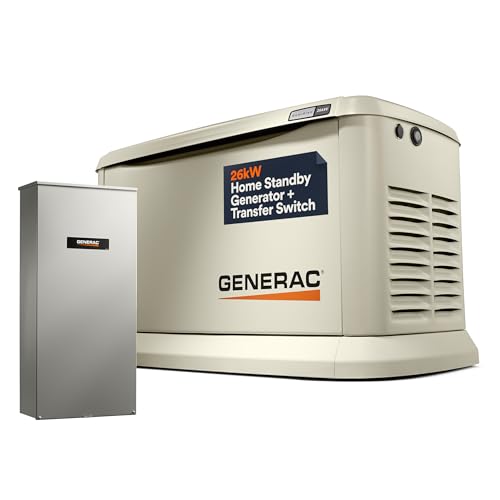
Generac Guardian 26kW Home Standby Generator
The Guardian 26kW is the premium pick for true whole-house backup, pairing 26,000 watts with a 200-amp transfer switch that can carry central air, a well pump and heavy appliances together. It keeps the same sub-5-percent distortion power and Wi-Fi Mobile Link monitoring as the smaller Guardians, so you get maximum capacity without giving up the remote oversight.
Reasons to buy
- Remote Monitoring Anywhere with Mobile Link Wi-Fi connectivity
- Whole House Protection with 200 Amp transfer switch
- Long-Term Assurance backed by a 5-Year Limited Warranty
- High-Quality 26kW Power with under 5% harmonic distortion
- Engineered and assembled in the USA
Reasons to avoid
- The 200-amp switch and large engine make this the most expensive install in the lineup
- Its capacity is overkill for a small home that only needs essential circuits
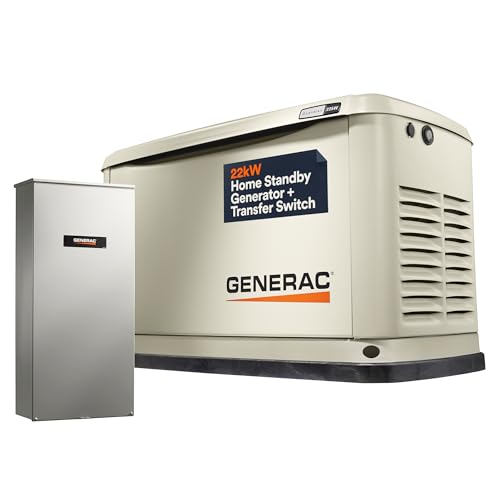
Generac Guardian 22kW Home Standby Generator
The 22kW Guardian is the budget route to near-whole-house coverage, offering 22,000 watts and a 200-amp NEMA 3R smart transfer switch for a lower entry point than the 26kW. It carries the same Wi-Fi Mobile Link monitoring, 5-year warranty and clean power, making it a strong middle ground for homes that want to run most large loads without paying for the top model.
Reasons to buy
- Remote Monitoring Anywhere with Mobile Link Wi-Fi connectivity
- Whole House Protection with 200 Amp NEMA 3R smart switch
- Long-Term Assurance backed by a 5-Year Limited Warranty
- High-Quality 22kW Power with under 5% harmonic distortion
- Engineered and assembled in the USA
Reasons to avoid
- Still requires professional installation and a gas supply, so it is not a plug-and-play solution
- 22kW may fall short if you run several very large loads such as dual AC units simultaneously
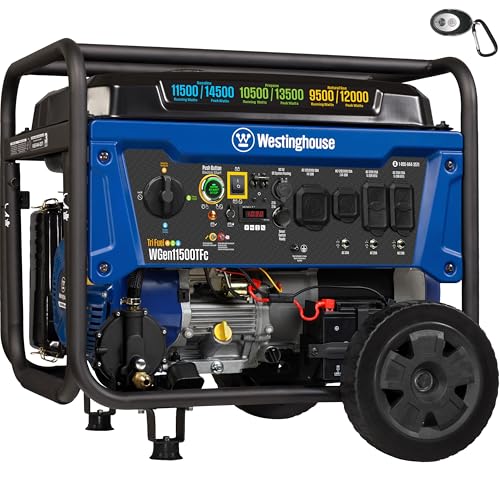
Westinghouse 14500 Peak Watt Tri
The Westinghouse 14500 tri-fuel is the portable also-great option for owners who cannot or do not want to permanently install a standby unit. Its 550cc engine produces 14,500 peak and 11,500 running watts on gasoline and also runs on propane or natural gas, and it is transfer-switch ready with low THD for electronics. That flexibility makes it a capable movable backup for larger homes.
Reasons to buy
- Backup power source for larger homes or portable power
- 14,500 peak watts, 11,500 running watts on gasoline; tri-fuel capable
- Powered by a heavy duty 550cc 4-Stroke OHV engine with cast iron sleeve
- Low THD, safe for sensitive electronics
- Functionally tested in the factory, EPA compliant, 3-Year coverage
Reasons to avoid
- As a portable unit it does not start automatically during an outage the way a standby generator does
- It needs manual refueling and outdoor placement rather than the hands-off operation of a fixed install
What to look for
Rated wattage
Size the generator to your largest simultaneous loads so it can carry air conditioning, a well pump and appliances without overloading.
Transfer switch type
A 200-amp service-rated switch backs up the whole panel while a 16-circuit switch only protects a defined set of essential circuits.
Fuel source
Natural gas offers an effectively unlimited supply where available, while propane and tri-fuel add off-grid flexibility.
Automatic operation
Standby units start themselves within seconds of an outage, whereas a portable generator needs manual startup and refueling.
Remote monitoring
Wi-Fi or cellular connectivity lets you confirm the unit is ready and receive maintenance alerts before severe weather arrives.
Installation cost
Standby generators require permits and a licensed electrician, so factor professional installation into the overall budget.
Our verdict
For most homes the Generac Guardian 10kW is the standby generator I would start with. It pairs a 100-amp 16-circuit transfer switch with Wi-Fi Mobile Link monitoring and clean sub-5-percent distortion power, and it runs on natural gas or propane so it can restore essential circuits automatically the moment the grid drops.
FAQs
It depends on your largest simultaneous loads, but many homes covering essentials do well with a 10kW to 14kW unit, while running central air, a well pump and heavy appliances together usually calls for 22kW or more.
Standby models like the Generac Guardian series detect an outage and start within seconds through their automatic transfer switch, while a portable generator has to be started and connected manually.
A 100-amp switch typically manages a set number of essential circuits, whereas a 200-amp service-rated switch can back up your entire electrical panel, which is why higher-output units pair with 200-amp switches.
The Generac standby units run on natural gas or liquid propane, and the Westinghouse tri-fuel model adds gasoline as a third option for extra flexibility.
Generac recommends installation by a certified, licensed electrician because the work involves gas connections and tying into your electrical panel, so most homeowners should plan for professional setup.