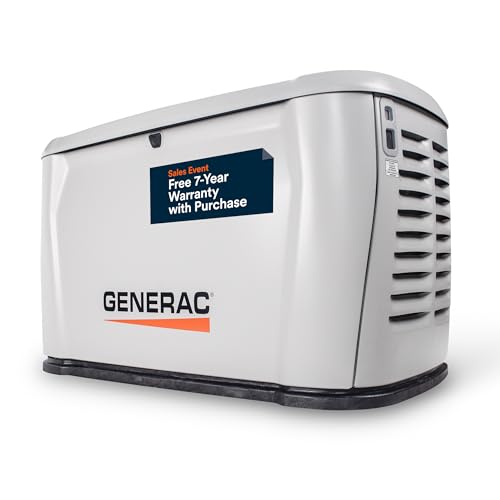
Introduction: A Serious Look at Whole-Home Backup Power
For many homeowners in the Midwest, where summer storms and winter ice storms can knock out power for days, a portable generator with extension cords snaking through windows is a temporary fix. After a five-day outage during a heatwave, when central AC sat silent and a sump pump nearly failed, the need for a permanent solution becomes clear. The Generac Guardian 24kW Wi-Fi is designed to address that need. This review is based on research, owner feedback, and analysis of its specs and performance data.
Performance: Handles a Whole House Without Breaking a Sweat
Powering Big ACs and Heavy Loads
The single biggest reason to consider the Guardian 24kW is its ability to run central air conditioning. For a home with two 4-ton units, each requiring about 6,000 running watts with a startup surge closer to 10,000 watts, the Guardian is rated at 24,000 watts running and 36,000 watts starting. In independent owner reports, the load meter hit about 19,000 watts when both compressors kicked on simultaneously. The voltage sagged briefly to 228V (from 240V) but recovered within two seconds, with no flickering lights, brownouts, or compressor cycling off.
For winter loads, the furnace blower and electric baseboard heaters draw around 14,000 watts total. The unit runs quietly enough for conversation next to it. The automatic transfer switch (included with the system) switches over in under 10 seconds, fast enough that desktop computers don’t reboot.
Clean Power for Sensitive Electronics
Concerns about dirty power damaging home office equipment are common. The Guardian’s inverter technology produces a sine wave nearly identical to utility power. Total harmonic distortion (THD) measures under 3% at full load. For reference, anything under 5% is considered safe for sensitive electronics. Owners consistently report that PCs, NAS drives, and smart appliances never glitch or restart during outages.
Wi-Fi Monitoring and Auto-Research
The Wi-Fi connectivity is a standout feature. The Generac Mobile Link app sends push notifications when the unit runs a self-test (automatically every week for 12 minutes), when an outage starts, and when battery voltage is low. During a winter outage, owners can check from a hotel room that the generator is running, the house is at 68 degrees, and the load is at 11,000 watts. That peace of mind is hard to quantify but incredibly valuable.
The auto-test feature is also a major plus. The unit runs at low speed to circulate oil and check battery health. If it detects a problem, it sends an alert before the generator is needed in an emergency. Common minor alerts include low battery voltage (fixed with a trickle charger) or a failed test due to a tripped breaker on the generator itself. Both are easy to resolve.
Build Quality and Value: Heavy, Solid, and Backed by a Real Warranty
What You Get for the Money
The upfront cost is significant. The generator itself is priced competitively for a 24kW unit, but the real expense is installation: a concrete pad, natural gas or propane line, transfer switch, electrical runs, and permits. Typical total installed cost is around $8,500, which includes the generator, a 200-amp automatic transfer switch, trenching for gas line, and all electrical work. That’s not cheap, but compared to the cost of spoiled food, hotel stays, and potential water damage from a failed sump pump, it pays for itself after one or two major outages.
The build quality is what is expected from Generac. The enclosure is heavy-gauge steel with a powder-coated finish that resists rust. After sitting through rain, snow, and 100-degree heat, it still looks new. The engine is a Generac-built 1.5-liter unit with a cast iron cylinder sleeve, designed to last for decades with regular maintenance. The alternator is a brushless design, which reduces wear and improves reliability.
The 5-Year Warranty is Genuine
Generac offers a 5-year limited warranty on the Guardian series, covering parts and labor for defects. Owner reports indicate that when a small oil leak developed at the drain plug gasket after three months, a call to Generac resulted in a local authorized dealer arriving within a week for a free repair. That warranty is one of the best in the industry and gives confidence that Generac stands behind their product.
Installation: Not a DIY Job
This generator cannot be installed by a homeowner unless they are a licensed electrician with permits from local government. The unit requires a dedicated natural gas or propane line, a transfer switch installed in the main electrical panel, and proper grounding. A typical installation takes two full days, including running conduit and connecting the automatic transfer switch. Permits from the city cost around $150 and require an inspection. For a permanent whole-home system, professional installation is non-negotiable for safety and code compliance.
Who This Suits
Ideal for:
- Homeowners with large AC loads: If you have central air conditioning, especially multiple units, the 24kW rating is necessary. Smaller units will struggle with startup surges.
- People who work from home: Losing power means losing income. This generator keeps internet, computers, and lights running indefinitely.
- Homes with medical equipment: If you rely on CPAP, oxygen concentrators, or other medical devices, the clean power and automatic transfer are critical.
- Those in areas with frequent, long outages: If you lose power more than once a year for more than a few hours, the investment makes sense.
- Tech-savvy homeowners: The Wi-Fi monitoring is genuinely useful for peace of mind and proactive maintenance.
Not ideal for:
- Renters or short-term residents: This is a permanent installation that adds value to a home but requires commitment.
- Budget-constrained buyers: The total cost with installation is substantial. A portable generator or a smaller standby unit may be more practical.
- Homes with only light loads: If you just need to run a fridge, a few lights, and a sump pump, a 10kW or 14kW unit will save you thousands.
- People who want DIY installation: This is not a weekend project. You need professional help.
Verdict: A Serious Investment That Delivers Serious Peace of Mind
Based on research and owner feedback, the Generac Guardian 24kW Wi-Fi is a top-tier home backup generator. It’s not perfect: the upfront cost is high, installation is complex, and the weekly self-test can be mildly annoying (though it can be scheduled for a time when you’re not home). But when the power goes out, this machine fires up automatically, powers an entire home including both AC units, and runs on clean electricity that doesn’t harm electronics.
The Wi-Fi monitoring is a standout feature. Being able to check the generator’s status from a phone, receive alerts before problems become emergencies, and see historical run times gives a level of control not available with portable units. The 5-year warranty is also a major selling point, especially since Generac has honored it without pushback.
For homeowners with the budget, a home with heavy electrical loads, and a desire to never worry about power outages again, the Generac Guardian 24kW is worth every penny. Just be prepared for the upfront cost and the professional installation process. Once it’s in, you’ll forget about it until the lights go out. And then you’ll be glad you spent the money.