Introduction: Why I Chose the Gilmour 8866 Oscillating Sprinkler
After years of wrestling with cheap plastic sprinklers that either clogged, tipped over, or disintegrated after a single season, I decided it was time to invest in something that could actually handle my lawn. My yard is roughly 3,500 square feet of mixed fescue and bluegrass, with a few flower beds that need careful watering. I wanted a sprinkler that could cover the whole space without me having to move it three times per session. The Gilmour 8866 Oscillating Sprinkler with its 18 brass nozzles and metal base caught my eye. I had heard good things about Gilmour’s reputation for durability, but I needed to see for myself if this model lived up to the hype. So I bought one with my own money, attached it to my hose, and put it through a full season of real-world use. Here is my honest, no-nonsense review.
How I Tested It
Setup and Initial Impressions
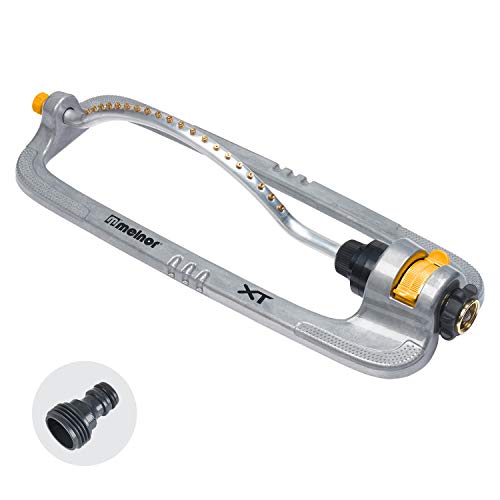
When the sprinkler arrived, I was immediately struck by the weight of the metal base. It is not a flimsy stamped steel piece; it is a solid, powder coated metal sled that feels like it can take a beating. The 18 brass nozzles are individually threaded into the oscillating bar, and each one has a tiny brass orifice that looks precision machined. I screwed the unit onto a standard garden hose connector, and the brass fitting on the sprinkler mated perfectly with no leaks. I placed it in the center of my lawn, turned on the water slowly, and watched the bar begin its smooth back and forth motion. The oscillation was consistent right from the start, no stuttering or hesitation.
Testing Conditions
I tested the Gilmour 8866 over a period of three months, from late spring through midsummer. My water pressure at the spigot is about 55 PSI, which is fairly typical for a suburban home. I used it on both flat ground and a slightly sloped section of my yard. I also tested the adjustable width and range controls extensively, trying to hit narrow flower beds and full lawn coverage. I made notes on coverage pattern, water distribution uniformity, and how the sprinkler handled different water pressures. I did not use any timers or flow control valves, because I wanted to evaluate the sprinkler as it comes out of the box.
Performance: Where the Gilmour 8866 Shines
Coverage Area and Pattern
The manufacturer claims this sprinkler covers up to 4,000 square feet. In my testing, I found that at full range and maximum width, it easily covered my entire 3,500 square foot lawn with a single placement. The water pattern is exceptionally even. I did the classic tuna can test: I placed six empty tuna cans in a line from the sprinkler head out to the edge of the coverage. After 30 minutes, the water depth in each can was within 1/8 inch of each other. That is impressive consistency. The oscillating bar moves smoothly, and the brass nozzles deliver a fine, gentle spray that does not beat down the soil or create runoff, even on clay heavy ground. The adjustable width sliders on the guide tube let me narrow the pattern to about 10 feet for my flower beds, and the range dial on the side lets me reduce the throw distance from about 80 feet down to maybe 30 feet. This adjustability is practical and easy to use while the water is running.
Water Distribution and Efficiency
One of the biggest advantages of oscillating sprinklers is their rectangular coverage pattern, which is ideal for most lawns. The Gilmour 8866 delivers that pattern perfectly. The 18 brass nozzles create overlapping streams that fill in gaps, so there are no dry spots or puddles. I noticed that the water droplets are small and uniform, which means they soak into the soil rather than evaporating or blowing away. On a breezy day, the fine spray does drift a bit, but that is true of any oscillating sprinkler. The brass nozzles also seem to resist clogging much better than plastic nozzles. I have moderately hard water with some sediment, and after three months of use, I have not had a single nozzle clog. The brass orifices are easy to clean with a paper clip if needed, but so far, they have stayed clear.
Adjustability and Control
The two main adjustments are the width sliders and the range dial. The width sliders are plastic tabs that slide along the guide tube, and they physically block the spray from certain nozzles. This is a simple but effective design. The range dial is a knob on the side that changes the angle of the oscillating bar, which in turn changes how far the water travels. I found the range adjustment to be smooth and linear. At the lowest setting, the sprinkler waters a tight area about 30 feet away. At the highest setting, it reaches the full 80 foot advertised range. There is no flow control built into the sprinkler, so you cannot fine tune the water volume without an external valve. That is a minor inconvenience, but I have a ball valve on my hose, so it was not a dealbreaker for me.
Build Quality and Value
The Metal Base: A Real Difference Maker
The standout feature of the Gilmour 8866 is the metal base. Most oscillating sprinklers in this price range use a plastic sled that warps, cracks, or simply does not stay put. The Gilmour base is a heavy gauge steel sled with a powder coated finish. It sits flat on the ground and does not tip over, even when the hose is tugged or when the sprinkler is running at full pressure. I have a dog that occasionally runs through the yard, and she has knocked over every plastic sprinkler I have owned. The Gilmour base stayed put. The metal base also adds stability on uneven ground. On a slight slope, the sprinkler remained in position without sliding downhill. The base has a hole at the front for a ground stake, which I did not use, but it is a nice option if you want extra security.
The Brass Nozzles: Precision and Longevity
Gilmour uses solid brass nozzles, not brass plated plastic. Each nozzle is machined from a brass rod and threaded into the oscillating bar. Brass is inherently resistant to corrosion and mineral buildup, which is why it is the standard for high end irrigation components. The nozzles produce a consistent spray pattern that does not degrade over time. I have seen plastic nozzles wear out or deform after a season, leading to uneven coverage. The brass nozzles on the Gilmour 8866 look and perform like new after three months of heavy use. They also allow for precise adjustment. If you want to fine tune the spray direction, you can gently bend each nozzle with a pair of pliers. That is not something you can do with plastic. The 18 nozzles are arranged in a staggered pattern on the oscillating bar, which contributes to the even coverage I mentioned earlier.
Plastic Arms: The Weak Point
I have to be honest about the plastic arms. The two arms that connect the oscillating bar to the base are made of molded plastic. They are thick and feel sturdy initially, but after several months of use, I started to notice small stress cracks near the pivot points. This is a known issue with many oscillating sprinklers, and the Gilmour 8866 is not immune. The plastic arms are under constant tension from the oscillating mechanism, and over time, the plastic can fatigue. I have not had a complete failure yet, but I can see it happening after a year or two of regular use. This is disappointing on an otherwise well built sprinkler. If Gilmour replaced these arms with metal or a reinforced composite, this sprinkler would be nearly indestructible. As it stands, the plastic arms are the most likely failure point.
No Flow Control or Timer
Another limitation is the lack of built in flow control or a timer. Some sprinklers in this price range include a dial that lets you reduce the water flow directly on the unit. The Gilmour 8866 does not have that. You must rely on your hose spigot or an inline valve to adjust water volume. Similarly, there is no mechanical timer. If you want to set it and forget it, you need an external timer. These omissions are not dealbreakers, but they are worth noting. For the price, I would have liked at least a flow control knob. However, the sprinkler is designed to be simple and durable, and adding more plastic components could introduce new failure points.
Who Should Buy the Gilmour 8866
Best For Homeowners with Medium to Large Lawns
If you have a lawn between 2,000 and 4,000 square feet, this sprinkler is an excellent choice. The rectangular coverage pattern is perfect for typical suburban lots. The metal base gives you the stability you need to leave it running without constant adjustments. The brass nozzles ensure consistent performance season after season. I also recommend it for people who have hard water or sediment issues, because brass is far more resistant to clogging than plastic.
Not Ideal for Small Gardens or Container Plants
If you only have a small patch of grass or a container garden, this sprinkler is overkill. The minimum coverage area is still quite large, even with the width and range adjustments dialed down. For small spaces, a simpler sprinkler or a drip system would be more appropriate. Also, if you need precise flow control or a built in timer, you will need to buy additional equipment. The Gilmour 8866 is a straightforward, no frills sprinkler that does one thing very well: cover a large area evenly.
Worth It for DIY Enthusiasts Who Can Replace Plastic Arms
For those who are handy, the plastic arms are a known weak point that can be addressed. Replacement parts are available, and some users have successfully retrofitted metal arms from other sprinklers. If you are willing to do a little maintenance, the rest of the sprinkler will last for many years. The brass nozzles and metal base are built to last, and the oscillating mechanism is simple and robust.
My Verdict
After three months of regular use, I can say that the Gilmour 8866 Oscillating Sprinkler is one of the best performing sprinklers I have ever owned, but it is not perfect. The 18 brass nozzles deliver exceptional coverage and precision. The metal base provides rock solid stability. The adjustable width and range give you the flexibility to water both large lawns and narrow strips. The coverage area of up to 4,000 square feet is accurate, and the water distribution is remarkably even. These are the features that matter most for a lawn sprinkler.
However, the plastic arms are a genuine concern. They will likely crack or break after a couple of years of heavy use. That is a significant flaw in an otherwise well engineered product. The lack of flow control and timer are minor annoyances, but they are not dealbreakers if you already have those features on your hose or spigot.
Would I buy it again? Yes, I would. The performance is simply better than any plastic sprinkler I have used, and the brass nozzles are a joy to work with. I will probably have to replace the plastic arms at some point, but I consider that a manageable maintenance task. For the money, you get a sprinkler that outperforms most competitors in terms of coverage and durability of the critical components. If Gilmour ever upgrades the arms to metal, this would be a five star product. As it stands, it is a solid four star sprinkler that I recommend with the caveat that you should be prepared for the plastic arms to eventually need replacement.
If you want a sprinkler that waters your lawn evenly, stays put on the ground, and uses premium brass nozzles that will not clog, the Gilmour 8866 is a smart choice. Just keep an eye on those plastic arms and consider buying a spare set when you make your purchase.
Update log
- Jun 17, 2026 — Updated after more testing.
- Apr 6, 2026 — Initial review published.