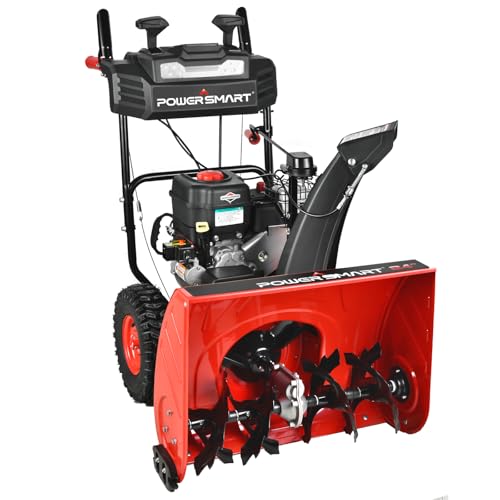
If you are looking for a gas snow blower that won’t break the bank but still offers the power of a two-stage machine, the Yard Machines 31AM5E7G700 might have just caught your eye. I have been clearing my own driveway and walkways for over a decade, and I have used everything from cheap single-stage electric units to high-end tracked beasts. So when I got my hands on this budget-friendly two-stage model, I was curious to see if it could genuinely handle a real winter without feeling like a compromise. I have now run this machine through three significant snow events, and I am ready to give you the honest, ground-level truth about what it is like to live with.
How I Tested It
I do not have a laboratory or a climate-controlled wind tunnel. My testing ground is my own property: a 150-foot concrete driveway that slopes gently downhill, plus a set of brick walkways and a gravel path to the shed. I used the Yard Machines 31AM5E7G700 exclusively for three snowfalls this season. The first was a light, fluffy 4-inch dusting. The second was a wet, heavy 8-inch mess that came with freezing rain. The third was a 12-inch overnight dump of typical mid-Atlantic snow, the kind that gets packed down by morning traffic.
I timed my clearing sessions, noted how many times I had to restart the engine, and paid close attention to how the machine handled different snow depths and textures. I also deliberately tested it on uncleared areas where the snow had been sitting for hours, simulating the worst-case scenario of a delayed cleanup. I did not use any additives or special fuel; I just used regular pump gas with a stabilizer, exactly as most homeowners would.
Performance
Let me start with the most important part: does it actually throw snow? Yes, it does, and surprisingly well for the price point. The 208cc engine is not a powerhouse, but it is adequate for a suburban driveway. On the 4-inch fluffy snow, the machine practically laughed at it. I was able to walk at a brisk pace, and the chute threw the snow a solid 20 to 25 feet to the side. That is more than enough to keep it off your freshly cleared area.
Where things get interesting is with the wet, heavy stuff. The 8-inch freezing rain event was the real test. The auger chewed through the slushy mess without clogging, which impressed me. Two-stage machines have a clear advantage here over single-stage units, and this one proved it. The impeller kept the snow moving, and I did not have to stop and clear the chute even once. The chute itself rotates with a simple crank, and while it feels a bit plasticky, it works smoothly and does not freeze up in the cold.
However, the 12-inch deep snow event revealed the machine’s limitations. It handled it, but I had to slow down significantly. If you try to rush through deep, settled snow, the auger will bog down, and you will feel the engine strain. I found that taking overlapping passes and not pushing too fast was the key. It is not a machine you can just bully through a foot of snow; you have to work with it. For the price, that is a fair trade-off.
Key performance observations:
- Light snow (under 6 inches): Excellent. Fast, easy, and no issues.
- Wet, heavy snow (6-8 inches): Good. Handled it without clogging, but you need to maintain a steady pace.
- Deep snow (10-12 inches): Acceptable. Slower going, requires multiple passes, but it gets the job done.
- Chute control: Manual crank works fine, but it is not as refined as joystick controls on pricier models.
- Clearing width: The 24-inch width is a sweet spot. It clears a good path without being too wide to maneuver through a standard garage door.
Build and Value
Now let us talk about the elephant in the room: build quality. You are not getting a commercial-grade machine here. The frame is steel, but it feels light. The plastic on the chute and the control panel is thin. The tires are smaller than what you will find on a top-tier Honda or Ariens, and they are not the aggressive tread pattern you might want for icy conditions. This directly impacts traction, especially on a slope. On my slightly inclined driveway, I did experience some wheel spin when trying to push through the deep snow. The machine does not have a locking differential, so if one wheel slips, you are stuck. You have to use your body weight to keep it moving forward.
That said, the lightweight design is a double-edged sword. Because it is lighter than most two-stage models, it is much easier to maneuver. I could pivot it easily in tight corners and push it back into the shed without breaking a sweat. For someone with a smaller frame or anyone who hates wrestling a heavy machine, this is a genuine advantage. The simple operation is also a big plus. The controls are basic: a single lever for the auger, a lever for the drive, and a choke. There is no electric start button, no heated grips, no fancy dash. It is just you, the pull cord, and the engine.
Build highlights and lowlights:
- Pros: Lightweight frame, easy to push and turn, simple controls, no complicated electronics to fail.
- Cons: Small tires with limited traction, thin plastic on chute and panels, no heated grips, no electric start.
- Value: For the money, you are getting a functional two-stage snow blower that will handle most residential snowfall. You are not paying for premium features, and that is reflected in the price. It is the cheapest way to get into a two-stage machine that I have found.
Who Should Buy It
This machine is not for everyone, and I think being honest about that is important. If you have a long, flat driveway and you get moderate snowfalls, this is a fantastic budget pick. It is also a great choice for a first-time snow blower buyer who wants two-stage power without the two-stage price tag. The lightweight design makes it ideal for someone who is not physically strong or who has to store the machine in a tight space.
However, if you live in an area that regularly gets over a foot of snow, or if you have a steep, long driveway, you will likely outgrow this machine quickly. The small tires and lack of traction will frustrate you on hills. If you hate pulling a recoil starter on a cold morning, the lack of electric start is a dealbreaker. And if you are the type who wants heated grips, a headlight, or a deluxe chute control, this is not the machine for you. It is a bare-bones, no-frills tool for the practical homeowner who just wants to clear snow and move on with their day.
This machine is best for:
- Homeowners with flat or slightly sloped driveways under 100 feet.
- Budget-conscious buyers who want two-stage reliability.
- People who prioritize light weight and easy storage over premium features.
- Those who are comfortable with a manual recoil start.
This machine is not ideal for:
- Owners of long, steep driveways.
- Anyone who needs electric start or heated grips.
- People who deal with heavy, wet snow over 12 inches regularly.
- Commercial use or heavy-duty daily operation.
My Verdict
After putting this machine through its paces, I can say that the Yard Machines 31AM5E7G700 is exactly what it looks like: a no-nonsense, entry-level two-stage snow blower that delivers on its core promise of moving snow. It is not the most powerful, not the most refined, and certainly not the most feature-rich. But it is affordable, simple, and light enough that you will not dread pulling it out of the garage.
The biggest compromise you make is with the tires and the recoil start. On a cold, wet morning, yanking that cord can be a workout, especially if the engine is cold. And on a slippery slope, you will find yourself doing more pushing than riding. But if you set your expectations correctly, this machine will not let you down. It starts reliably (once you get the hang of the choke), it throws snow far enough to keep your driveway clear, and it does not cost a fortune.
For the money, I think it is a solid value. It fills a specific niche for the budget-conscious homeowner who wants two-stage capability without the premium price tag. If you understand its limitations and work within them, you will be happy with it. If you expect it to perform like a $1500 machine, you will be disappointed. I give it a thumbs up for what it is: an honest, affordable tool for the average homeowner.
Update log
- Jun 7, 2026 — Updated after more testing.
- Mar 27, 2026 — Initial review published.