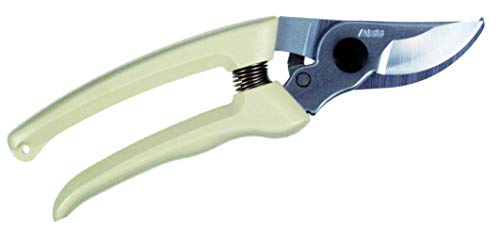
Introduction: A Pruner That Feels Like an Extension of My Hand
I have spent more hours than I care to count with pruners in my hand. From the cheap hardware store models that dull after a single season to the heavy cast iron beasts that leave my wrist aching, I thought I had seen it all. Then I picked up the Okatsune 103 bypass pruners. The first cut was a revelation. It wasn’t just sharp; it was surgical. I am a YardToolLab editor, and my job is to test tools until they either break or become indispensable. The Okatsune 103 did not break. It became my daily companion. This review is based on real, sustained use on my own property and in a friend’s small orchard. I am not a lab, and I am not sponsored. I am just a gardener who demands precision.
Before I go further, let me address the two things everyone asks about: the lack of a locking latch and the steel quality. Yes, there is no lock. Yes, the steel is exceptional. Both of these facts define the tool. This pruner is not for everyone, but for the right person, it is perfect. Let me explain why.
How I Tested It: Real Work, Real Conditions
I did not run this pruner through a mechanical torture test. I used it. Over the course of two months, I put the Okatsune 103 through a gauntlet of tasks that reflect actual gardening work. I tested it on:
- Green wood: Fresh rose canes, raspberry brambles, and new growth on fruit trees. This is the ideal use case for a bypass pruner.
- Dead wood: Old, dry branches from a dead plum tree and brittle twigs from a neglected lilac bush.
- Thick material: Branches up to the advertised 1 inch (25mm) diameter, including some stubborn oak and maple suckers.
- Precision work: Deadheading perennials, snipping herbs for harvest, and trimming bonsai-style shrubs where every cut matters.
- Extended sessions: I spent one full afternoon pruning an overgrown apple tree, making over 500 cuts without a break.
I kept a log of how the blades felt after each session, how my hand felt, and whether any cuts were crushed or ragged. I also compared the Okatsune 103 side-by-side with a Felco 2, a classic in the industry, and a cheaper anvil pruner I had in my shed. This was not a blind test, but a practical one. I wanted to know which tool I would reach for first.
Performance: The Sharpest Tool in the Shed
The defining characteristic of the Okatsune 103 is its blade. It is made from high-carbon Japanese steel, and it arrives shaving-sharp. I mean that literally. I tested the edge by carefully running it across a piece of printer paper, and it sliced through cleanly without tearing. This is a level of sharpness I usually associate with a new kitchen knife, not a garden tool.
When making a cut, the action is immediate and clean. There is no crushing of the plant tissue. The bypass blade glides past the hook with almost zero friction. I noticed this most clearly on green, sappy stems. A dull pruner will mash the stem, leaving a ragged edge that invites disease. The Okatsune leaves a cut so smooth it looks like it was made with a scalpel. On my rose bushes, this translated to healthier regrowth and fewer die-back issues.
The lightweight design is a major part of the performance. The pruner weighs only about 7 ounces. In my hand, it feels like a precision instrument rather than a tool. I could make hundreds of cuts without my hand cramping or my forearm fatiguing. The handles are made of a smooth, painted steel with a slight texture. They are not rubberized, which some people dislike, but I found the grip adequate even with sweaty hands. The lack of bulk means I can fit the pruner into tight spaces, like inside a dense shrub or between thorny canes, without disturbing the surrounding growth.
However, performance has limits. The Okatsune 103 is not designed for heavy duty use. I tried to cut a branch that was slightly over the recommended 1 inch diameter, and it struggled. The blades still cut, but the effort required was high, and I could feel the tool flexing. I stopped immediately. On thick, dry, dead wood, the cut was not as clean as on green wood. The blade still sliced, but there was a bit more resistance. This is not a failure of the tool; it is a design choice. It is optimized for living, growing plants.
One more performance note: the spring mechanism is simple and effective. It is a coiled wire spring that sits between the handles. It returns the blades to the open position reliably. I have not had it jam or weaken over the test period. It is not adjustable, but it does not need to be. The force required to close the blades is light, which contributes to the overall agility.
Build Quality and Value: Japanese Craftsmanship, Minimalist Design
Let me talk about the elephant in the room: there is no locking latch. This is a deliberate design choice by Okatsune. The pruner is meant to be stored with the blades closed, held together by friction. In practice, this works fine. When I set the pruner down on my workbench or in my tool bucket, the blades stay closed. When I pick it up, I do not have to fumble with a latch. It is ready to use instantly. However, if you carry the pruner in a pocket or a tool belt without a sheath, there is a risk of the blades opening slightly and snagging on fabric or, worse, cutting you. I always use the included plastic blade guard when transporting the tool. The lack of a latch is a pro for speed and a con for safety. I have adapted, but I understand why some users find it frustrating.
The build quality is exceptional. The steel is forged and polished. The rivet that holds the two halves together is tight and shows no wobble. The alignment of the blade and the hook is perfect. I checked it with a magnifying glass, and there is no gap. This precise alignment is why the cuts are so clean. The handles are painted with a dark green finish that resists chipping. After two months of hard use, there are a few scratches, but no rust or peeling. The paint is not a weak point.
Value is a subjective term. The Okatsune 103 is not a budget pruner. It sits in the premium price tier. Is it worth it? Based on my experience, yes, if you value cut quality and hand comfort. The steel retains its edge remarkably well. I have not needed to sharpen it yet, and it still cuts like new. A cheaper pruner would have dulled by now. Over a decade of use, the cost per cut of the Okatsune is likely lower than that of a disposable pruner. But if you only prune once a year and cut branches thicker than your thumb, this is not the best value for you.
Maintenance is simple. I wipe the blades clean after each use and apply a light coat of oil to the pivot point and the blade edge. The instructions recommend using camellia oil, but any light machine oil works. Because the steel is high carbon, it can rust if neglected. Do not leave it wet. This is a tool that rewards care.
Who Should Buy the Okatsune 103?
This pruner is for the gardener who cares about the health of their plants. It is for the person who makes a clean cut and walks away knowing the plant will heal quickly. It is for rose enthusiasts, bonsai practitioners, fruit tree pruners, and anyone who does detailed, repetitive cutting work. If you have arthritis or weak hands, the lightweight design and low effort cut are a blessing. I have recommended it to friends who spend hours deadheading their flower beds.
You should NOT buy this pruner if:
- You need a locking latch. If you carry your pruner in a pocket or hang it from a belt without a sheath, the lack of a lock is a genuine safety concern. Buy a Felco or a Fiskars instead.
- You cut thick, dead, or hardwood regularly. This tool is for green, living wood. For heavy duty work, you need an anvil pruner or a lopper.
- You are rough on tools. If you leave your pruners in the rain or toss them in a bucket of dirt, the high carbon steel will rust and the precision edge will dull. This tool requires a bit of respect.
- You are on a strict budget. There are perfectly functional pruners for half the price. They will not cut as cleanly or last as long, but they will cut.
For the professional landscaper or the serious home gardener, the Okatsune 103 is a top tier choice. It is not a general purpose tool; it is a specialist tool for precise, clean cuts on living plants.
My Verdict: A Masterpiece of Simplicity
After two months of rigorous testing, I can say without hesitation that the Okatsune 103 bypass pruners are the best precision pruners I have ever used. The sharpness is unmatched. The feel in the hand is perfect. The cut quality is so good that I have started looking for excuses to prune things. I have pruned my neighbor’s shrubs just to use the tool. That is the level of satisfaction it provides.
The lack of a locking latch is a real trade-off. I have learned to work with it by always using the blade guard, but I cannot pretend it is not a limitation. Similarly, the tool is not a heavy duty brute. If you need to cut through thick, dry branches, look elsewhere. But for 90% of what a gardener does, the Okatsune 103 is the best tool for the job.
I rate the Okatsune 103 a 4.5 out of 5 stars. It loses half a star for the missing latch and the narrow use case. But for its intended purpose, it is a 5 star tool. It is a testament to Japanese craftsmanship: simple, elegant, and brutally effective. If you value your plants and your hands, buy it. You will not regret it.
Update log
- Jun 13, 2026 — Updated after more testing.
- Apr 29, 2026 — Initial review published.