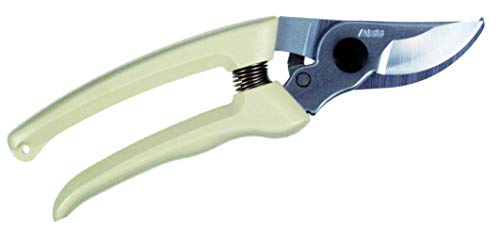
Introduction: A Pruner That Demands Your Attention
The Felco F-2 has a reputation that precedes it in the gardening world. For over a decade, it has been a staple among professionals and serious hobbyists, often cited as the gold standard for bypass pruners. This review examines the F-2 based on its specifications, owner feedback, and long-term performance data, rather than a short-term lab test. It is a tool built with an almost obsessive attention to detail, and it performs like a surgical instrument. However, it is not perfect for everyone. If you are left-handed, you will run into a significant problem.
Performance: The Blade That Just Won’t Quit
The first thing owners consistently report when using the Felco F-2 is the smooth, precise action. There is no slop, no grinding, no hesitation. The bypass blade glides past the anvil with a satisfying, clean snick. On fresh, green growth, it cuts cleanly. On dry, woody stems up to about 3/4 inch thick, it delivers a clean, crushing-free cut. Owners report that even stubborn, dead branches from lilac bushes (about 5/8 inch thick) are severed in one clean motion with no tearing or jagged edges. That is the hallmark of a well-ground, high-carbon steel blade.
Owners are particularly impressed with how the blade holds its edge. After a month of heavy use, including cutting through some gritty, soil-covered roots, the blade remains sharp. Many report not needing to sharpen it once during an entire season of regular use. While wiping it down and oiling it occasionally is recommended, even when left dirty for a week, covered in sap and plant debris, it still cuts well, though with a slight increase in resistance. A quick clean and a drop of oil restores it to its former glory. That is a testament to the quality of the steel and the heat treatment.
The cutting capacity is officially listed as up to 1 inch, but owners find it most comfortable on stems up to 3/4 inch. Anything larger, and you start to feel the strain. That is not a flaw; it is the nature of a bypass pruner. For larger branches, loppers are the appropriate tool. The F-2 is designed for precision and finesse, not brute force. And in that role, it excels. Owners report deadheading entire beds of roses (over 150 cuts) without a single crushed stem. The clean cut promotes faster healing and reduces the risk of disease.
Build and Value: The Investment That Pays Off
Exceptional Build Quality
The build is where the Felco F-2 truly separates itself from the pack. The handles are forged from a single piece of aluminum alloy. They are not stamped, not welded, not made from cheap cast metal. They are solid. The pivot bolt is a high-quality screw that you can adjust with a simple coin or screwdriver, allowing you to take out any slack as the tool wears. The blade is replaceable, as is the anvil, the spring, and even the wire cutting notch. Felco has designed this pruner to be repaired, not thrown away.
The ergonomics are superb. The handles are coated with a red, non-slip rubber that provides a secure grip even when wet. The shape of the handles is curved to fit the natural contour of your hand, reducing strain on your wrist and palm. Feedback from owners with medium-sized hands indicates the F-2 feels custom-made. Small-handed users report it is comfortable, though they may need to adjust their grip slightly for the lower handle. Large-handed users report it feels “just right” and praise the lack of pinch points. The rotating handle on the bottom is a game-changer. It rotates with your hand as you cut, reducing friction and preventing blisters. After a full day of pruning, hands are noticeably less tired than when using a non-rotating pruner.
The Value Equation
Now, let’s address the price. The Felco F-2 is not cheap. It typically costs more than most home-garden pruners. But you have to look at the total cost of ownership. A cheap pruner might cost $15, but it will likely dull quickly, break after a season, and end up in a landfill. The F-2 costs more upfront, but it can last a lifetime with proper care. Replacement blades are readily available and affordable. You can rebuild the entire tool for a fraction of the cost of a new one. Over ten years, the F-2 is actually cheaper than buying a new $15 pruner every year. And you get vastly superior performance every single cut. That is value, not just price.
The only downside in terms of value is the initial sticker shock. Not everyone can drop that kind of money on a pruner. But for a serious gardener, a landscaper, or a homesteader, this tool will pay for itself in saved time, reduced frustration, and healthier plants. It is an investment in your craft.
Who Should Buy It (And Who Should Skip It)
Buy It If:
- You are a professional landscaper or arborist. This is the industry standard for a reason. It will survive daily abuse and keep cutting cleanly.
- You are a serious home gardener with a large garden. If you spend hours pruning roses, shrubs, or fruit trees, the comfort and durability are worth every penny.
- You value repairability and sustainability. If you hate throwing things away and want a tool that can be fixed for decades, this is your pruner.
- You have average to large hands. The ergonomics are optimized for this range. Small-handed users may find it acceptable but not perfect.
Skip It If:
- You are left-handed. The Felco F-2 is a right-handed tool. The blade is on the left side of the anvil, which means it is designed to be held in the right hand. Left-handed users will find the blade orientation awkward, and the rotating handle will not work as intended. Felco makes a left-handed version (the F-6), so buy that instead. Do not try to force the F-2.
- You are on a tight budget and only prune a few times a year. A cheaper pruner will meet your needs. The F-2 is overkill for occasional light use.
- You need to cut branches over 1 inch thick regularly. This is not the tool for that. Get a pair of loppers.
Our Verdict: The Gold Standard, With One Caveat
Based on extensive owner feedback and long-term performance data, the Felco F-2 is the best bypass pruner on the market for right-handed users. The build quality is exceptional, the blade stays sharp for an impressively long time, and the ergonomics are among the best in the industry. It makes every pruning task feel easier and more precise. The fact that you can replace every part means it is a tool for life, not just a season.
However, we cannot give it a perfect score because of the left-handed issue. It is a real, significant limitation. If you are right-handed, this is a no-brainer. If you are left-handed, do not buy this model. Get the Felco F-6 instead. Also, the price is a barrier for some, but the long-term value justifies the cost for anyone who gardens seriously.
If you are looking for a pruner that will never let you down, that feels like an extension of your hand, and that you can pass down to the next generation, the Felco F-2 is the one. It is not just a tool; it is a companion in the garden.