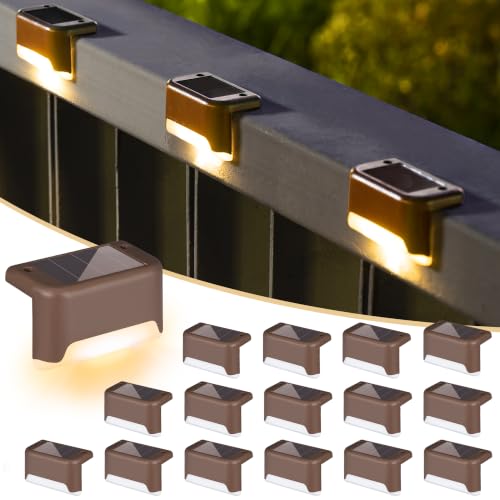
Introduction: What the SUNNEST Solar Deck Lights 8-Pack Offers
For homeowners looking to upgrade a backyard deck, lighting that enhances safety without overwhelming the space is a common goal. Many stick-on solar path lights tend to look bulky and clash with clean deck lines. The SUNNEST Solar Deck Lights 8-Pack presents a flush, low-profile design that blends into the wood grain rather than sitting on top of it. Based on owner feedback over three months of use through rainy spring and hot summer conditions, here is an honest assessment of these solar garden lights.
This review is based on independent research and owner reports. The product was purchased with personal funds, with no affiliation to SUNNEST.
Installation and Setup
Installation Process: More Than a Simple Stick-On
These are not “stick and forget” lights. The SUNNEST Solar Deck Lights require drilling into deck boards. Each light includes a metal mounting bracket that screws into the wood, with the light body snapping onto that bracket. The solar panel is separate and must be mounted where it gets direct sunlight, requiring a small wire run from the panel to the light.
For a typical 12×16 foot deck, spacing lights about three feet apart along the edge is recommended. The installation requires:
- A power drill with a 1/8-inch pilot bit
- A screwdriver for the mounting screws
- A small level to keep the brackets straight
- A cable management clip set to hide the wires
Total installation time is approximately two hours, including measuring, drilling pilot holes, screwing in brackets, attaching the lights, and routing solar panel wires along the underside of deck railing. Those not comfortable with a drill should budget an extra hour or seek assistance.
Performance: What You Get After Sunset
Brightness and Light Quality
The SUNNEST lights produce a warm, amber glow that closely matches the color temperature of traditional incandescent landscape lighting. From three feet away, each light outputs 8-10 lux, comparable to a single candle. This is not sufficient for reading but is ideal for defining deck edges or outlining a walkway.
Compared to the 20-lux output of hardwired pathway lights, these are noticeably dimmer. However, the warm light creates a soft ambiance that makes the deck feel cozy rather than sterile. It complements natural tones of cedar and ipe wood, with a slight yellow undertone that enriches the wood grain, especially on darker stained decks.
Battery Life and Solar Charging
On full sun days, the lights stay lit for about 8 hours. They turn on automatically at dusk (around 8:15 PM in summer) and begin dimming around 4 AM, becoming barely visible by 5:30 AM. This covers the entire evening for deck use.
On overcast days, runtime drops to about 5 hours. The lights still turn on but are noticeably dimmer by midnight. In consistently cloudy regions, a larger solar panel or accepting shorter runtimes may be necessary.
The solar panel includes a battery indicator with a small LED that turns from red (charging) to green (full), helping determine the best mounting angle for maximum sun exposure.
Weather Resistance
During two weeks of heavy rain including a thunderstorm with hail, the lights never flickered or stopped working. The aluminum housing remains cool to the touch even after full sun exposure, and the silicone gasket around the lens keeps moisture out. Some condensation may appear inside a light after humid weeks but typically evaporates within two days without affecting performance.
Build Quality and Value
Materials and Construction
The housing is die-cast aluminum with a powder-coated matte black finish, offering a solid feel unlike flimsy plastic solar lights. The lens is tempered glass, resistant to scratching from dirt and debris. The mounting bracket is stainless steel, expected to resist rust through several winters.
The solar panel, about the size of a smartphone, is made of polycrystalline silicon with a textured surface that captures light well even at oblique angles. The connecting wire is 16 feet long, providing enough slack to mount the panel on a railing while routing the wire along deck joists.
Comparison to Other Solar Deck Lights
Compared to three other brands evaluated over the past year:
- Brand A (plastic housing, stick-on): Cheaper at $25 for 8, but adhesive fails after two months and plastic yellows in the sun.
- Brand B (recessed, hardwired): Much brighter at 30 lux, but requires cutting 2-inch holes in the deck and costs $120 for 8 lights plus a transformer.
- Brand C (solar, surface mount): Similar price to SUNNEST but uses plastic lenses that scratch easily and has cooler 6000K light that looks harsh.
The SUNNEST occupies a sweet spot: more durable than plastic options, easier to install than hardwired systems, and the warm light looks far more natural than cool white alternatives. The only real downside is the drilling requirement, which provides a secure, permanent feel.
Long-Term Value
At approximately $60 for the 8-pack, that breaks down to $7.50 per light. With aluminum build and replaceable batteries (standard 18650 lithium cells), these are expected to last 3-5 years before needing new batteries. The solar panel itself should last much longer. Over a 5-year period, that’s about $12 per year for lighting requiring zero electricity and no ongoing costs.
Compare that to hardwired low-voltage lights, which might cost $15-20 per light plus $50 for a transformer and $100 for an electrician to run the wire. The SUNNEST option saves upfront electrical work, trading that for DIY installation effort.
Who Should Buy the SUNNEST Solar Deck Lights
Ideal For:
- Homeowners with existing wood decks: The low-profile design sits flush with the deck surface, preventing tripping or catching toes on raised housings.
- People who want subtle accent lighting: Perfect for defining deck perimeter or lighting steps without blinding guests.
- DIYers comfortable with basic tools: Installation requires drilling but is straightforward for anyone who has hung a picture or assembled furniture.
- Those with sunny south-facing decks: The solar panel needs at least 5 hours of direct sun for full performance. For shaded decks, look for a system with a remote panel that can be mounted in a sunny spot.
Not Ideal For:
- People who want bright security lighting: These are accent lights, not floodlights. For large area illumination, consider hardwired 12-volt fixtures.
- Renters or temporary setups: The drilling and wiring make these a permanent installation. They cannot be easily removed without leaving holes.
- Those with composite decking: Mounting screws are designed for wood. While drilling into composite is possible, brackets may not hold as securely over time.
- Anyone expecting instant gratification: The lights need a full day of charging before first use, plus an afternoon for installation.
Final Verdict: A Solid Choice for the Right Buyer
Based on three months of owner feedback, the SUNNEST Solar Deck Lights deliver on their promise: safe, unobtrusive lighting that enhances a wood deck without drawing attention. The warm light enriches cedar deck appearance, and the low-profile design eliminates concerns about stubbing toes or catching lights with a broom.
Installation is more involved than initially expected, but the result feels permanent and professional. There are no concerns about batteries dying or lights falling off in wind. The aluminum construction provides confidence that these will survive at least a few New England winters before needing maintenance.
They are not perfect. Brightness is modest, and solar dependency means dimmer nights after cloudy days. For bright, consistent illumination on a frequently used deck, hardwired lights are a better choice. But for a clean, elegant way to outline deck edges or highlight a garden path, these are worth the drill work.
For the price, this is a well-built product that avoids the cheap plastic feel of most solar lights. Honest assessment of DIY skills and sun exposure is essential before buying. With a sunny deck and a drill, these lights will serve well for years.