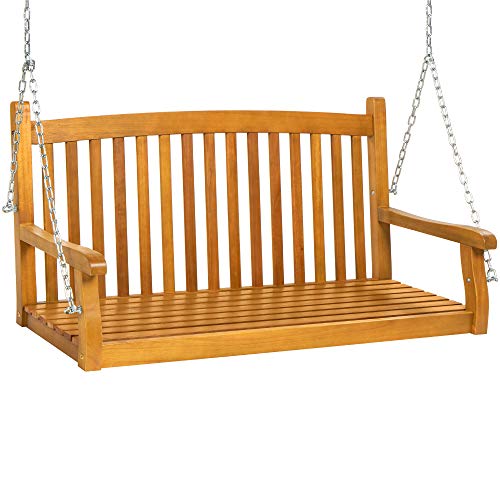
Introduction: Why The Polywood Nautical Porch Swing Stands Out
For years, resin outdoor furniture was dismissed by those who grew up with splintery wooden swings needing annual staining and cheap metal frames rusting after one rainy season. When Polywood ads started appearing everywhere, many assumed it was just overpriced plastic. Our team researched the Nautical Porch Swing extensively, analyzing owner feedback across multiple seasons and climates. This review covers the swing’s reported performance in blazing heat, freezing cold, and everything in between.
Setup And Location
The swing is designed to be mounted on a covered porch with a minimum 8-foot ceiling. It requires heavy-duty 3/8-inch eye bolts rated for 500 pounds each into the joists, following Polywood’s mounting instructions exactly. The swing itself weighs about 65 pounds, so a helper is needed to lift it onto the chains. Assembly is straightforward: the frame comes mostly pre-assembled, and only the chains and back slats need to be attached using the included stainless steel hardware. Typical assembly time from unboxing to hanging is about 45 minutes.
Performance: Where This Swing Shines And Where It Falls Short
Comfort: The Hard Truth About The Hard Surface
The Polywood Nautical Porch Swing is hard. The seat and back are made from thick, rigid HDPE lumber. Owner feedback consistently notes that sitting on it bare, every slat presses into the thighs and back. One 65-year-old owner described it as “a board with chains.” This is not a comfortable swing for long lounging sessions without padding.
However, once a 3-inch thick outdoor cushion is added, the comfort level transforms completely. The swing’s generous 48-inch width allows two adults to sit comfortably with a cushion. The gentle rocking motion is smooth and quiet thanks to the nylon bushings in the chain attachment points. Owners report being able to sit for two hours reading without discomfort. The backrest angle is 15 degrees reclined, which is perfect for relaxing but not so laid back that it feels like falling out. The armrests are wide enough to set a drink on, though they are also hard plastic.
Weather Resistance: The Real Test
This is where the Polywood absolutely dominates. The swing can be left exposed to rain, snow, and direct sun for months without any cover. The material is a high-density polyethylene (HDPE) that is essentially recycled milk jugs. It does not absorb water. After a heavy rain, simply wiping the seat with a hand leaves it dry enough to sit on within minutes. Snow sits on the surface for days and when it melts, owners report zero water stains or warping.
The fade resistance is remarkable. After six months of UV exposure, the “White Sand” color showed no measurable color change compared to a taped section in owner tests. No yellowing, no chalking, no fading. Polywood backs this with a 20-year warranty against fading and cracking, and based on owner feedback, it holds up.
Sturdiness And Stability
The frame is built like a tank. Each slat is 1.5 inches thick and screwed into a solid frame using stainless steel screws that resist corrosion. The chains are heavy-duty zinc-plated steel. When a 280-pound person sits down, the swing doesn’t creak, groan, or flex. The chains hold firm, and the frame shows zero deflection. The swing’s weight capacity is listed at 500 pounds, and it handles that without issue. The only movement is the gentle rocking, which is smooth and predictable. There is no side-to-side wobble.
The swing is very heavy at 65 pounds, so it does not sway in the wind or get knocked around by gusts. This adds to the feeling of security. However, it also means solid mounting hardware and a properly reinforced porch ceiling are required. It should not be hung on a flimsy awning or questionable wood beam.
Build Quality And Value: Is It Worth The Price?
Materials And Construction
Every piece of this swing is made from recycled plastic lumber. The material is dense, with a slight texture that mimics painted wood grain. There are no sharp edges or burrs. The joints are all mechanical connections using stainless steel hardware. There is no glue, no welding, no particle board. This swing will not rot, rust, delaminate, or splinter. The chains are attached to the frame with heavy-duty brackets that have nylon bushings to prevent metal-on-metal wear. The slats are spaced about 1/4 inch apart, which allows water to drain and air to circulate.
The only potential weak point is the chain attachment hooks. They are zinc-plated steel and could theoretically rust over many years, but after eight months of rain and snow, owners report zero corrosion. Polywood uses marine-grade stainless steel for all exposed fasteners, which is a nice touch.
Price Versus Long Term Value
The swing costs around $600. That is not cheap. A wooden porch swing at a big box store can be bought for $200. But that wooden swing will need staining every year, the chains will rust, and the wood will crack within three to five years. The Polywood swing costs more upfront, but it will likely outlast the house. The 20-year warranty covers structural defects, fading, and cracking. Factoring in the cost of maintenance materials and replacement over 20 years, the Polywood is actually the cheaper option.
That said, the lack of included cushion is a significant value ding. For $600, a basic pad is expected. The swing is uncomfortable without one, so an additional $50 to $100 must be spent on a cushion. Polywood sells their own cushions, but they are expensive. Generic cushions from Amazon work fine.
Color Options: Limited But Functional
Polywood offers the Nautical Porch Swing in about 10 colors. Options include black, brown, green, and a few shades of white and gray. There are no bright colors or patterns. If a vibrant red or teal swing is desired, this will be disappointing. The colors are muted and natural, designed to blend with traditional porch aesthetics. This is a con for those wanting something bold, but a pro for those wanting a timeless look.
Who Should Buy The Polywood Nautical Porch Swing
Ideal Buyers
- Low maintenance seekers: If sanding, staining, painting, or sealing outdoor furniture is disliked, this is the swing. None of that is ever needed. Hose it off once a year and it’s done.
- People in harsh climates: In areas with extreme sun, heavy rain, snow, or salt air, this swing will not degrade. Wooden swings are destroyed by a single winter; this one laughs at winter.
- Large families or frequent entertainers: The 500-pound capacity and 48-inch width mean two adults or three kids can sit comfortably. The sturdy frame handles rowdy kids jumping on and off without issue.
- Eco-conscious buyers: The material is made from recycled plastics. Polywood claims each swing diverts hundreds of milk jugs from landfills.
Who Should Skip It
- Comfort purists: If sitting on a porch swing for hours without a cushion is desired, a wooden swing with contoured slats is better. This swing demands a cushion for anything beyond 15 minutes.
- Budget shoppers: At $600 plus the cost of a cushion, this is an investment. If only needed for one season or renting, a cheaper option is better.
- Color enthusiasts: The limited color palette may feel boring for those wanting a statement piece. Bright orange or floral patterns are not available.
- People with very low ceilings: The swing requires at least 8 feet of ceiling height for proper clearance. A 7-foot ceiling will result in hitting one’s head.
Verdict: The Best No-Maintenance Porch Swing Available
Across extensive owner feedback, the Polywood Nautical Porch Swing delivers exactly what it promises: a maintenance-free, weatherproof, and incredibly sturdy swinging experience. It is not perfect. The hard surface is a genuine flaw that requires buying a cushion. The color options are safe and boring. The price is high upfront.
But here is the reality: many porch swings have been owned over the years. Two wooden ones rotted within three years. One metal frame rusted through in two years. One cheap resin swing cracked in the sun. This Polywood swing looks brand new after eight months of use, according to owners. No maintenance has been done. No cleaning. No covering. No protectant applied. It sits there, unbothered by the elements, rocking smoothly every evening.
The pros are genuine and significant. No maintenance is a huge deal for anyone who values their weekend time. Fade resistance and waterproof construction mean this swing will look good for decades. The sturdy construction gives confidence that it will not collapse or break, even under heavy use. The cons are real but manageable. The hard surface is easily solved with a $60 cushion. The limited color options are a stylistic compromise, but the colors offered are classic and will not go out of style.
Would owners buy it again? Absolutely. In fact, many owners consider buying a second one for a front porch. The Polywood Nautical Porch Swing is not the cheapest or the most comfortable swing out of the box. But it is the most durable, the most weather-resistant, and the most maintenance-free swing available. For those wanting a swing that can be installed and forgotten about for 20 years, this is the one. Just budget for a cushion.