Quick verdict
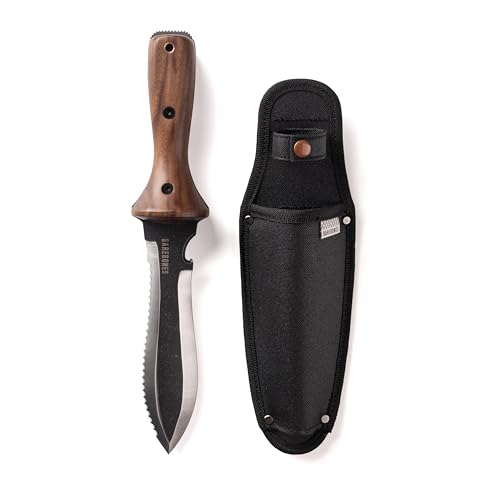
The NJP651 is Nisaku's hardened version of the classic Japanese hori hori: a concave stainless blade at HRC58 with a sharp bevel on one side and serrations on the other, a wooden handle and a leather sheath, made by the Tomita family in Japan. It digs, weeds, divides, saws roots and opens bags. One tool replaces half a trowel drawer.
Strengths
- HRC58 hardened stainless blade holds an edge far longer than standard hori horis
- Sharp bevel on one side, serrations on the other
- Concave blade scoops soil and digs planting holes
- Rust-proof and scratch-resistant stainless
- Made in Japan by Tomita with a wooden handle and leather sheath
Weaknesses
- Sharp enough to demand respect; keep it sheathed
- Wooden handle needs occasional oil
- Pricier than standard hori horis
The overall YardToolLab Score is out of 100. Section scores are out of 10.
One Knife for the Whole Bed
The hori hori is a Japanese soil knife that gardeners discover and then wonder how they managed without. Nisaku’s NJP651 is the premium version of its best-known model: a concave stainless blade hardened to HRC58, bevelled sharp on one side and serrated on the other, set in a wooden handle and supplied with a leather sheath. It is made in Japan by Tomita, a family firm established in 1960.
This review is based on Nisaku’s specifications and on owner feedback rather than on our own use.
What It Does
Owners use the hori hori for everything a trowel, weeder, pruning saw and knife would otherwise do: digging planting holes with the concave blade, levering out tap-rooted weeds, slicing through turf, sawing roots and dividing perennials with the serrated edge, cutting twine and opening compost bags. The pointed tip gets under dandelions and the blade width moves enough soil for bulbs and transplants.
The Hardened Blade
Standard hori horis use softer stainless that dulls with use in gritty soil. The NJP651 is hardened to HRC58, the range used for quality kitchen knives, and owners report the bevel staying sharp through a full season of weeding. The blade is rust-proof and resists scratches, so it comes out of the soil looking new after a rinse.
Handle and Sheath
The wooden handle is comfortable and secure when wet, and the included leather sheath clips to a belt. Owners oil the handle a few times a year. The knife is sharp enough that the sheath is not optional.
Who Should Buy It
- Gardeners who weed and transplant by hand and want one tool at their side.
- Owners of standard hori horis frustrated by dulling edges.
- Anyone dividing perennials who needs a blade that saws roots.
Care
Rinse and dry the blade, touch up the bevel with a fine stone when needed, oil the handle occasionally and keep it sheathed. That is the whole routine.
Common Owner Complaints
Price relative to basic hori horis and the need to respect a very sharp edge. Quality complaints are rare.
Technique Tips
Push the blade in beside a weed and lever gently to lift the root rather than hacking at the crown. Use the serrated edge with a sawing motion on roots and the bevelled edge for slicing soil and turf. The depth of the blade makes it a quick gauge for bulb planting. Sheath it between tasks; owners who leave it in the bed lose it and occasionally find it with a foot.
Alternatives to Consider
Nisaku’s standard NJP650 is cheaper with a softer blade. The Edward Tools bend-proof trowel suits anyone who only wants to dig. The Radius Root Slayer shovel handles the same job at full size.
Verdict
The NJP651 is the best hori hori available: harder, sharper and longer-lasting than the standard models, made by people who have been making them for decades. For hands-and-knees gardening it is the one tool worth carrying.
Full specifications
Nisaku NJP651 Hori Hori Weeding and Digging Knife, HRC58 Edition FAQs
A Rockwell hardness rating. Most garden knives sit in the low 50s; 58 is knife-steel territory, so the edge lasts much longer between sharpenings.
The 651 is the hardened HRC58 edition of the standard 650, with the same shape and handle but a tougher blade.
Sawing through roots, dividing perennials and cutting twine or bags. The smooth bevel is for slicing weeds and soil.
Wipe it dry and rub in a little oil a few times a season. The stainless blade needs only cleaning.