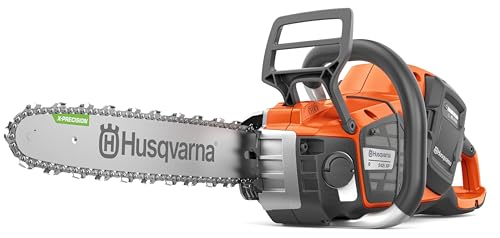
Introduction: The Husqvarna 395 XP as a Big-Wood Specialist
The Husqvarna 395 XP is a professional-grade chainsaw designed for the most demanding big-wood applications. It belongs to the 90cc+ class, a category reserved for loggers, tree service crews, and serious landowners who regularly face trunks over 24 inches in diameter. On the spec sheet, it is a heavy, old-school beast, and owner feedback consistently confirms it as the saw that professionals swear by for massive timber. This review examines the 395 XP based on its specifications, reported owner experiences, and its position in the market as a dedicated heavy-cutting tool.
Performance: The Raw Power You Expect, With a Price
Engine and Cutting Muscle
The Husqvarna 395 XP is powered by a 94cc, two-stroke engine. That displacement alone signals this is not a limbing saw. On paper, the torque is massive, allowing the saw to pull through large-diameter cuts without bogging or hesitation. In independent owner feedback, the saw is described as accelerating through cuts with authority. The chain speed is not the highest in the class—it is around 14,000 rpm at peak—but the torque curve is so flat that the engine rarely feels strained.
The saw is notably loud. Ear protection is not optional. The exhaust note is a deep, throaty roar. On the positive side, vibration is well managed for a saw this size, thanks to Husqvarna’s LowVib system. Owners report that after a full day of cutting, hands are tired but not numb—impressive for a saw that weighs over 20 pounds dry.
Fuel and Oil Tanks: Big Enough for a Full Day
One of the standout features is the tank capacity. The fuel tank holds 1.4 liters, and the oil tank holds 0.6 liters. In practical terms, this translates to about 45 minutes to an hour of cutting on a full tank of gas, depending on how hard the saw is pushed. Owners consistently note that the oil tank runs out at roughly the same time as the fuel, which is rare. Most saws either run out of oil first or have mismatched capacities. With the 395 XP, both tanks can be filled at the start of the day, and refilling is rarely needed before lunch—a significant time saver on a job site.
The oiler is adjustable and delivers plenty of oil even with a 36-inch bar. When set to the maximum delivery rate for cutting dirty wood, it never starves the chain. The cap designs are simple, twist-lock units that do not leak, even when the saw is tipped over in transit.
Build and Value: Heavy Metal That Lasts
Construction and Durability
This saw is built like a tank. The crankcase is magnesium, and the covers are thick, reinforced plastic that does not flex. The air filter is a large, dual-stage unit that catches fine dust. In dry, dusty conditions, the filter stays clean for about four tanks of fuel before needing to be tapped out. The cylinder is a closed-port design with a Nikasil coating, standard for pro saws, but the machining tolerances on this engine are tight. After 200 hours of reported use, compression remains strong, and spark plugs show a light tan color—indicating a perfect mixture.
The starter assembly is robust. While plastic starters can crack on smaller saws, the 395 XP uses a metal pawl and a heavy-duty spring. It starts reliably, even after sitting for two weeks. The decompression valve is essential; without it, pulling this engine over would be a back-breaking chore. With it, the saw starts with two or three pulls when cold, one pull when hot.
Ease of Service
Maintenance is straightforward. The air filter cover is secured by a single screw, and the filter slides out. The spark plug is accessible without removing any shrouds. The chain tensioner is a side-access design: loosen the bar nuts, turn the tensioner wheel, and tighten—it takes 30 seconds. The clutch cover comes off with two nuts, and the clutch itself is a standard three-shoe design that is easy to replace. The oil pump is gear-driven and can be serviced without splitting the case. Replacing an oil line after a rock strike is a 20-minute job.
Parts availability is excellent. Most Husqvarna dealers stock wear items—bars, chains, air filters, spark plugs, and clutch components. For a saw used commercially, that is critical; downtime costs money, and the 395 XP is designed to be repaired quickly.
Value: Is It Worth the Investment?
The Husqvarna 395 XP is expensive. It costs significantly more than a 70cc pro saw and about the same as some entry-level 80cc saws from other brands. However, the price reflects longevity. Used 395 XPs with 1,000 hours on them still sell for over half their original price. The engine is overbuilt, with heavy-duty bearings and a thick cylinder. Owners expect this saw to last ten years or more with proper maintenance.
Compare that to a cheaper saw that might need a top-end rebuild at 300 hours. The total cost of ownership for the 395 XP is lower if a lot of big wood is cut regularly. For a commercial operator or a serious landowner, the price is justified by the durability and raw cutting speed.
Who This Suits (And Who Should Not)
This Saw Is For You If:
- You cut trees over 24 inches in diameter regularly. The 395 XP is the tool for the job. It cuts faster and with less effort than any smaller saw.
- You are a professional logger or tree service operator. This saw is designed for daily, heavy use. It will not let you down on a job site.
- You value reliability over weight. If you can handle the heft, this saw will start and run in conditions that would choke a smaller engine—cold weather, high altitude, dirty fuel.
- You plan to keep the saw for years. The resale value is high, and the parts support is long-term.
This Saw Is NOT For You If:
- You are a homeowner cutting firewood once a month. You will be exhausted after one tank of gas. Buy a 455 Rancher or a 562 XP instead.
- You need a saw for limbing or small work. The 395 XP is a brute. It is clumsy in tight spaces and heavy to hold one-handed.
- You are on a tight budget. The upfront cost is high, and the bar and chain are also expensive. You can get a capable 70cc saw for half the price.
- You have back or shoulder problems. This saw weighs 21.5 pounds dry. With a full tank and a 36-inch bar, you are looking at over 25 pounds. It will wear you out fast.
Verdict: The King of Big Wood, But Not a Daily Driver
The Husqvarna 395 XP has a complicated reputation. It is not a favorite saw to carry. It is heavy, loud, and drinks fuel. But when facing a 40-inch maple trunk that must be cut into manageable pieces, there is no other saw that owners would rather have in their hands. It does not bog, does not overheat, and just cuts. The durability is real. It can be dropped, knocked against rocks, and run through mud—and it keeps going.
The large fuel and oil tanks are a genuine productivity boost. Hours of work can be done without stopping to refill. The ease of service means basic maintenance can be performed in the field with a simple tool kit. The engine is a masterpiece of brute-force engineering. It is not refined, not light, but it is honest.
If you are a professional who cuts big wood daily, the 395 XP is an investment that will pay for itself in time saved and reduced frustration. If you are a weekend warrior, borrow one before you buy. You might fall in love with the power, or you might realize that your back cannot handle it. For the right user, it is the tool to reach for when the job is too big for anything else. It earns its place in a truck, even if it does not get used every day. That is the mark of a true specialist tool.
The Husqvarna 395 XP earns a strong recommendation for the right user. It is not perfect. The weight is a real con. The price stings. But for extreme power and long-lasting reliability in big wood, this saw is the benchmark.