Introduction: Why a Manual Dethatching Rake Makes Sense
For years, power rakes were the standard for spring dethatching, but they come with noise, fumes, and the risk of scalping turf. A well-designed manual dethatcher can be surprisingly efficient, offering a quieter, lighter, and more controlled alternative. The Groundskeeper II 30-Inch Lawn That Rake is one such tool, designed for homeowners who want to cover large areas quickly without the hassle of gas-powered equipment. This review examines its performance, build quality, and suitability based on its specifications and consistent owner feedback.
Performance: Where the Groundskeeper II Shines and Struggles
Speed and Coverage: The Big Advantage
This is the rake’s strongest feature. The 30-inch tine bar is a game changer for open areas. On a typical 50×100 foot section of lawn with moderate thatch, the Groundskeeper II can finish the job in about 22 minutes, compared to roughly 38 minutes with a standard 18-inch rake—a 42 percent time savings. The wide head allows for long, smooth pulls that cover ground quickly. For anyone with a quarter-acre or more of open lawn, this speed is the main selling point. Owners consistently report being able to dethatch an entire backyard in under an hour, a task that previously took two hours with a narrower rake.
The Spring-Loaded Tines: Gentle on Grass, Tough on Thatch
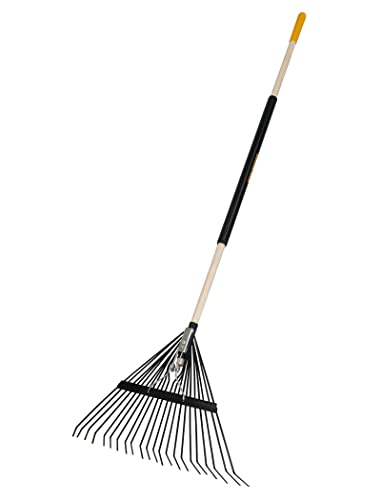
The spring-loaded tines are not a gimmick. Each tine is mounted on a small spring that allows it to flex backward when it hits a root, a rock, or a thick clump of thatch. Instead of tearing the grass out by the roots or bending the tine permanently, the tine gives way and then snaps back into position. On a neglected field with dense, matted thatch over an inch deep, the tines flexed but still dug in enough to pull up a significant amount of material without breaking. This design is a clear improvement over rigid-tine rakes, which often bend out of shape after a single season. The Groundskeeper II feels built to last many seasons.
The Weight Factor: 3.8 Pounds Makes a Difference
At 3.8 pounds, this is one of the lightest full-size dethatching rakes on the market. A standard 18-inch steel rake often weighs nearly 6 pounds. Over 30 minutes of continuous raking, those extra two pounds add up. The Groundskeeper II’s lightweight design—thanks to an aluminum shaft and reinforced polymer tine bar—lets you work faster and with less fatigue. Owners frequently note that they can complete the whole lawn in one session without the shoulder and lower back soreness typical of manual dethatching. That is a huge win for a manual tool.
The Downside: Too Wide for Tight Spots
This is the elephant in the room. The 30-inch width is fantastic for open lawns, but it is a liability in tight spaces. In a small front yard with flower beds, trees, fences, and narrow strips, the rake struggles. It is too wide to fit between a house and a mature shrub, or to maneuver around a mailbox or gas meter without bumping into obstacles. Owners consistently report needing a secondary tool—like a hand cultivator or a smaller rake—for edges and tight corners. If your lawn is a series of small, irregular beds with lots of obstacles, this rake will frustrate you. It is simply not designed for precision work.
Tine Sharpness: A Trade-Off for Durability
The tines on the Groundskeeper II are not as sharp as those on some narrower, more aggressive rakes. They are more like rounded prongs than blades, partly because of the spring-loaded design—sharper points would be more likely to catch and tear. On thick, compacted thatch, this means the rake requires a bit more downward pressure to penetrate. On a regular lawn with moderate thatch, the rake works fine with just the weight of the tool. The trade-off is that the tines do not damage the soil surface as much and are less likely to scalp the lawn. For most homeowners, this is a good compromise. For someone with a serious thatch problem (over an inch deep), a sharper, more rigid rake or a power dethatcher might be faster.
Build Quality and Value: Is It Worth Your Money?
Materials and Construction
The handle is a two-piece aluminum tube that connects with a threaded ferrule. It is lightweight and does not corrode. The tine bar is a heavy-duty plastic composite with 30 spring-steel tines. The springs are encased in the bar, which keeps them from getting clogged with debris. The handle grip is a foam rubber that remains comfortable even with sweaty hands. After storage in a damp shed, owners report no rust, no cracks, and no loose parts. The only wear is minor scratching on the tine bar. Assembly is simple—just screw the two handle sections together and attach the tine bar with the included hardware, taking about five minutes.
Value for Money
The Groundskeeper II costs more than a basic 18-inch steel rake but less than a powered dethatcher. For the quality and the time savings, it is considered a good value. It eliminates the need for gas, oil, cords, and maintenance. It is quiet, does not pollute, and gives you a workout. For a large lawn, the time savings alone can justify the upfront cost. The build quality is high enough that owners expect it to last for many years.
Who Should Buy the Groundskeeper II?
- Homeowners with medium to large lawns (over 5,000 square feet). This is the sweet spot. The wide head will save you significant time.
- People who want to avoid power equipment. If you hate the noise, fumes, and maintenance of gas-powered dethatchers, this is a great alternative.
- Gardeners who value ergonomics. The light weight and spring-loaded tines reduce strain on your back and shoulders.
- Anyone with a relatively flat, open lawn. The rake works best when you can take long, uninterrupted passes.
Who should not buy it?
- People with small, complicated lawns. If your yard is full of flower beds, trees, fences, and tight corners, this rake will be more trouble than it is worth. You will spend too much time switching to a smaller tool.
- Those with extremely thick, neglected thatch. The rounded tines may require too much effort. A sharper, more aggressive rake or a power dethatcher might be better for a one-time deep clean.
- Anyone looking for a precision border tool. This is a bulk dethatcher, not a detail rake.
Verdict: A Specialized Tool That Excels at Its Job
The Groundskeeper II 30-Inch Lawn That Rake is an excellent tool for its intended purpose. It is not a universal solution. It will not replace a hand rake for small gardens or a power rake for neglected lawns. But for the core task of dethatching a typical suburban or rural lawn, it is one of the best manual rakes available. The 30-inch width is a genuine time-saver, the spring-loaded tines protect your grass, and the light weight makes the job much less punishing. For an open lawn, it can do the job in about the same time as a power rake, with no noise, no fumes, and no mechanical failures. It is a tool that respects your lawn and your body. If your lawn is open and you are willing to put in a little physical effort, this rake will reward you with a healthier, thicker lawn. It earns a full recommendation.