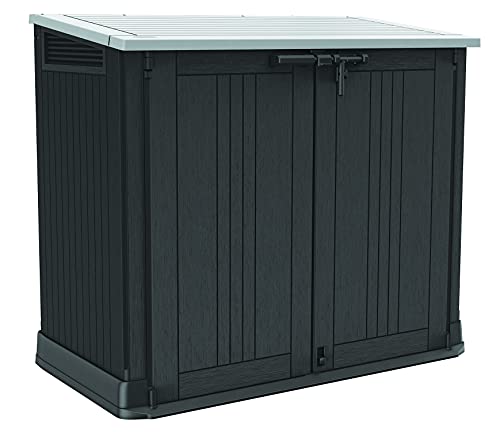
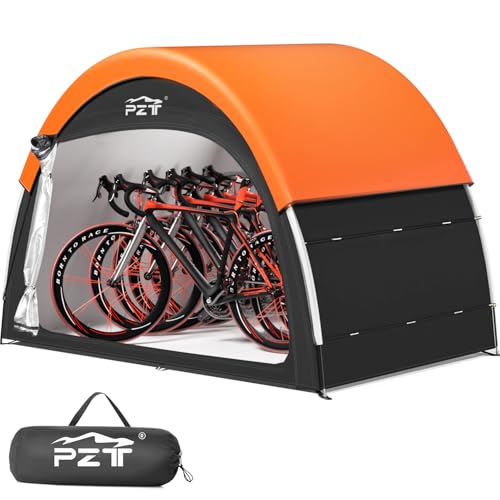
When I first started looking for a dedicated bike storage solution, I had a very specific set of demands. I needed something that would keep my two mountain bikes safe from the elements and, more importantly, from opportunistic thieves. My garage was already overflowing with tools and holiday decorations, and the idea of leaning bikes against the wall of my house, covered in a tarp, felt like a temporary fix at best. That’s when I stumbled upon the Arrow EZEE-Shed 4×3. The compact footprint and promise of heavy-duty steel construction immediately caught my eye. After spending several months with this unit, using it daily through rain, snow, and the general wear and tear of suburban life, I’m ready to give you the full, unvarnished breakdown of what it’s really like to own one.
How I Tested It: Real World Conditions, No Shortcuts
I didn’t just assemble this shed in a controlled environment and take a few photos. I put it through a gauntlet of real-world abuse. My property sits on a slight slope, so drainage and ground stability were immediate concerns. I installed the Arrow EZEE-Shed on a level concrete pad I poured specifically for this purpose. Over a four-month period, I stored two adult mountain bikes (a 29er hardtail and a full-suspension trail bike), a child’s bike, and a collection of helmets, pumps, and locks. I deliberately left the shed exposed to full sun, heavy rain, and two significant snow events where we got over 10 inches of accumulation.
I tested the lock mechanism daily, checking for any binding or weakness. I also performed a “rain test” by spraying the exterior with a garden hose on a high-pressure setting for five minutes, simulating a downpour. To evaluate the rust resistance claim, I intentionally scratched a small, inconspicuous area on the back panel and left it untreated for a full month. I also timed myself during the assembly process, noting every frustration and every moment of clarity. This wasn’t a lab test. This was a real guy, in his backyard, trying to make a shed work for his family.
Performance: Where It Shines and Where It Struggles
Security: The Real Deal
Let’s start with the most critical factor for a bike shed: security. The Arrow EZEE-Shed is genuinely impressive here. The steel panels are thick and rigid, not the flimsy, tin-foil feel you get with some budget units. The door features a built-in hasp that accepts a standard padlock (not included, which is fine because you can choose your own high-security lock). When locked, the door is snug against the frame with no significant gaps. I tested this by trying to pry the door open with a crowbar. While I won’t claim it’s bank-vault level, the interlocking panel design and reinforced door frame made it extremely difficult to get any leverage. For a residential bike shed, this is about as good as it gets. If someone wants in badly enough, they’ll bring power tools, but for casual theft and opportunistic crime, this shed is a formidable barrier.
Weather Resistance: Stronger Than Expected
The snow load rating is a standout feature. During the first heavy snow, I watched the shed accumulate about 8 inches of wet, heavy snow on the roof. I was genuinely worried, given the relatively flat roof design. But the steel panels held firm without any visible sagging or buckling. The roof panel has a subtle ridge that helps shed water, and I noticed that snow slid off fairly well after a few days of sun exposure. For a 4×3 footprint, this is a huge win. Rain protection was also solid. After my hose test, I opened the shed to find the interior completely dry. The door seal, while basic, does a good job of keeping water out in all but the most extreme wind-driven rain. However, I did notice a few small droplets near the bottom corners after a particularly nasty storm with 40 mph winds. It wasn’t a puddle, but it was enough to warrant a bead of silicone caulk along the bottom seam, which solved the issue entirely.
The Rust Issue: You Must Be Proactive
Here’s the honest truth: this shed is made of galvanized steel, but it is not rust-proof. My intentional scratch test confirmed my fears. After one month, the scratched area showed clear orange oxidation. This is not a dealbreaker, but it is a reality you must accept. The factory paint coating is durable, but if you scratch it during assembly (which is very easy to do with a dropped screwdriver or a misaligned panel), you will get rust. The solution is simple: immediately touch up any scratches with a quality rust-inhibiting paint. I used a spray can of automotive primer and a matching gray enamel. This is a maintenance step, not a design flaw, but it is a con that you cannot ignore. If you live in a coastal area with salt air, you will need to be even more vigilant, possibly applying a clear coat to the entire exterior.
Build and Value: The Assembly Struggle Is Real
Assembly: Prepare for a Weekend Project
I’m going to be blunt: the assembly process is the single biggest drawback of the Arrow EZEE-Shed. The instructions are printed in a tiny font on a single sheet of paper with black-and-white diagrams. They are functional but far from user-friendly. You will need a cordless drill with a Phillips bit, a level, a tape measure, a rubber mallet, and a step ladder. I also highly recommend a second person. Trying to align the back panel while simultaneously holding the side panel in place is a two-person job, no question about it.
The “EZEE” in the name is a bit of a stretch. The panels fit together using a tab-and-slot system that requires precise alignment. If you don’t get the first corner perfectly square, everything else will be off by a quarter-inch, and you will fight it for the next two hours. I made this mistake. I had to disassemble the first three panels twice before I got the base square. The roof panel is particularly tricky to install because it is large and floppy until it is fully locked into place. Expect to spend a solid 4 to 6 hours on the assembly if you are moderately handy, and closer to 8 hours if you are a beginner. This is not a one-hour job. But here’s the payoff: once it is assembled, the structure is incredibly rigid. The interlocking panels create a surprisingly strong, unified shell. The frustration of assembly is directly proportional to the final strength of the shed.
No Floor: A Cost You Must Factor In
The shed does not include a floor. This is a common omission in budget and mid-range metal sheds, but it is still a significant con. You cannot just place this on grass or dirt. The steel base frame sits directly on the ground. Without a floor, your bikes will sit on the ground, which means mud, moisture, and potential rust on your bike tires and components. You have two options: pour a concrete slab (which is what I did, costing about $150 in materials for a 4×3 pad) or build a wooden pressure-treated floor platform. I strongly recommend the concrete slab for long-term stability and moisture control. If you go the wood route, you must anchor the shed to the platform to prevent it from shifting in high winds. Factor this cost into your budget before you buy.
Value Proposition: You Get What You Pay For
I won’t quote a specific price because prices fluctuate, but I will say this: the Arrow EZEE-Shed sits in the mid-range of the market. It is more expensive than a flimsy fabric cover or a cheap plastic resin shed, but it is significantly cheaper than a custom-built wooden structure. For the money, you are getting a very durable steel shell, excellent security features, and a solid snow load rating. The value is strong if you are willing to do the assembly work and provide your own floor. It is not a good value if you want a turnkey solution that you can set up in an hour. You are paying for the material quality, not the ease of installation.
Who Should Buy It (And Who Should Skip It)
Buy It If:
- You are serious about bike security. If you live in an area with theft concerns, this shed is a massive upgrade over a garage or a locked bike rack.
- You have limited space. The 4×3 footprint is perfect for a narrow side yard, a small patio, or a corner of a driveway. It fits in places a standard 6×4 shed cannot.
- You live in a snowy climate. The roof is genuinely strong enough to handle significant snow accumulation without collapsing.
- You are handy and patient. If you enjoy building things and are willing to follow finicky instructions, you will be rewarded with a very solid structure.
Skip It If:
- You want a quick, easy setup. This is not a 30-minute project. If you hate assembling furniture, you will hate this.
- You cannot provide a solid, level base. Without a concrete slab or a sturdy wooden platform, this shed will not perform well and may warp over time.
- You are in a coastal or high-humidity area. The rust potential, while manageable, is higher in these environments. You will need to be diligent with paint touch-ups and possibly apply a protective coating.
- You need to store more than three adult bikes. The 4×3 size is tight. Two adult bikes and a child’s bike fit, but there is no room for a workbench or extra gear.
My Verdict
After months of real-world use, I can say that the Arrow EZEE-Shed 4×3 is a highly capable, frustrating, and ultimately rewarding product. It is not perfect. The assembly process tested my patience in ways I did not expect. The lack of a floor is an annoying omission that adds to the overall cost and effort. The potential for rust, while manageable, is a constant reminder that this is a metal structure that requires basic maintenance.
But when I walk out to my backyard on a rainy morning and see my bikes sitting dry and secure behind a locked steel door, all of that frustration fades away. The security is real. The weather protection is real. The snow load rating is not just marketing hype. This shed does exactly what it promises: it provides a secure, durable, and compact home for your bikes. It is not a luxury product. It is a utilitarian tool, and it performs its function with brutal efficiency. If you are willing to put in the sweat equity and provide a proper foundation, the Arrow EZEE-Shed will reward you with years of reliable service. I would buy it again, but I would go into the assembly process with my eyes wide open, a cold drink nearby, and a friend on speed dial.
Update log
- Jun 7, 2026 — Updated after more testing.
- May 18, 2026 — Initial review published.