Quick verdict
Nearly the same washer in two frames. The Ryobi moves a tenth of a gallon more per minute and rolls on bigger wheels; the DeWalt is more compact and equally well built. Both clean a driveway, a deck and a car. Buy by the frame that fits the garage; the cleaning is a draw.

Ryobi RY142500 2500 PSI Electric Pressure Washer
The RY142500 is the Ryobi 2,500 PSI, 1.2 GPM brushless electric pressure washer with a metal frame, big wheels, a 25-foot hose, a 35-foot cord and an onboard detergent tank.
Ryobi RY142500 versus DeWalt DWPW2400 brushless electric pressure washers: PSI, GPM, frame, wheels, cord, hose and warranty compared from published specifications.
The picks at a glance
| Tool | Best for | Score /100 | |
|---|---|---|---|
| Ryobi RY142500 2500 PSI Electric Pressure Washer | Best Frame and Flow | 9.0 | Check price |
| DeWalt DWPW2400 2400 PSI Electric Pressure Washer | Best Compact Brushless Electric | 8.7 | Check price |
The picks, reviewed
Ryobi RY142500 2500 PSI Electric Pressure Washer
The RY142500 is the Ryobi 2,500 PSI, 1.2 GPM brushless electric pressure washer with a metal frame, big wheels, a 25-foot hose, a 35-foot cord and an onboard detergent tank.
Reasons to buy
- 1.2 GPM cleans faster
- Metal frame and big wheels
- 35-foot cord
- Home Depot parts and support
Reasons to avoid
- Heavier
- Larger to store
- Costs about the same as the DeWalt
DeWalt DWPW2400 2400 PSI Electric Pressure Washer
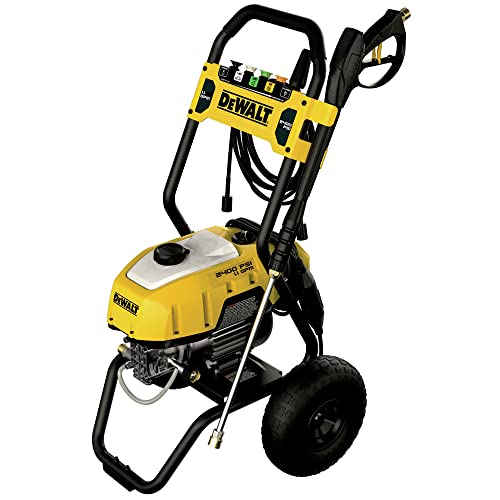
The DWPW2400 is the DeWalt 2,400 PSI, 1.1 GPM brushless electric pressure washer with a 13 amp motor, a 25-foot hose, a 35-foot cord, an onboard detergent tank and a compact steel frame. It is quiet, well built and a touch less powerful than the Ryobi.
Reasons to buy
- Quiet brushless motor
- Compact steel frame
- 35-foot cord
- DeWalt three-year warranty
Reasons to avoid
- 1.1 GPM cleans a little slower
- Smaller wheels
- Hose stiffens in the cold
Where these two differ
Both are 13 amp brushless electric pressure washers with a 25-foot hose, a 35-foot cord and an onboard detergent tank. The Ryobi RY142500 is rated at 2,500 PSI and 1.2 GPM on a metal frame with big wheels. The DeWalt DWPW2400 is rated at 2,400 PSI and 1.1 GPM on a compact steel frame. The cleaning is nearly a draw; the frame and the flow separate them.
This comparison is based on the published specifications and manuals for both washers and on recurring owner feedback. We have not run either washer ourselves.
| Specification | RY142500 | DWPW2400 |
|---|---|---|
| Pressure | 2,500 PSI | 2,400 PSI |
| Flow | 1.2 GPM | 1.1 GPM |
| Motor | 13 amp brushless | 13 amp brushless |
| Frame | Metal, big wheels | Compact steel |
| Cord | 35 ft | 35 ft |
| Hose | 25 ft | 25 ft |
Cleaning power
Pressure times flow puts the Ryobi about ten percent ahead on paper. Both strip a driveway with a surface cleaner, clean a deck with a 25-degree nozzle and wash a car on the soap setting. Neither is a gas washer.
Build and handling
The Ryobi metal frame and large wheels roll over lawn and gravel. The DeWalt compact steel frame stores in less space with smaller wheels that prefer a hard surface. Both have an onboard detergent tank and nozzle storage.
Hose and cord
Identical reach: a 25-foot hose and a 35-foot cord on both. Both hoses stiffen in cold weather and both are the first thing owners upgrade.
Yard jobs this decides
A driveway, a deck, patio furniture and a car suit both. A lawn or gravel path to cross favors the Ryobi wheels. A tight garage favors the DeWalt frame.
Warranty and support
On the Ryobi RY142500, Ryobi covers ONE+ tools and batteries with a three-year limited warranty. On the DeWalt DWPW2400, DeWalt covers it with a three-year limited warranty, one year of free service and a 90-day money-back guarantee. Both makers run service networks in the US and both honor the warranty only with proof of purchase, so keep the receipt with the manual. Registration takes a few minutes online and is worth doing the day the tool arrives.
Care and storage
Both pressure washers last longest with the same habits: run clean water through the pump after detergent, release the trigger pressure before storing, and keep the pump from freezing. A pump saver or antifreeze flush before winter protects the seals on either. Store hoses coiled loosely and the wand off the ground. Most early failures on either machine trace to a frozen pump or a kinked hose starving the inlet.
Accessories worth adding
A surface cleaner attachment is the accessory that transforms either washer on a patio or driveway, finishing in a quarter of the time of a wand and without stripes. A foam cannon helps on cars, a longer hose reaches a second-story wall, and a gutter wand saves a ladder. Both machines use standard quarter-inch quick connects for all of these.
Common owner complaints
Ryobi owners mention size and a stiff hose. DeWalt owners mention small wheels and a stiff hose. Both motors are reliable.
Which one should you buy
Buy the RY142500 for a little more flow and big wheels. Buy the DWPW2400 for a compact frame and the same cleaning.
Our verdict
The Ryobi RY142500 edges this comparison on flow and wheels. The DeWalt DWPW2400 is the better fit for a small garage.
How we research
This comparison is built from the published specifications, manuals and warranty terms of both products and from recurring owner feedback. We have not run either product ourselves; where the makers do not publish a figure we say so rather than guess.
What to look for
Flow
The Ryobi moves 1.2 GPM against 1.1.
Frame
Big wheels on the Ryobi; compact on the DeWalt.
Storage
The DeWalt takes less space.
Warranty
Three years on both.
Our verdict
Nearly the same washer in two frames. The Ryobi moves a tenth of a gallon more per minute and rolls on bigger wheels; the DeWalt is more compact and equally well built. Both clean a driveway, a deck and a car. Buy by the frame that fits the garage; the cleaning is a draw.
FAQs
The Ryobi by about ten percent on paper; in use the difference is small.
Yes.
Yes.
Both are quiet; owners describe the DeWalt as a touch quieter.
Related guides

WEN PW3000E Review: A Brushless 3000 PSI Electric Washer With a 35-Foot Cord

WEN PW2300 Pressure Washer Review: A Light 13 Amp Unit With a Variable Nozzle and Two-Year Warranty

LawnMaster LT506 2300 Max PSI Pressure Washer Review for Cars, Patios and Small Decks

Greenworks Pro 2300 PSI 2.3 GPM Brushless Pressure Washer Review: The Flow Figure Is the Point
Best Pressure Washer for Algae on Patio Stones: Two Washers With Foam and Turbo, and the Turbo Tip Itself

Best Pressure Washer for a Small Concrete Patio: Three 2,300 PSI Electrics That Finish in an Hour

Best Pressure Washer for Composite Decking: Three Electrics Gentle Enough for Trex and Its Rivals
