Quick verdict
The Biswing Impact Sprinkler Head on Tripod Base is the top pick for wind because its single heavy-droplet impact stream is far less prone to drift than the fine mist a multi-nozzle oscillating sprinkler produces.

Biswing Impact Sprinkler Head on Tripod Base
This impact sprinkler throws a single adjustable stream rather than a fine multi-nozzle mist, and the solid alloy metal tripod base is built to stay rust-proof and sturdy through repeated outdoor use. The adjustable spray range and radian let you dial in a heavier, lower-angle trajectory that holds its line better in a breeze than a wide fan pattern would.
Check price on Amazon →Best sprinklers for windy yards, favoring heavier-droplet impact sprinklers over fine-mist oscillating types that blow off target.
The picks at a glance
| Tool | Best for | Score /100 | |
|---|---|---|---|
| Biswing Impact Sprinkler Head on Tripod Base | Best Overall | Check price | |
| Biswing Large Impact Sprinkler Head on Tripod Base | Best Value | Check price | |
| Metal Spot Sprinkler | Best Budget | Check price | |
| Meekamar Heavy Duty Pulsating Impact Lawn Sprinkler | Best Premium | Check price | |
| Nexlogi Heavy Duty Pulsating Impact Lawn Sprinkler | Also Great | Check price |
The picks, reviewed
Biswing Impact Sprinkler Head on Tripod Base
This impact sprinkler throws a single adjustable stream rather than a fine multi-nozzle mist, and the solid alloy metal tripod base is built to stay rust-proof and sturdy through repeated outdoor use. The adjustable spray range and radian let you dial in a heavier, lower-angle trajectory that holds its line better in a breeze than a wide fan pattern would.
Reasons to avoid
- Tripod height needs to be set lower in strong wind to reduce exposure to gusts
- 20 to 35 foot radius is smaller than some ground-based impact sprinklers

Biswing Large Impact Sprinkler Head on Tripod Base
A top dial with clearly marked distance settings lets you switch this sprinkler between a powerful jet and a gentle fine mist, so on a windy day you can deliberately choose the heavier jet setting that resists drift, then widen it back out once conditions calm down. The adjustable arc from 20 to 340 degrees also lets you angle the stream away from the direction wind is blowing.
Reasons to avoid
- Maximum 90-foot diameter coverage only applies at the widest, most wind-exposed setting
- Tripod legs need secure, level footing to avoid tipping in gusts
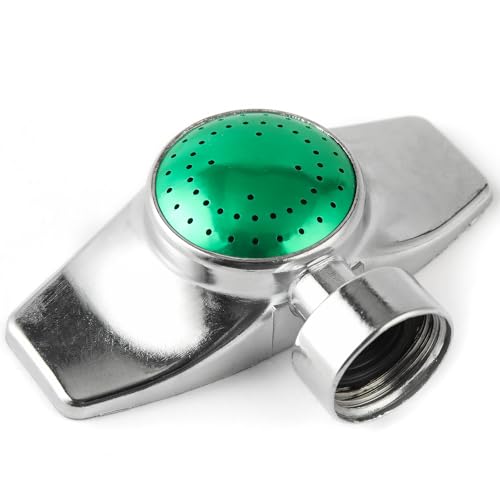
Metal Spot Sprinkler
Made of heavy-duty solid alloy metal rather than lighter plastic, this compact spot sprinkler sits low to the ground and resists being nudged out of position by wind better than a tall plastic unit would. It is built for smaller, targeted areas, which naturally limits how much spray is ever exposed to crosswind compared to a wide-radius sprinkler.
Reasons to avoid
- 30-foot coverage diameter is meant for small areas, not a full lawn
- Circle spray pattern has less directional control than an adjustable-arc impact head

Meekamar Heavy Duty Pulsating Impact Lawn Sprinkler
The heavy-duty anti-tip zinc alloy base is specifically described as resisting movement in severe weather conditions, which extends naturally to holding steady in gusty wind. The adjustable 20 to 360 degree arc lets you narrow the pattern to a downwind-facing section instead of spraying in every direction.
Reasons to avoid
- Rated coverage assumes calm conditions and will drop with any consistent crosswind
- Heavier base makes repositioning between different windy corners of a yard more effort

Nexlogi Heavy Duty Pulsating Impact Lawn Sprinkler
This all-metal impact sprinkler offers spray customization from precise partial arcs to a full rotation, and the brass nozzle and zinc alloy construction are built to resist the wear that repeated outdoor exposure, including wind-blown grit, can cause over time. Its working pressure range of 20 to 80 PSI gives room to adjust flow for a heavier, more wind-resistant stream.
Reasons to avoid
- All-metal design adds weight that makes moving it between windy sections slower
- Adjustable arc requires manual resetting rather than an automatic wind-responsive feature
Wind changes which sprinkler style actually gets water onto a lawn. A fine-mist spray pattern, the kind produced by many small oscillating nozzles working at typical household pressure, has very little mass per droplet, so even a light breeze can carry a meaningful share of that spray off the target area before it lands. A single heavier stream from an impact or pulsating sprinkler, thrown as larger droplets rather than atomized mist, holds its trajectory noticeably better in the same conditions, which is why every pick in this guide is an impact-style design rather than a standard oscillating fan sprinkler.
We compared these models on droplet size and spray style, how low or adjustable the trajectory angle is, and how heavy and stable the base is against gusts that might otherwise shift a lighter sprinkler off its aim. Several of the impact sprinklers reviewed here include a diffuser screw or an adjustable dial specifically for switching between a fine mist and a heavier jet, which matters a great deal in wind since choosing the heavier setting is usually the more wind-resistant option even though it covers a smaller radius per pass.
Base weight and construction matter for a second reason beyond spray pattern: wind pushes on the sprinkler body itself, not just the water leaving it. A metal or zinc alloy base sits more securely than a light plastic one, and a tripod-mounted head, while it raises the spray higher for clearing plants, can be more exposed to gusts than a low ground-level unit, so the tripod models here favor a wider, more stable metal leg base to offset that tradeoff.
It is worth setting expectations honestly: no sprinkler eliminates wind drift entirely, and manufacturer specs describe recommended pressure ranges assuming calm conditions. On a consistently windy site, running the sprinkler on the heaviest available droplet setting, keeping the trajectory lower rather than higher, and watering during calmer parts of the day generally does more to reduce waste than the sprinkler choice alone, though the picks below make that easier than a standard oscillating sprinkler would.
How we research
What to look for
Droplet size and spray style
A single heavier impact stream resists wind drift better than the fine mist produced by many small oscillating nozzles, since larger droplets carry more mass relative to the wind pushing on them.
Adjustable trajectory and arc
A sprinkler that can narrow its arc lets you aim the spray away from the direction wind typically blows, and a diffuser or jet setting lets you trade coverage width for a more wind-resistant heavier stream.
Base weight and material
A metal or zinc alloy base resists being nudged out of position by gusts far better than a light plastic base, which matters as much as the spray pattern itself in consistently windy conditions.
Tripod height versus ground level
A tripod-mounted head clears taller plants but is more exposed to wind at height, so on a windy site a lower tripod setting or a ground-level unit is often the more reliable choice.
Realistic coverage expectations
Manufacturer coverage ratings generally assume calm conditions, so plan on a shorter effective radius on windy days regardless of which sprinkler you choose.
Our verdict
The Biswing Impact Sprinkler Head on Tripod Base is the top pick for wind because its single heavy-droplet impact stream is far less prone to drift than the fine mist a multi-nozzle oscillating sprinkler produces.
FAQs
Generally yes, because an impact sprinkler throws a single heavier stream that holds its trajectory better than the fine mist produced by many small oscillating nozzles. The tradeoff is that impact sprinklers typically cover a circular or arc-shaped area rather than the rectangular pattern an oscillating sprinkler produces.
Choose the heavier jet or droplet setting where your sprinkler offers one. A heavier stream carries more mass relative to wind resistance and drifts off target less than a fine mist, even though it may cover a smaller area per pass.
It can, but height adds exposure to gusts, so setting the tripod lower in windy conditions and choosing a model with a wide, heavy metal leg base helps keep it stable. A ground-level impact sprinkler is a safer default choice for a consistently windy site.
This varies by wind speed and is not precisely quantified by any manufacturer we reviewed. As a general rule, expect a shorter effective radius than the rated coverage on a breezy day, and plan to water during calmer periods when possible to reduce waste.
Models with an adjustable arc, like the impact sprinklers featured here, let you narrow the spray to a specific section rather than a full circle, which lets you favor the downwind side and reduce how much spray crosses open, wind-exposed ground before reaching the lawn.
Related guides

Best Sprinkler for an L-Shaped Yard: Three Sprinklers That Cover a Corner Lot Without Two Hoses
Best Sprinkler Systems

Best Sprinklers for Irregular Lawns

Best Impact Sprinklers of 2026
Melnor 65030-AMZ Metal Impact Sprinkler Review

K-Rain RPS75 Review: Specs, Setup & Owner Reports
Orbit 55025 Brass Impact Sprinkler Review