Quick verdict
The Orbit H2O Six Gear-Drive Sprinkler is the top pick for genuinely low pressure because its single rotating head does not depend on pushing water evenly through many small nozzles the way an oscillating fan sprinkler does.

Orbit H2O Six Gear-Drive Sprinkler
A gear-drive rotor head throws water from a single adjustable stream rather than splitting flow across many small nozzles, which manufacturer specs describe as delivering six spray patterns and a four-position spray control that still functions when supply pressure is reduced. The metal T-spike base keeps it stable regardless of flow strength.
Check price on Amazon →Best sprinklers for low household water pressure, including rotor and impact styles that stay effective where multi-nozzle oscillating sprinklers struggle.
The picks at a glance
| Tool | Best for | Score /100 | |
|---|---|---|---|
| Orbit H2O Six Gear-Drive Sprinkler | Best Overall | Check price | |
| Dramm 15073 ColorStorm Spinning Sprinkler | Best Value | Check price | |
| Meekamar Heavy Duty Pulsating Impact Lawn Sprinkler | Best Premium | Check price | |
| 360 Degree Rotating Lawn Sprinkler (Joeys-style) | Best Budget | Check price | |
| Melnor MiniMax Turbo Sprinkler | Also Great | Check price |
The picks, reviewed
Orbit H2O Six Gear-Drive Sprinkler
A gear-drive rotor head throws water from a single adjustable stream rather than splitting flow across many small nozzles, which manufacturer specs describe as delivering six spray patterns and a four-position spray control that still functions when supply pressure is reduced. The metal T-spike base keeps it stable regardless of flow strength.
Reasons to avoid
- Six fixed spray patterns offer less fine adjustment than a dedicated width and range dial
- Throw distance still shortens noticeably at the low end of its pressure range

Dramm 15073 ColorStorm Spinning Sprinkler
The manufacturer explicitly lists this sprinkler as working from a low of 20 PSI and markets it directly at well-system owners, which makes it one of the few products in this category with a documented low-pressure claim rather than a general coverage rating. The heavy-duty stationary base does not depend on spray force to stay in place.
Reasons to avoid
- Coverage tops out around 38 feet in diameter, smaller than gear-drive or impact alternatives
- Single fixed spray style with no adjustable arc or pattern

Meekamar Heavy Duty Pulsating Impact Lawn Sprinkler
As an impact-style head, this sprinkler distributes water through pulsing single-stream bursts rather than many simultaneous small nozzle jets, which is generally more forgiving on limited pressure than a full-width oscillating fan. The zinc alloy anti-tip base holds position at any pressure level, and the arc is adjustable from 20 to 360 degrees to concentrate flow where it is needed.
Reasons to avoid
- Rated 4,500 sq ft coverage assumes stronger pressure than a genuinely low-pressure home may deliver
- Brass nozzle can still clog with sediment common on older low-pressure well systems
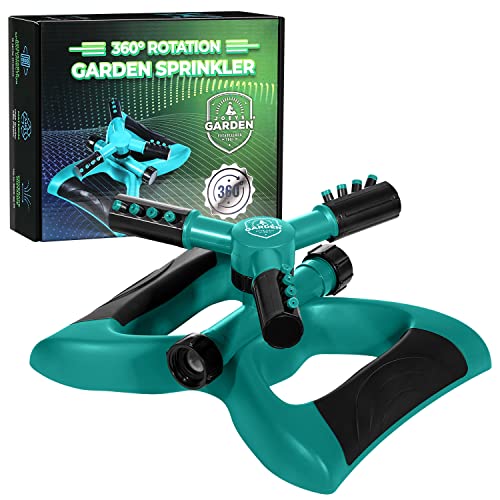
360 Degree Rotating Lawn Sprinkler (Joeys-style)
True rotation through three adjustable arms spreads the available flow across a full circle continuously rather than splitting it among many stationary nozzles at once, and the weighted ABS base holds steady on grass, patio or gravel even as pressure varies. Multiple units can be daisy-chained if one low-pressure sprinkler cannot cover the whole yard alone.
Reasons to avoid
- Manufacturer notes it works best with steady household pressure for maximum spray distance
- Plastic body is less durable long-term than the metal impact and gear-drive options

Melnor MiniMax Turbo Sprinkler
This is the strongest oscillating option for a low-pressure home because it includes an independent flow control dial alongside width and range adjustment, letting you narrow the pattern to concentrate whatever pressure is available rather than spreading a full-width fan thin. The dirt-resistant drive is also built to keep operating on well water.
Reasons to avoid
- Still needs more pressure than a single-jet impact or rotor head to hit its full rated coverage
- Best results require actively narrowing the width setting rather than running it wide open
Low household water pressure, whether from a well pump, a long uphill supply line, or older plumbing, punishes some sprinkler designs more than others. A sprinkler with sixteen or twenty small oscillating nozzles needs enough pressure to push water through every jet evenly, and manufacturer specs for these models commonly list a minimum operating pressure to hit their rated coverage. A single-head impact or gear-drive rotor sprinkler has fewer, larger openings, and several of the listings we reviewed specifically call out a low minimum PSI as a selling point, which generally makes that style more forgiving when supply pressure is weak.
We compared these models on their stated minimum operating pressure, how the design handles reduced flow, and whether the manufacturer positions the unit for well water or low-pressure use specifically. A few listings are explicit about this: one spinning sprinkler in our comparison states it works from as low as 20 PSI, which the manufacturer markets directly at well-system owners. Others rely on flow-control dials that let you narrow the spray pattern to concentrate whatever pressure is available onto a smaller area rather than spreading it thin across a wide fan.
Base design also plays a role at low pressure, since a sprinkler that relies on water pressure alone to stay upright can behave differently when flow drops. The gear-drive and impact designs here use a physically stable base rather than depending on spray force for stability, so a drop in pressure changes the throw distance but not whether the unit stays in place. That is a meaningful difference from lightweight oscillating units that can sit less securely once the spray force driving their oscillation weakens.
It is worth being realistic about what a sprinkler can and cannot fix. No sprinkler restores pressure that is not there, and a home with genuinely low pressure throughout will see a shorter throw radius on every model, including these picks. What these designs do is fail more gracefully: a single rotating jet at reduced pressure still delivers water in a usable, if smaller, circle, where a multi-nozzle fan sprinkler at the same reduced pressure can leave visibly uneven strips because the far nozzles receive less flow than the near ones.
How we research
What to look for
Documented minimum operating pressure
Look for a manufacturer-stated minimum PSI rather than relying on a general coverage number, since coverage figures usually assume full, unrestricted household pressure.
Single-jet versus multi-nozzle design
Impact, gear-drive and rotor heads distribute flow through one adjustable stream, which tends to hold up better at reduced pressure than a fan sprinkler splitting the same flow across many small nozzles.
Base stability independent of spray force
A metal spike, T-spike or weighted base that does not rely on water pressure to stay upright keeps performance more consistent as pressure fluctuates through the day.
Adjustable arc or flow control
The ability to narrow the spray pattern lets you concentrate limited pressure onto a smaller area instead of stretching it thin across a wide setting.
Well water compatibility
If low pressure comes from a well system, a dirt-resistant or sediment-tolerant drive mechanism, noted on several of these models, avoids clogging that would reduce effective pressure further.
Our verdict
The Orbit H2O Six Gear-Drive Sprinkler is the top pick for genuinely low pressure because its single rotating head does not depend on pushing water evenly through many small nozzles the way an oscillating fan sprinkler does.
FAQs
Most sprinkler manufacturers design around a household range of roughly 25 to 60 PSI. Pressure below that range, common with well pumps or long supply runs, is generally considered low, and it is worth checking your specific model's minimum listed PSI rather than assuming a general figure applies.
Generally, yes, because an impact or gear-drive head distributes the available flow through one adjustable stream rather than splitting it across many small simultaneous nozzles. An oscillating sprinkler with sixteen or more nozzles needs more pressure to keep every nozzle delivering water evenly.
Not necessarily. Rated coverage figures assume the pressure range the manufacturer evaluated at, which is usually mid to full household pressure. At the low end of a unit's operating range, expect a shorter throw distance and smaller effective coverage than the number on the box.
Narrowing the width or flow setting on an adjustable sprinkler concentrates the available pressure onto a smaller area, which often improves visible coverage on the section you are watering, even though it does not increase your home's actual water pressure.
Some models add a dirt-resistant or sediment-tolerant drive mechanism specifically for well water, since well systems can carry more grit than municipal supply. This matters most for clog prevention rather than pressure itself, though a clogged nozzle further reduces effective pressure at the head.
Related guides

Best Sprinkler for a Lawn With a Steep Slope: Three Low-Rate Sprinklers That Soak In Instead of Running Off
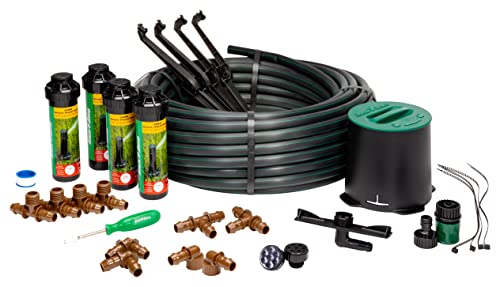
Rain Bird 32HE Click-N-Go Pop-Up Sprinkler Review: In-Ground Watering Without the Plumber

Best Sprinklers for Higher Water Pressure

Best Oscillating Lawn Sprinkler

Best Lawn Sprinklers of 2026
Rain Bird 32ETI Review
Orbit 58322 Zinc Impact Sprinkler Review
