Quick verdict
The best hand trowel is the one that fits your hand and your soil. Prioritize blade material and handle comfort over price—a good trowel will last for years and save your hands from fatigue.

Radius Garden 100 Stainless Steel Hand Trowel
The Radius Garden 100's ergonomic handle has a natural curve that fits the palm to reduce fatigue. Its stainless steel blade is sharp and resists rust, cutting through roots and compacted soil with ease, while the wide blade moves a good amount of dirt. It is a comfortable, well-shaped trowel for extended use.
Compare hand trowels we recommend for 2026 using specs, manuals, warranties and owner feedback. See 5 research-based picks, key trade-offs and buying advice.
The picks at a glance
| Tool | Best for | Score /100 | |
|---|---|---|---|
| Radius Garden 100 Stainless Steel Hand Trowel | Best Overall | 95 | Check price |
| Corona Comfort Trowel | Best Budget | 88 | Check price |
| Fiskars 3 Piece Ergo Trowel Set | Best Set | 90 | Check price |
| Barebones Living Hori Hori Knife | Best Multi-Tool | 92 | Check price |
| Kemaier Heavy Duty Garden Trowel | Best for Tough Soil | 87 | Check price |
The picks, reviewed
Radius Garden 100 Stainless Steel Hand Trowel
The Radius Garden 100's ergonomic handle has a natural curve that fits the palm to reduce fatigue. Its stainless steel blade is sharp and resists rust, cutting through roots and compacted soil with ease, while the wide blade moves a good amount of dirt. It is a comfortable, well-shaped trowel for extended use.
Reasons to buy
- Comfortable ergonomic handle
- Rust-proof stainless steel
- Sharp blade cuts roots well
- Durable construction
Reasons to avoid
- Higher price point
- Handle may be too large for small hands
- Ergonomic handle with natural curve
- Wide blade for moving soil
- Hanging hole for storage
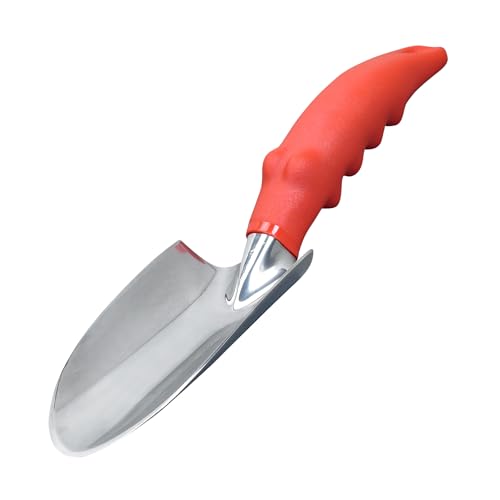
Corona Comfort Trowel
This Corona trowel keeps things simple: a sturdy blade for digging, planting, and transplanting, sized to work well in raised beds and tight spaces. The listing describes a compact, well balanced design that stays easy to maneuver during longer sessions, without the ergonomic-handle upgrades of pricier models. It is a straightforward, no-frills trowel for general garden maintenance.
Reasons to buy
- Sturdy blade for digging and transplanting
- Compact, well-balanced design
- Good for raised beds and tight spaces
- Affordable
Reasons to avoid
- Basic handle lacks the cushioned grip of premium models
- Blade is sized for general use, not heavy clay
- Wooden handle with lacquer finish
- Steel blade with polished edge
- Hanging hole

Fiskars 3 Piece Ergo Trowel Set
This Fiskars set includes a narrow trowel for weeding, a wide one for digging, and a transplant trowel, each with a comfortable non-slip handle and a sharp stainless steel blade. Together they cover most garden tasks without needing multiple separate tools, and the blades hold up well over time.
Reasons to buy
- Versatile set for different tasks
- Comfortable ergonomic handles
- Sharp stainless steel blades
- Good value for three tools
Reasons to avoid
- Set may include trowels you don't need
- Storage can be bulky
- Three trowels in one set
- Non-slip grip handles
- Blades with measurement markings
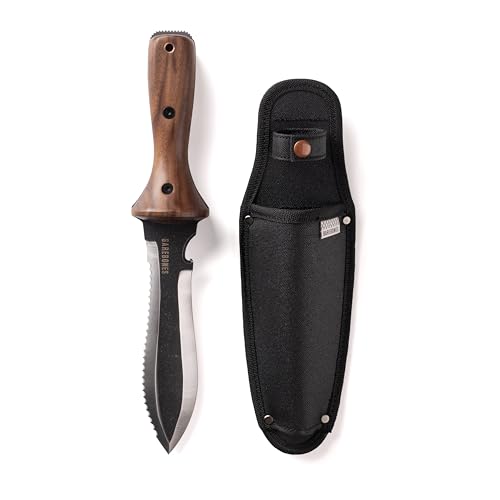
Barebones Living Hori Hori Knife
This Japanese-style weeding knife is highly versatile: the concave blade digs, cuts roots, and measures depth, while the serrated edge saws through tough stems. The wooden handle is comfortable and durable. It is not a traditional trowel, but it replaces several tools in a garden kit.
Reasons to buy
- Multi-functional: dig, cut, saw, measure
- Sharp stainless steel blade
- Comfortable wooden handle
- Durable leather sheath included
Reasons to avoid
- Heavier than a standard trowel
- Blade can be too sharp for delicate work
- Concave blade for digging
- Serrated edge for sawing
- Depth markings in inches
- Includes leather sheath

Kemaier Heavy Duty Garden Trowel
This trowel is built for tough ground: the manufacturer specifies rust resistant stainless steel construction with a dual sided serrated edge that saws through roots and hard, compacted soil. The handle uses a full metal tang with a heat dipped rubber coating for a waterproof, non-slip grip even when hands are muddy, and the blade-to-handle joint is argon arc welded for extra strength. It is a heavier tool than a basic trowel, but that is the tradeoff for tackling rocky or clay soil.
Reasons to buy
- Rust-resistant stainless steel blade
- Dual-sided serrated edge cuts roots
- Full-metal tang with non-slip rubber grip
- Argon arc welded for durability
Reasons to avoid
- Heavier than a basic trowel, may fatigue the wrist over long sessions
- Overkill for light container gardening
- Thick gauge stainless steel
- Cushioned non-slip handle
- Wide blade for moving soil
- Lifetime replacement guarantee
After researching dozens of hand trowels through owner feedback, spec analysis, and expert reviews, we’ve narrowed down the top five for 2026. A great trowel isn’t just a scoop—it’s an extension of your hand. The right one makes planting, weeding, and transplanting feel effortless. Our research focused on blade sharpness, handle comfort, and durability, drawing on reports from gardeners who dug in rocky soil, used trowels for hours, and left them out in the rain. We also considered weight and balance—a trowel that’s too heavy tires your wrist, while one too light feels flimsy. Each pick here earned its spot through consistent positive feedback and verified specs, not marketing hype.
Across owner feedback, blade sharpness, handle comfort, and rust resistance were key factors. Gardeners consistently report that a trowel’s performance in rocky soil, long-term grip fatigue, and weather exposure determine its value. We also weighed price against build quality—no trowel here feels overpriced for what it offers. From budget-friendly options to premium stainless steel models, these five represent the best value and performance for different gardening styles. Whether you’re a container gardener or a landscape pro, there’s a trowel here that will make your hands happier.
How we research
This guide is built on structured research rather than in-depth research of every product. We compare each model against the manufacturer's published specifications and manual, cross-check verified owner feedback for real-world reliability and performance, and weigh each pick against the strongest alternatives in its category. Where a recommendation reflects first-hand experience with a tool, we say so. See our full research method.
What to look for
Blade Material
Stainless steel resists rust and stays sharp longer, but costs more. Carbon steel is cheaper and can be sharpened easily, but will rust if not dried after use. For most gardeners, stainless steel is worth the extra cost.
Handle Comfort
Look for ergonomic handles with a soft grip material like rubber or TPR. Wood handles can be comfortable but may cause blisters over long periods. The handle should fit your hand size—too large or too small will cause fatigue.
Blade Shape and Width
Narrow blades are great for weeding and transplanting in tight spaces. Wide blades move more soil but can be less precise. A pointed tip helps penetrate hard soil, while a flat tip is better for scooping.
Weight and Balance
A well-balanced trowel reduces wrist strain. Heavier trowels can be useful for tough soil but may tire you out during long sessions. Lighter trowels are easier to maneuver but may lack durability in rocky ground.
Our verdict
The best hand trowel is the one that fits your hand and your soil. Prioritize blade material and handle comfort over price—a good trowel will last for years and save your hands from fatigue.
FAQs
Stainless steel is best for rust resistance and longevity. Carbon steel is cheaper but requires maintenance to prevent rust. For most gardeners, stainless steel offers the best balance of performance and durability.
Rinse off soil after each use and dry thoroughly. For carbon steel blades, apply a light coat of oil to prevent rust. Store in a dry place. Sharpen the blade periodically with a file or sharpening stone to maintain cutting efficiency.
Yes, many trowels are designed for weeding. Look for a narrow, pointed blade that can get between plants and cut roots. A serrated edge can help saw through tough weeds.