A 40V battery does not fit or run a 20V yard tool, and forcing it with an adapter feeds the motor twice its design voltage. The exceptions are platforms built to switch voltage, such as DeWalt FlexVolt, and dual-pack tools that take two 20V packs.
The short answer
No. A 40V battery will not fit a 20V tool, and if an adapter is used to force the connection the tool receives double the voltage it was built for, which burns out the motor or the controller. Makers key their battery mounts precisely so this cannot happen by accident. The only ways to run one battery across two voltages are platforms designed for it, such as DeWalt FlexVolt, which switches voltage inside the pack, or tools designed to take two lower-voltage packs in series. Everything else is a mismatch.
What the voltage number means
A lithium pack is a stack of cells at about 3.6 volts each. Five cells in series make 18 volts nominal, which brands advertise as 20V max because a freshly charged cell reads about 4 volts. Ten cells in series make 36 volts nominal, sold as 40V max. A 20V tool has a motor wound and a controller rated for 18 to 20 volts; a 40V tool for 36 to 40. Voltage sets motor speed and the electrical stress on the controller. Feed a 20V motor 40 volts and it tries to spin twice as fast, draws far more current, overheats and fails, and the controller’s components see twice their rated voltage and fail sooner.
Why the mounts do not fit
Within one brand, the 20V and 40V packs have different rails, latches and contact layouts. Ryobi 18V ONE+ and Ryobi 40V do not interchange. Black and Decker 20V and 40V do not. Greenworks 24V, 40V, 60V and 80V are four separate families. Worx 20V and 40V tools share the 20V pack only because the 40V tools hold two of them. This is deliberate; a key that only fits its lock is the safety system.
The exceptions that are designed in
DeWalt FlexVolt is the clear case. A FlexVolt pack rearranges its cells when it is fitted to a tool: 60V in a FlexVolt tool, 20V in a 20V MAX tool. It is built to do that, and a FlexVolt pack in a 20V mower or trimmer is a supported combination with a large capacity. The second exception is dual-pack tools: Worx PowerShare 40V mowers and blowers run on two 20V packs, and several Greenworks 48V tools run on two 24V packs. The tool wires the two packs in series; the packs are ordinary 20V or 24V packs. Those are the only ways a lower-voltage pack powers a higher-voltage tool, and no pack runs a lower-voltage tool at higher voltage.
Adapters
Adapters sold online fall into two kinds. Same-voltage cross-brand adapters, such as a Milwaukee 18V pack to a Ryobi 18V tool, keep the voltage the same and only remap the contacts; they work with caveats about protection circuits and warranty. Adapters that claim to run a 40V pack in a 20V tool either contain no converter, in which case they pass 40 volts straight to the tool, or contain a cheap step-down converter that cannot handle the current a yard tool draws under load. Neither is safe. The right answer to a 20V tool that needs more runtime is a bigger 20V pack, not a 40V one.
The reverse question
A 20V pack in a 40V tool is also not possible without forcing. If it were, the tool would run at half speed and the controller would see a low-voltage condition; many would refuse to start. The pack would be drained below its safe limit by a tool expecting 40 volts. Dual-pack 40V tools are the supported way to use 20V packs at 40 volts.
What to do instead
Pick one voltage family for the yard and stay in it; the packs are the expensive part and the tools are cheap within a family. For more runtime on a 20V tool, buy a higher amp-hour 20V pack; a 4 Ah pack lasts twice as long as a 2 Ah one at the same voltage. For more power, buy the 40V version of the tool and a 40V pack. If an existing 40V pack has no tools to run, the 40V trimmers and blowers in that family are often sold bare at low cost. If a brand offers FlexVolt-style voltage switching, that is the one platform where one pack serves both.
Safety
A lithium pack forced to deliver current into a mismatched tool heats, and a hot lithium pack is a fire risk. Mismatched voltage also defeats the protection circuit that stops a pack from over-discharging. Use the pack the tool was sold with or one the maker lists as compatible, charge on the matching charger, and store packs at moderate temperatures.
How we research
We compare published manufacturer specifications, official manuals, warranty information and recurring owner feedback. Rankings are research-based unless original YardToolLab test evidence is explicitly shown on the page.
FAQs
No. Makers key the mounts so packs of different voltages cannot be fitted, even within one brand.
The motor and controller receive double their design voltage. Brushed motors overspeed and burn; electronic controllers fail; the warranty is void and the pack can overheat.
DeWalt FlexVolt packs switch between 20V and 60V automatically and run 20V tools. Some brands make dual-pack 40V tools that run on two 20V packs. No pack is both 20V and 40V by itself.
It does not fit, and if forced the tool runs weak or not at all and the pack over-discharges.
Related guides
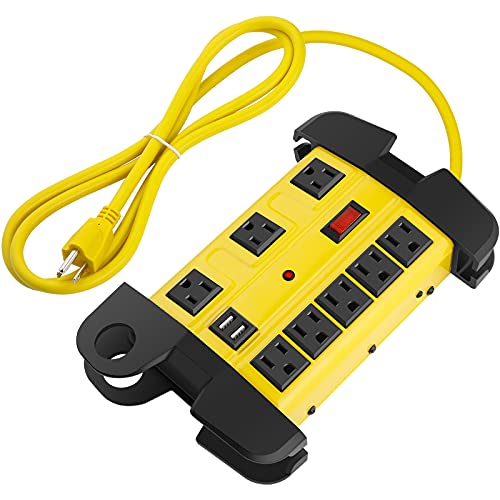
CCCEI Heavy Duty Metal Surge Strip Review: A Charging Station the Shed Can Take
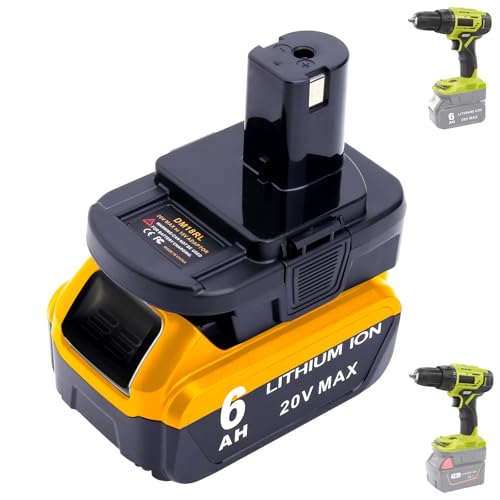
Biswaye DM18RL Battery Adapter Review: Running Ryobi Tools on DeWalt or Milwaukee Packs
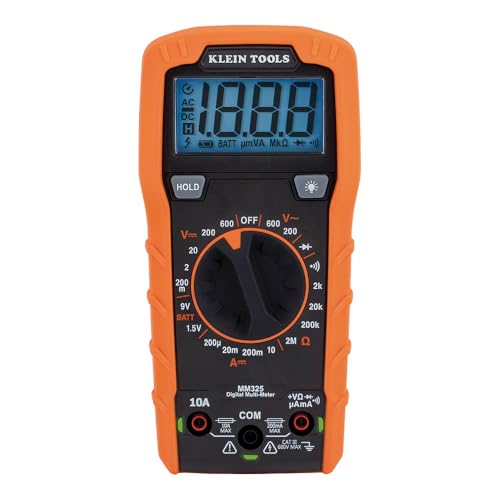
Klein Tools MM325 Multimeter Review: Reading a Tool Battery Instead of Guessing

ZIORS Saw Blade Storage Case Review: Reciprocating Blades Sorted and Carried

SZWJT-LV DeWalt 20V Battery Rack Review: Four Packs on the Wall, Charged and Ready

Oxlfoas 3-Pack Silicone Battery Covers Review: Sleeves for DeWalt Packs That Ride in the Truck

WELIDAY Tool Battery Carrying Case Review: Every Battery and Charger in One Bag
