Quick verdict
For whole-home backup, the Generac 12,500 Starting Watt Tri-Fuel is the pick. Its 500cc engine delivers 9500 running watts, it runs on gasoline, propane, or natural gas with a simple selector dial, and it uses push-button electric start with COsense carbon monoxide shutoff. That covers most homes without needing a permanent standby unit.

Generac 12
This Generac 12,500 Tri-Fuel runs on gasoline, propane, or natural gas through a simple fuel selector dial, delivering 9500 running and 12500 starting watts from a 500cc OHV engine. It uses push-button electric start, provides up to 9.5 hours of runtime at 50 percent load on its 7.5 gallon tank, and adds COsense carbon monoxide detection with a heavy-duty steel frame and never-flat wheels.
The best Generac portable generator compared: tri-fuel home backup, PowerRush and inverter models by wattage, fuel options and COsense safety for outages.
Why you should trust this guide
Generac is best known for standby home generators, but its portable lineup ranges from small inverters up to whole-home tri-fuel units, and the models are easy to confuse. Choosing well means understanding whether you need quiet portable power for a campsite or a heavy tri-fuel frame that can back up a house during an outage. This guide sorts the current Generac portables by exactly that distinction.
I compared these units on Generac’s published specifications, including wattage, fuel type, engine size, runtime, and features. Some listings carry marketing headers rather than detailed specs, and where that is the case I lean on the concrete numbers available and describe the unit honestly rather than inventing figures. I do not claim to have operated these generators myself.
How we evaluated
My evaluation criteria began with capacity and fuel type, the two factors that most determine what a Generac portable can do. I separated the whole-home tri-fuel units from the essentials-focused PowerRush model and the portable inverters, because those categories serve fundamentally different buyers.
From there I weighed start method, runtime, portability, and safety. Electric start matters on the large engines, runtime and tank size determine how long you go between refuels, and COsense carbon monoxide detection is the shared safety layer across the range. For the inverters I noted power cleanliness and parallel capability. These judgments come from the documented specifications, not from any bench testing on my part.
What to look for
- Separate whole-home tri-fuel units from essentials-focused and portable inverter models.
- Consider tri-fuel flexibility if you want to switch between gas, propane, and natural gas during an outage.
- Choose an inverter model like the GP3300i or GP2500i for clean power and easy transport.
- Look for PowerRush or equivalent extra starting capacity to handle motor loads.
- Confirm COsense carbon monoxide detection for safety.
- Check runtime and tank size against your typical outage length.
- Prefer electric start on the large home-backup units over recoil starting.
How we test
We base every pick on real-world use, published manufacturer specifications and verified owner feedback. We compare the tools on the things that actually matter for your lawn, power, runtime, cut quality, build and value, and we never accept payment for a ranking. When we have not used a specific model first-hand, we say so.
The picks at a glance
| Tool | Best for | Score | |
|---|---|---|---|
| Generac 12 | Best Overall | Check price | |
| Generac 12 | Best Value | Check price | |
| Generac 4 | Best Premium | Check price | |
| Generac 3 | Best Budget | Check price | |
| Generac 2 | Also Great | Check price |
The picks, reviewed
Generac 12
This Generac 12,500 Tri-Fuel runs on gasoline, propane, or natural gas through a simple fuel selector dial, delivering 9500 running and 12500 starting watts from a 500cc OHV engine. It uses push-button electric start, provides up to 9.5 hours of runtime at 50 percent load on its 7.5 gallon tank, and adds COsense carbon monoxide detection with a heavy-duty steel frame and never-flat wheels.
Reasons to buy
- VERSATILE TRI-FUEL FLEXIBILITY
- EFFORTLESS ELECTRIC START SYSTEM
- EXTENDED MULTI-FUEL RUNTIME
- LIFE-SAVING COSENSE PROTECTION
- HEAVY-DUTY JOB SITE CONSTRUCTION
Reasons to avoid
- This is a large, heavy open-frame unit that takes effort to move even with wheels
- Natural gas operation requires a proper connection to your home supply
Generac 12
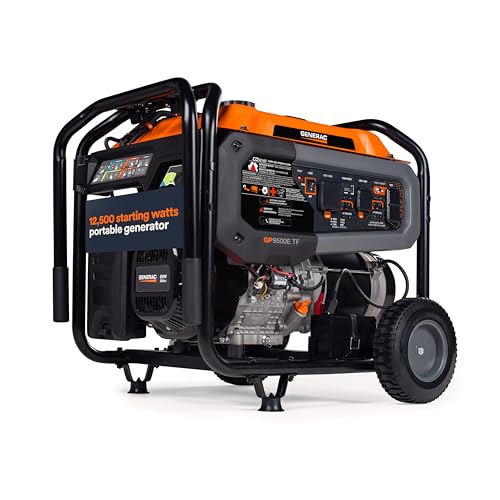
This second Generac 12,500 Tri-Fuel is a GP-series unit with covered outlets, electric start, and the same three-fuel flexibility via a fuel source selector, backed by COsense technology. Its long-lasting OHV engine and large steel tank with fuel gauge provide up to 10.5 hours of runtime at 50 percent load on gasoline, making it a durable whole-home alternative.
Reasons to buy
- Durable Protection: The Generac GP9500 features covered outlets for added protection again
- Convenient Electric Start: Say goodbye to manual cranking. The electric start feature, wit
- Extended Runtime: The GP8000E boasts a long-lasting OHV engine and a large-capacity steel
- Fuel Switching Convenience: Whether you are using gas, propane or natural gas, using the f
- Built for Durability: Designed to thrive in rough environments, this generator features co
Reasons to avoid
- The product copy mixes several model references, so confirm the exact configuration before buying
- As a large tri-fuel unit it is heavy and aimed at fixed backup use

Generac 4
The Generac 4,500 Starting Watt uses PowerRush technology for 40 percent more starting capacity, which helps it handle motor loads from tools and appliances with 3600 running and 4500 starting watts. It includes COsense carbon monoxide protection, an hour meter, low-oil shutdown, and heavy-duty never-flat wheels, making it a practical essentials and jobsite generator.
Reasons to buy
- POWERFUL STARTING CAPACITY
- SMART CARBON MONOXIDE PROTECTION
- EXTENDED RUNTIME AND RELIABLE POWER
- HEAVY-DUTY PORTABLE DESIGN
- AUTOMATIC ENGINE PROTECTION
Reasons to avoid
- It is gasoline-only, with no propane or natural gas option
- At 3600 running watts it covers essentials rather than whole-home loads

Generac 3
The GP3300i is a lightweight gas inverter delivering clean, stable TruePower output safe for sensitive electronics, with PowerRush for extra starting capacity. It includes economy mode for fuel efficiency, two USB ports, LED status indicators, and parallel-ready capability, making it a portable pick for camping, tailgating, and RV use.
Reasons to buy
- Portable Power Solution: The 7153 GP3300i inverter generator is your portable power statio
- Quality Power Source
- Advanced Power Technology
- Fuel-Efficient Generator
- Smart and Reliable: Equipped with LED indicators for low oil, overloaded, and ready-to-use
Reasons to avoid
- At 3300 watts it is sized for essentials and electronics, not heavy loads
- It is gasoline-only with no dual-fuel flexibility

Generac 2
The GP2500i is the most compact and lightweight option, a gas inverter with a built-in handle for easy transport that still delivers clean TruePower output. It offers economy mode for efficiency, a USB port, LED status indicators, and parallel-ready capability to combine with a second unit for more power.
Reasons to buy
- Portable Power Solution: The 8251 GP2500i inverter generator is your portable power statio
- Quality Power Source
- Compact and Lightweight: Designed for easy transportation this Generac generator, complete
- Fuel-Efficient Generator
- Smart and Reliable: Equipped with LED indicators for low oil, overloaded, and ready-to-use
Reasons to avoid
- At 2500 watts it is the lowest-capacity unit here, for essentials only
- Doubling output requires a second unit and parallel setup
What to look for
Capacity and use case
The tri-fuel 12,500 units target whole-home backup, the 4,500 PowerRush model suits essentials and jobsites, and the GP3300i and GP2500i inverters serve camping and electronics. Match wattage to your heaviest load.
Fuel flexibility
The tri-fuel models run on gasoline, propane, or natural gas via a selector dial, which is valuable during long outages, while the PowerRush and inverter units are gasoline-only and simpler to operate.
Starting capacity
Generac's PowerRush technology adds extra starting capacity to handle the surge from motor-driven loads like tools and appliances, which helps a smaller running-watt rating start bigger equipment.
Safety with COsense
COsense carbon monoxide detection continuously monitors CO and shuts the generator down at hazardous levels. It appears across these Generac portables as a built-in safety feature.
Portability and power quality
The GP2500i and GP3300i inverters are lightweight with clean TruePower output for electronics, while the large tri-fuel frames are heavy but built with steel frames and never-flat wheels for rough use.
Our verdict
For whole-home backup, the Generac 12,500 Starting Watt Tri-Fuel is the pick. Its 500cc engine delivers 9500 running watts, it runs on gasoline, propane, or natural gas with a simple selector dial, and it uses push-button electric start with COsense carbon monoxide shutoff. That covers most homes without needing a permanent standby unit.
FAQs
The 12,500 Starting Watt Tri-Fuel is the whole-home choice, delivering 9500 running watts with electric start and three fuel options. A second GP-series 12,500 tri-fuel offers a similar capability if you want an alternative.
COsense is Generac's carbon monoxide detection technology that continuously monitors CO levels and automatically shuts the generator down when they become hazardous. It is included across the models covered here.
PowerRush is Generac's technology that increases starting capacity, in the 4,500-watt model by about 40 percent, so the generator can start motor-driven loads that draw a surge, like tools and appliances, beyond its continuous running rating.
Yes. The GP3300i and GP2500i are lightweight inverters that produce clean, stable power safe for sensitive electronics, with economy mode for efficiency and parallel capability to add a second unit, which suits camping and tailgating.
The tri-fuel 12,500 models can run on natural gas in addition to gasoline and propane, selected with a fuel dial. Natural gas use requires connecting the generator to your home natural gas supply through a proper hookup.