Quick verdict
For most people who want to check air around a running generator, the TOPTES CT-580 is the pick. It is a rechargeable handheld unit reading 0 to 1000 PPM with light, sound, and vibration alerts, so you can walk the perimeter and spot exhaust drift. If you want a fixed household alarm instead, the First Alert CO606 plug-in is the simpler choice.

TOPTES CT
The TOPTES CT-580 is a handheld manual inspection detector rather than a fixed alarm, which makes it well suited to actively checking the air around a running generator. It reads 0 to 1000 PPM, alerts by indicator light, audible alarm, and vibration at once, and recharges over USB-C so you are not swapping batteries. It also offers alarm history and calibration options for repeat use.
Check price on Amazon →The best generator carbon monoxide detector picks compared: TOPTES handheld, First Alert and Kidde alarms by sensor type, power source and portability for
Why you should trust this guide
Carbon monoxide is the single most dangerous byproduct of running a generator, and it is invisible and odorless, which is why a detector belongs in every generator owner’s kit. The stakes here are higher than with most accessories, so this guide focuses on the practical differences that decide whether a detector actually protects you: sensor type, power source, and whether it is meant to be carried or mounted.
I compared these units on the specifications each manufacturer publishes, including sensor technology, alarm loudness, power method, certification, and whether the device is a portable handheld or a fixed alarm. I do not claim to have run any of them in a real exhaust environment; instead I explain what each design is built to do so you can match one to how you plan to use it.
How we evaluated
My evaluation criteria began with the fundamental split between handheld inspection tools and fixed alarms. A handheld like the TOPTES CT-580 reads a live PPM number and is designed to be walked around a generator, while a plug-in or battery alarm is meant to sit in one place and warn occupants. Neither is wrong; they solve different problems.
From there I weighed power source and resilience, since generators run precisely when the grid is down. A plug-in unit needs battery backup to stay useful in an outage, and a battery-only unit needs diligent cell replacement. I also considered certification such as UL 2034, alarm loudness, and useful extras like event memory or a digital PPM display. These judgments come from the published specifications, not from lab testing on my part.
What to look for
- Decide between a handheld PPM meter for checking around the generator and a fixed alarm for living space.
- Confirm the sensor is electrochemical, the standard technology for reliable CO detection.
- Ensure any plug-in unit has battery backup so it works during the outage when the generator runs.
- Look for UL 2034 certification or equivalent listing for CO alarms.
- Check alarm loudness, with 85 decibels being the common standard for audible warning.
- Consider a digital display if you want to see the exact PPM level, not just an alarm.
- Look for event or peak memory and an end-of-life chirp so you know when to replace the unit.
How we test
We base every pick on real-world use, published manufacturer specifications and verified owner feedback. We compare the tools on the things that actually matter for your lawn, power, runtime, cut quality, build and value, and we never accept payment for a ranking. When we have not used a specific model first-hand, we say so.
The picks at a glance
| Tool | Best for | Score | |
|---|---|---|---|
| TOPTES CT | Best Overall | Check price | |
| First Alert Carbon Monoxide Detector | Best Value | Check price | |
| Kidde Carbon Monoxide Detector | Best Premium | Check price | |
| Kidde Carbon Monoxide + Explosive Gas | Best Budget | Check price | |
| Kidde Carbon Monoxide Detector | Also Great | Check price |
The picks, reviewed
TOPTES CT
The TOPTES CT-580 is a handheld manual inspection detector rather than a fixed alarm, which makes it well suited to actively checking the air around a running generator. It reads 0 to 1000 PPM, alerts by indicator light, audible alarm, and vibration at once, and recharges over USB-C so you are not swapping batteries. It also offers alarm history and calibration options for repeat use.
Reasons to buy
- Fast and Accurate: The TOPTES CT-580 Carbon Monoxide Detector is a manual inspection tool
- Suitable for Individual and Business Use: For personal needs, this CO alarm is ready to op
- Three Alarm Modes: The CO alarm features three alarm modes: indicator light, audible alarm
- User-Friendly & Durable Design: The CT-580 is made from high-quality ABS engineering plast
- Certified Precision and Trusted Reliability: Certified by a national accredited lab, it is
Reasons to avoid
- As a handheld inspection tool it is meant to be carried and checked, not left mounted like a fixed alarm
- The extra menu and calibration features are more than a casual user needs
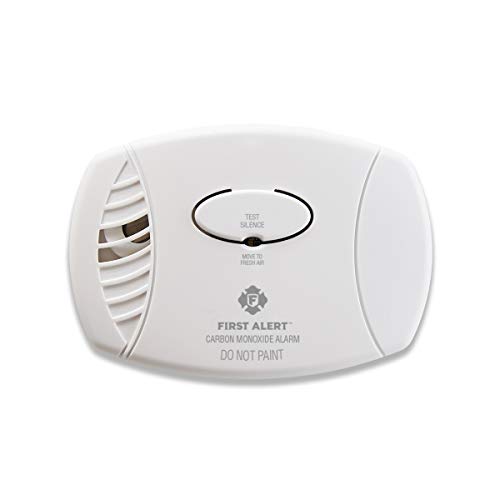
First Alert Carbon Monoxide Detector
The First Alert CO606 is a plug-in alarm with battery backup, so it keeps monitoring during a power outage, which is exactly when generators run. It uses an electrochemical CO sensor, sounds an 85 decibel alarm, and carries a 7-year limited warranty with an end-of-life chirp. This is the straightforward fixed-location choice for near living space.
Reasons to buy
- Keep your family safe with this easy to use plug in carbon monoxide alarm; It works with a
- Features an advanced electrochemical carbon monoxide sensor that accurately detects carbon
- Simple to use, with a single test/silence button; a loud 85 decibel alarm sounds when Carb
- To ensure complete protection make sure to place one on each level of your home and in eac
- 7 year limited warranty; Equipped with end of life signal chirp, so you know when it’s tim
Reasons to avoid
- It needs a standard outlet, so placement is limited to where you have one
- As a fixed alarm it is not designed to be carried around the generator like a handheld unit
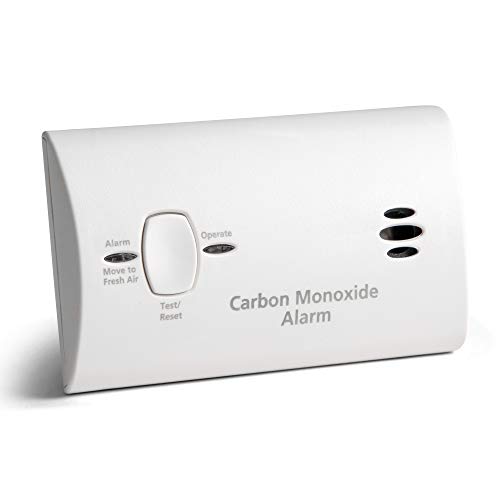
Kidde Carbon Monoxide Detector
This Kidde detector runs on two AA batteries with no wiring, so it keeps working during a power failure and can sit on a tabletop or mount to a wall. Its electrochemical sensor, 85 decibel alarm, green power LED, and event memory that logs the last CO detection make it a flexible pick for a cabin, RV, or room without a spare outlet.
Reasons to buy
- Electrochemical sensor technology detects CO gas
- Easy installation, no wiring needed, detects during a power failure by operating on 2-AA b
- Green LED indicates power to the carbon monoxide detector, while an 85-decibel alarm & a r
- Event Memory records the last time carbon monoxide was detected or when the unit was last
Reasons to avoid
- Battery power means you must monitor and replace the AA cells over time
- It is a single-gas CO alarm with no explosive gas detection
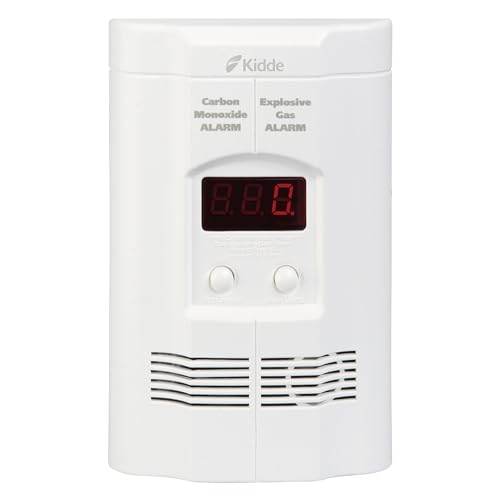
Kidde Carbon Monoxide + Explosive Gas
This Kidde combo unit plugs into a 120V outlet with a 9-volt battery backup and detects both carbon monoxide and explosive gases like natural gas and propane. Its digital LED display shows the sensed CO level or reads GAS for explosive gas, and peak level memory records past events, making it a good fit for homes that also have gas appliances.
Reasons to buy
- Easy Installation
- 9-volt battery backup provides protection during a power outage
- Digital LED display shows the level of carbon monoxide the CO alarm is sensing or states "
- 85-decibel alarm announces when carbon monoxide or explosive gas is detected
- Peak Level Memory records the last time carbon monoxide was detected or when the unit was
Reasons to avoid
- The explosive gas detection is aimed at gas appliance homes and is extra function you may not need
- Being plug-in, it depends on an available outlet for placement

Kidde Carbon Monoxide Detector
This Kidde COB is a compact AA-powered detector built to UL 2034 5th Edition and ETL listed, with an 85 decibel alarm, warning LED, and a test/hush button. Its lightweight travel-ready design means you can take it to a hotel, rental, or campsite, and it runs on two included AA batteries during outages.
Reasons to buy
- DETECTS CARBON MONOXIDE: Model COB monitors CO and sounds a loud 85 dB alarm to signal eva
- AA BATTERY POWERED: This CO detector is battery-powered, installs without wiring, mount it
- TRAVEL-READY DESIGN*: Compact carbon monoxide detector is suitable for use at home or for
- TESTED & TRUSTED: This carbon monoxide alarm is rigorously tested to meet UL 2034 5th Edit
- BUILT FOR EVERY HOUSEHOLD: Designed to help provide dependable carbon monoxide monitoring
Reasons to avoid
- Like the other AA models, it relies on battery upkeep rather than mains power
- It detects CO only, with no display of the exact PPM reading
What to look for
Handheld versus fixed
A handheld meter reads live PPM and is carried around the generator to find exhaust drift, while a fixed alarm mounts near living space to warn occupants. Pick the format that matches how you will actually use it.
Sensor type
Electrochemical sensors are the standard for accurate CO detection and appear across every unit here. This technology is what lets a detector respond reliably to low and high CO levels.
Power source and backup
Generators run during outages, so a plug-in unit must have battery backup to keep monitoring, and a battery-only unit needs regular cell replacement to stay dependable.
Certification
Look for UL 2034 or an equivalent listing, which signals the alarm meets recognized CO detection standards. The Kidde COB, for example, is built to UL 2034 5th Edition and ETL listed.
Alarm and display features
An 85 decibel alarm is the common loudness standard, and extras like a digital PPM display, event memory, and an end-of-life chirp add useful visibility into CO levels and unit age.
Our verdict
For most people who want to check air around a running generator, the TOPTES CT-580 is the pick. It is a rechargeable handheld unit reading 0 to 1000 PPM with light, sound, and vibration alerts, so you can walk the perimeter and spot exhaust drift. If you want a fixed household alarm instead, the First Alert CO606 plug-in is the simpler choice.
FAQs
A fixed home CO alarm protects the people inside, which is essential. A handheld meter like the TOPTES CT-580 adds the ability to walk around the generator and check that exhaust is not drifting toward windows or doors, so many owners use both.
Run the generator well away from the home, and place fixed alarms inside near sleeping and living areas on each level. Never rely on a detector as a reason to run a generator indoors or in a garage; ventilation distance comes first.
The battery-powered Kidde units run entirely on AA cells, and the plug-in models here include battery backup, so all of them can keep monitoring when the grid is down and the generator is running.
The single-gas models detect only carbon monoxide, while the combo unit also detects explosive gases like natural gas and propane. The combo is aimed at homes with gas appliances that want both hazards covered.
CO alarms have a limited sensor life, commonly several years, and many include an end-of-life chirp to signal replacement. Check each unit's warranty and replacement guidance, since a detector past its sensor life may not respond reliably.